Porsche Cayenne Turbo Electric Review (2026): 1,156hp, 387 Miles and the Most Powerful Porsche Ever Made
Quick Verdict: The Porsche Cayenne Turbo Electric produces 1,156hp in launch control, reaches 62mph in 2.5 seconds and offers 387 miles of WLTP range from £130,900. It is the most powerful production Porsche ever built. Vicki finds it delivers genuine sportscar dynamics in a 2,645kg family SUV, with optional wireless home charging and active chassis technology unique in the class.
The Porsche Cayenne Turbo Electric is the flagship of the first fully electric Cayenne range, powered by dual electric motors producing 857hp in standard mode and 1,156hp in launch control, with a further 176hp available in 10-second bursts via Push to Pass. It reaches 124mph in 11.4 seconds and a top speed of 162mph, all from a car weighing 2,645kg.
The Cayenne Turbo Electric starts at £130,900, with the full range running from £83,200 for the entry-level Cayenne Electric. It targets buyers who want performance-focused full-size electric SUV capability alongside Porsche's engineering depth. This review is based on first-hand driving impressions from Vicki Butler-Henderson, joined for the walkaround by Ben Weinberger, Head of the Cayenne model line at Porsche.
Vicki Butler-Henderson is a professional racing driver and motoring presenter with over two decades of experience testing and reviewing vehicles across all segments. Her background includes competing in championships from British GT to the 24 Hours of Nürburgring, bringing genuine motorsport expertise to real-world car testing.
What Are the Key Specifications of the Porsche Cayenne Turbo Electric?
| Specification | Porsche Cayenne Turbo Electric |
| Price (from) | £130,900 |
| Power (launch control) | 1,156hp |
| Power (standard) | 857hp |
| Torque (launch control) | 1,500Nm |
| 0-62mph | 2.5 seconds |
| WLTP range | Up to 387 miles |
| DC charge (10-80%) | 16 minutes |
| Kerb weight | 2,645kg |
| Towing capacity | 3,500kg (with Off-Road package) |
Sources: Porsche Cayenne Turbo Electric official specifications
What Is the Porsche Cayenne Turbo Electric?
The Porsche Cayenne Turbo Electric is the flagship of the first fully electric Cayenne generation, sitting at the top of a three-model range that also includes the Cayenne Electric from £83,200 and the Cayenne S Electric from £99,900. It builds on the Taycan's electric platform knowledge and sits on the scalable architecture that also underpins the Porsche Macan Electric, making it the first full-size electric SUV from the Volkswagen Group on that platform. According to Ben Weinberger, Head of the Cayenne model line at Porsche, combustion and hybrid Cayenne versions will remain on sale well into the next decade alongside the electric range.
What makes the Porsche Cayenne Turbo Electric special:
- 1,156hp and 1,500Nm in launch control mode, the most powerful production Porsche ever built
- 0-62mph in 2.5 seconds, quicker than the Porsche 911 GT3 which reaches 62mph in 3.4 seconds
- 387 miles WLTP range and a 10-80% DC charge time of 16 minutes, adding over 200 miles in 10 minutes
- Optional wireless inductive home charging system, a first for Porsche, available from the second half of 2026, removes the need for a cable
- 3,500kg towing capacity with the Off-Road package, matching the combustion and hybrid Cayenne and uncommon in the EV class
- Centre of gravity 83mm lower than the combustion Cayenne, contributing directly to handling and flat cornering
- Motorsport-derived cooling systems enable repeated standing-start acceleration runs without thermal degradation
What Does the 2026 Porsche Cayenne Electric Look Like?
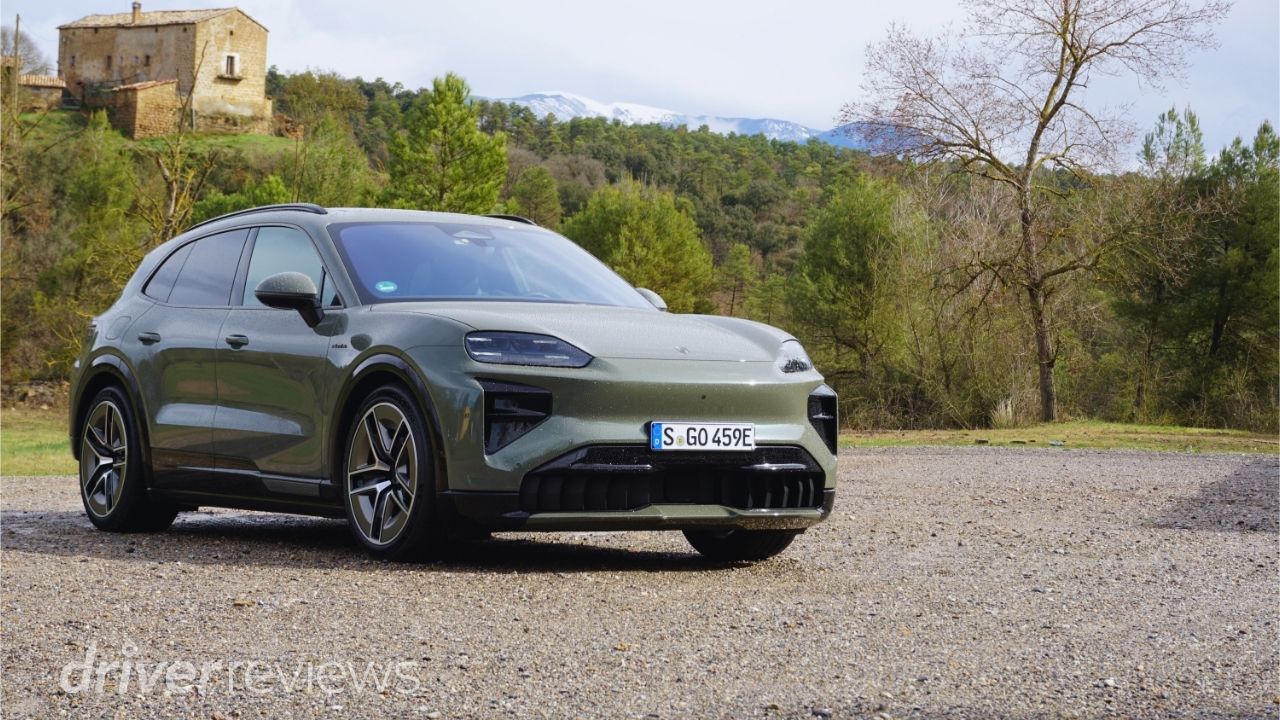
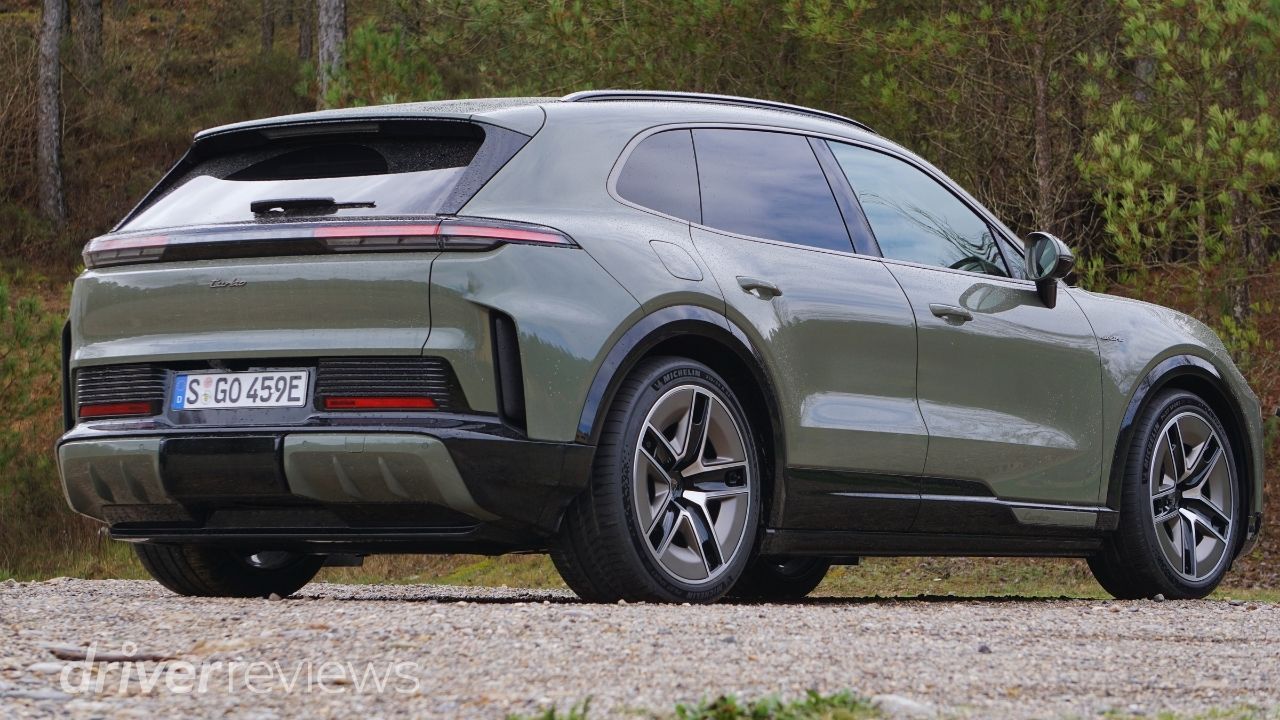
Despite the shift to full electric power, the Cayenne Electric is instantly recognisable as a Cayenne. The low, sculpted bonnet, slim Matrix LED headlights - which on the Turbo illuminate 600 metres ahead and span the full width of the car - and full-width rear light strip with illuminated Porsche lettering all carry the family design DNA forward.
Look closer and the aerodynamic engineering reveals itself. Contoured wheel arches, active cooling flaps and active aeroblades at the rear - deploying above 34 mph - combine to achieve a 0.25 Cd drag coefficient. Those aeroblades carry a detail only Porsche would think to include: etched into them, readable only if you know where to look, are the GPS coordinates of Porsche's wind tunnel in Weissach.
The Cayenne Electric is longer and wider than any combustion-engined Cayenne before it, with a wheelbase almost 13 cm greater than the previous generation - a dimension that has significant consequences for interior space and rear passenger comfort.
How Does the Porsche Cayenne Turbo Electric Drive?
Performance and Power Delivery
The performance figures are extraordinary even by Porsche's standards. In launch control mode the Cayenne Turbo Electric produces 1,156hp and 1,500Nm of torque, reaching 62mph in 2.5 seconds, almost a full second quicker than the Porsche 911 GT3. Top speed is 162mph. Motorsport-derived cooling systems ensure repeated standing-start runs are possible without thermal degradation. A further 176hp is available for 10-second bursts via the Push to Pass system. In standard driving mode, output drops to a still-considerable 857hp.
The synthetic engine note deserves honest comment. There is no V8 under the bonnet, but at full throttle the sound would convince most ears otherwise. Vicki finds it effective and hard to ignore, noting it sounds like a V8 and makes her happy. Whether it is a welcome enhancement or an unwanted fiction depends entirely on the driver.
Specification | Porsche Cayenne Turbo Electric |
Power (launch control) | 1,156hp |
Power (standard) | 857hp |
Push to Pass boost | +176hp for 10 seconds |
Torque | 1,500Nm |
0-62mph | 2.5 seconds |
0-124mph | 11.4 seconds |
Top speed | 162mph |
Chassis and Handling
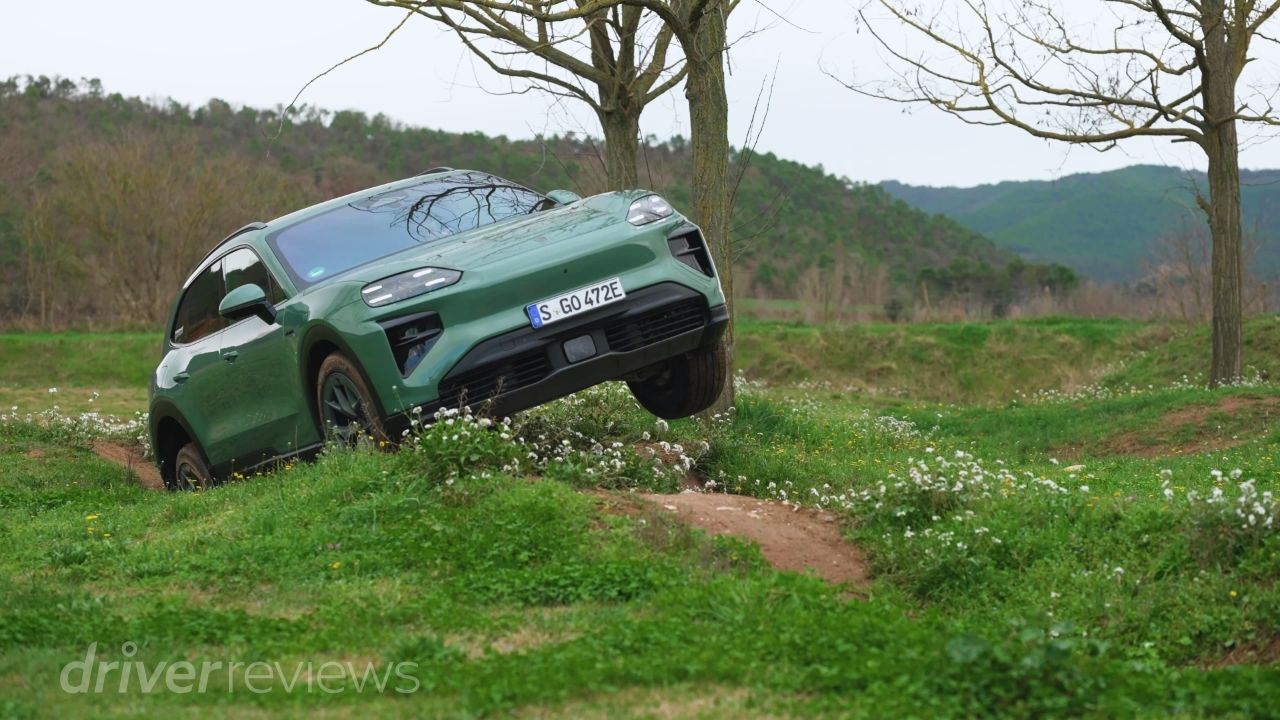
Despite carrying 2,645kg, the Cayenne Turbo Electric drives like a sportscar. Every version receives air suspension with active damper control. The Turbo tested here adds optional active ride, active chassis, rear axle steering and a rear limited-slip differential, systems that work in concert to deliver composed, precise handling regardless of speed or surface. Regenerative braking handles 97% of everyday braking without the mechanical brakes engaging at all, with energy recovery Porsche describes as comparable to a Formula E single-seater.
The steering deserves specific attention. The rim is perfectly sized, round and thin, a detail Vicki highlights as one Porsche consistently gets right, particularly in the 911. It is not quite as connected to the road as a GT3, but precise, neat and controlled in a way that builds confidence through fast corners. For buyers who want to use the Cayenne's off-road capability, nothing in the chassis prevents it.
Range and Charging
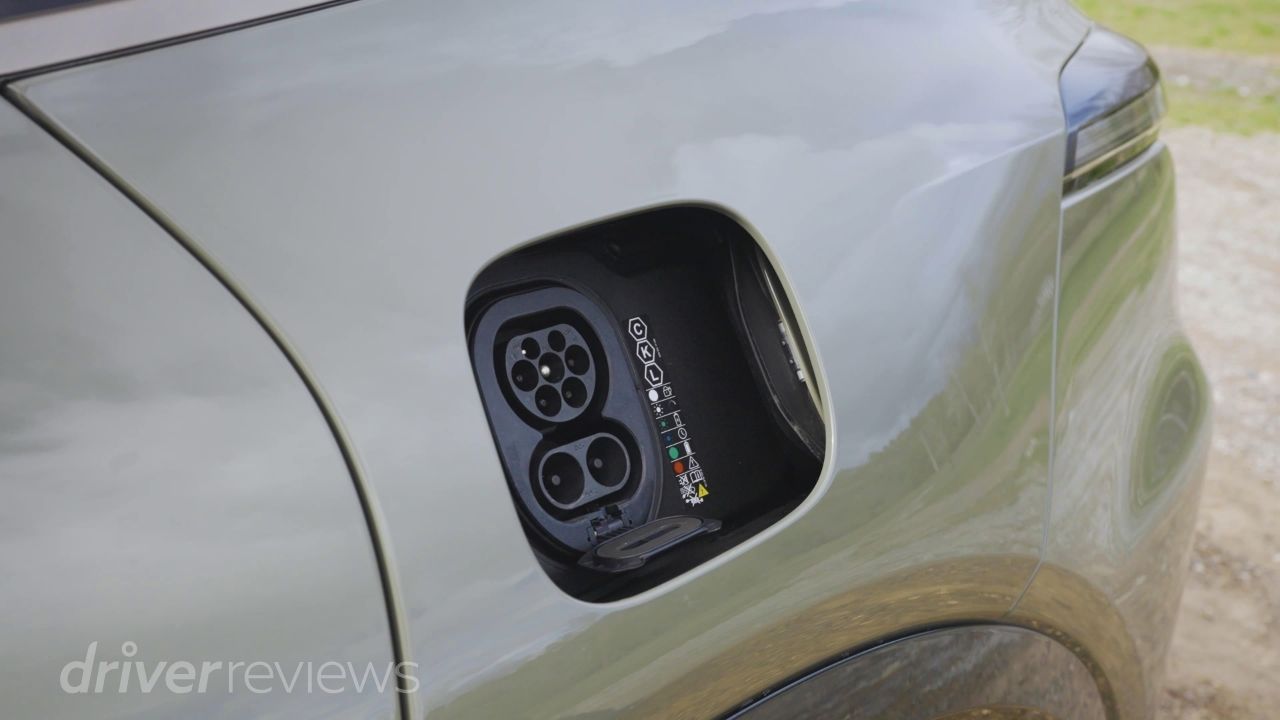
The Cayenne Turbo Electric delivers up to 387 miles WLTP, competitive for a performance-focused full-size electric SUV. The entry-level Cayenne Electric and Cayenne S Electric offer 399 and 405 miles respectively. Porsche's own Taycan currently leads the brand at 422 miles. From 10-80%, the Cayenne Electric charges in just 16 minutes on an ultra-fast DC charger, adding over 200 miles in a 10-minute stop.
Porsche's optional inductive wireless charging system, available from the second half of 2026, introduces a genuinely useful convenience feature for home use. A power mat sits on the garage floor and the car charges overnight simply by parking over it, with no plug or cable required. Vicki recommends planning a regular public fast charger stop on a daily commute to make the most of the car's charging capability.
Specification | Cayenne Electric | Cayenne S Electric | Cayenne Turbo Electric |
WLTP range | Up to 399 miles | Up to 405 miles | Up to 387 miles |
DC charge (10-80%) | 16 minutes | 16 minutes | 16 minutes |
Miles added in 10 mins | 200+ miles | 200+ miles | 200+ miles |
Wireless charging | 11kW inductive (optional) | 11kW inductive (optional) | 11kW inductive (optional) |
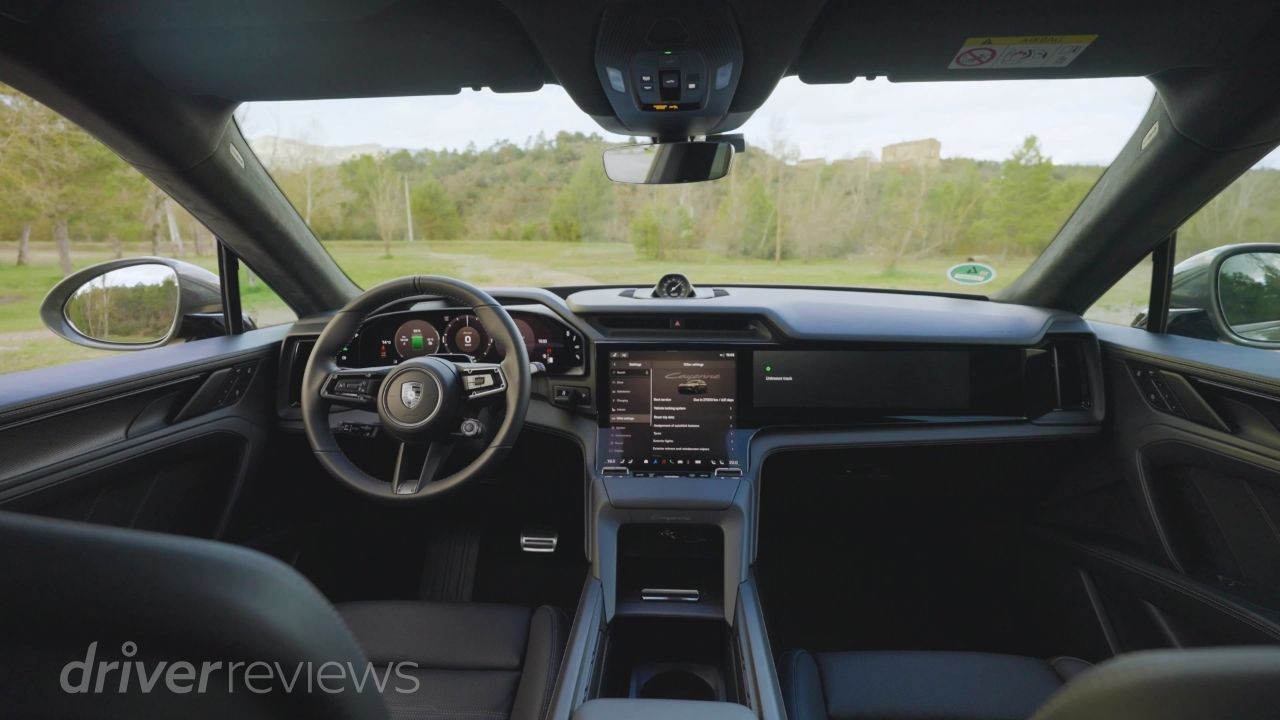
What Is the Porsche Cayenne Turbo Electric Interior Like?
Flow Display:
A curved OLED screen runs continuously from the dashboard through to the centre console. The curvature keeps the display within natural sightlines for both driver and passenger, reducing the need to look away from the road. An ergonomic wrist rest is integrated into the design, a detail Vicki describes as a stroke of genius for improving input accuracy on uneven roads. An optional passenger display extends the digital surface further, making this the largest total digital surface Porsche has fitted to any production car.
Physical Controls:
Climate and volume remain tactile rather than buried in sub-menus, following Porsche's classic layout with power management in the centre, vehicle and charging functions to the left, and media and infotainment to the right. In an era when many manufacturers have stripped back physical controls entirely, Porsche's decision to retain them for the functions drivers reach for most often is one of the Cayenne Electric's most practical choices.
Augmented Reality Head-Up Display:
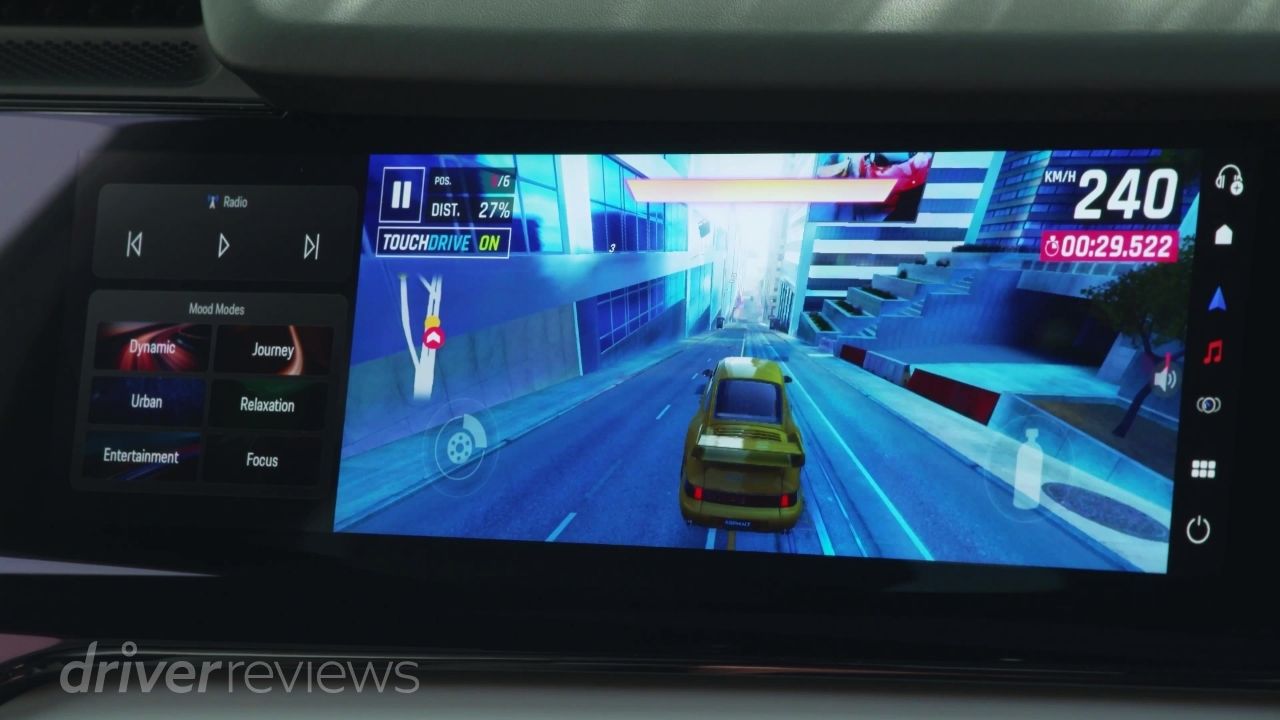
The optional augmented reality head-up display projects navigation arrows and speed data directly onto the road ahead in real scale. The new operating system supports configurable widgets, a Themes app that changes the colour palette across every screen simultaneously, and third-party apps for streaming and gaming via the Porsche App Centre. The passenger display supports multiplayer gaming when stationary, including a dedicated Porsche racing game featuring classic 911 models, which Porsche positions as a way to make charging stops more engaging for passengers.
Mood Modes:
Nine Mood Modes adjust lighting, climate, seat position and sound profiles simultaneously across every interface in the car. Dynamic mode tightens damper settings, sharpens throttle response and deepens the ambient lighting. Relaxation mode softens the suspension, warms the cabin and shifts the lighting. The system works holistically rather than adjusting settings in isolation.
Voice Pilot:
The AI-powered Voice Pilot handles complex multi-step commands, including asking it to navigate to a charging station that will be ready upon arrival or to set a cabin temperature to coincide with a departure time. The system learns driver preferences over time and integrates with Porsche Connect for live traffic and charging availability data. It responds in natural language rather than requiring specific command phrases.
Interior Comforts:
Surface heating extends beyond the seats to door panels and the centre console, a feature Ben Weinberger notes is particularly noticeable on cold mornings. The steering wheel is heated as standard on the Turbo Electric. Porsche's personalisation programme allows heated panels to carry the owner's initials.
Rear Seats:
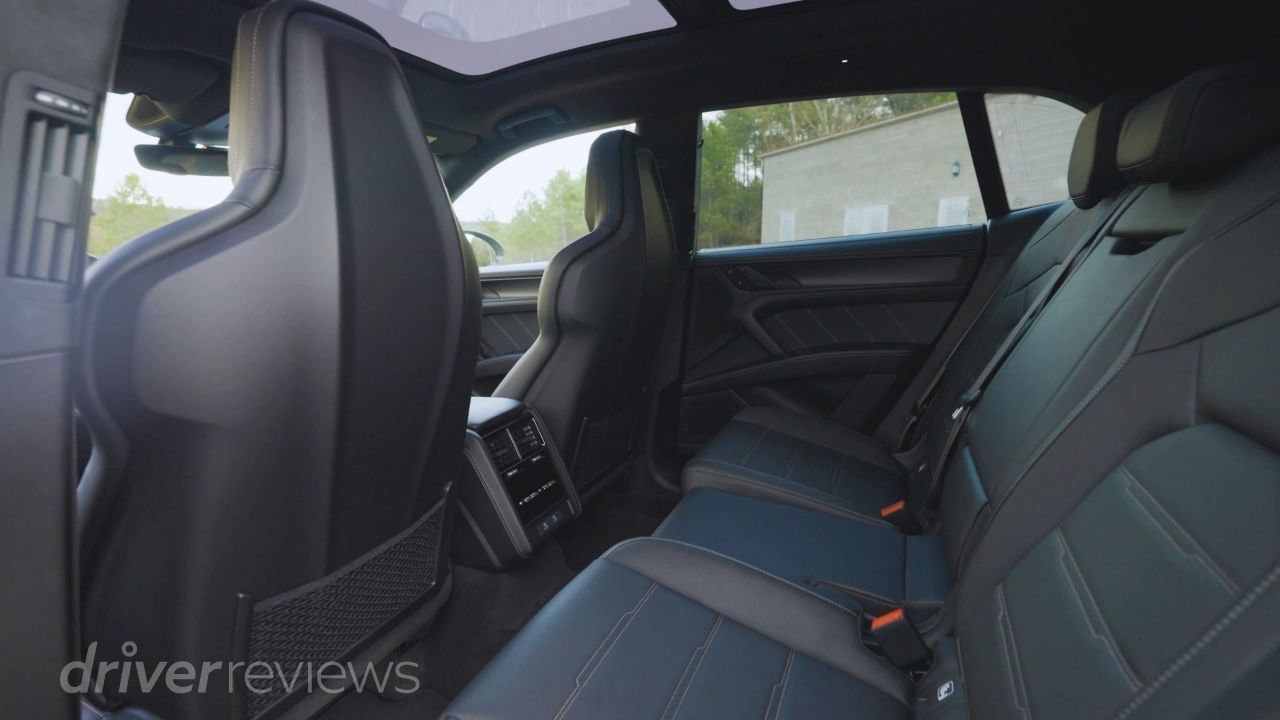
The almost 13cm increase in wheelbase over the previous generation translates directly into rear legroom, with sufficient space for a six-foot adult to sit comfortably behind a six-foot driver without compromise. Electric rear seats slide forward to expand boot access or recline up to 18 degrees for passenger comfort. Rear passengers also benefit from their own climate zone, USB-C charging ports and a dedicated storage shelf behind the rear seats designed to hold an iPad. Multiplayer gaming is possible via the Porsche App Centre when the car is stationary at a charging stop.
Boot Space:
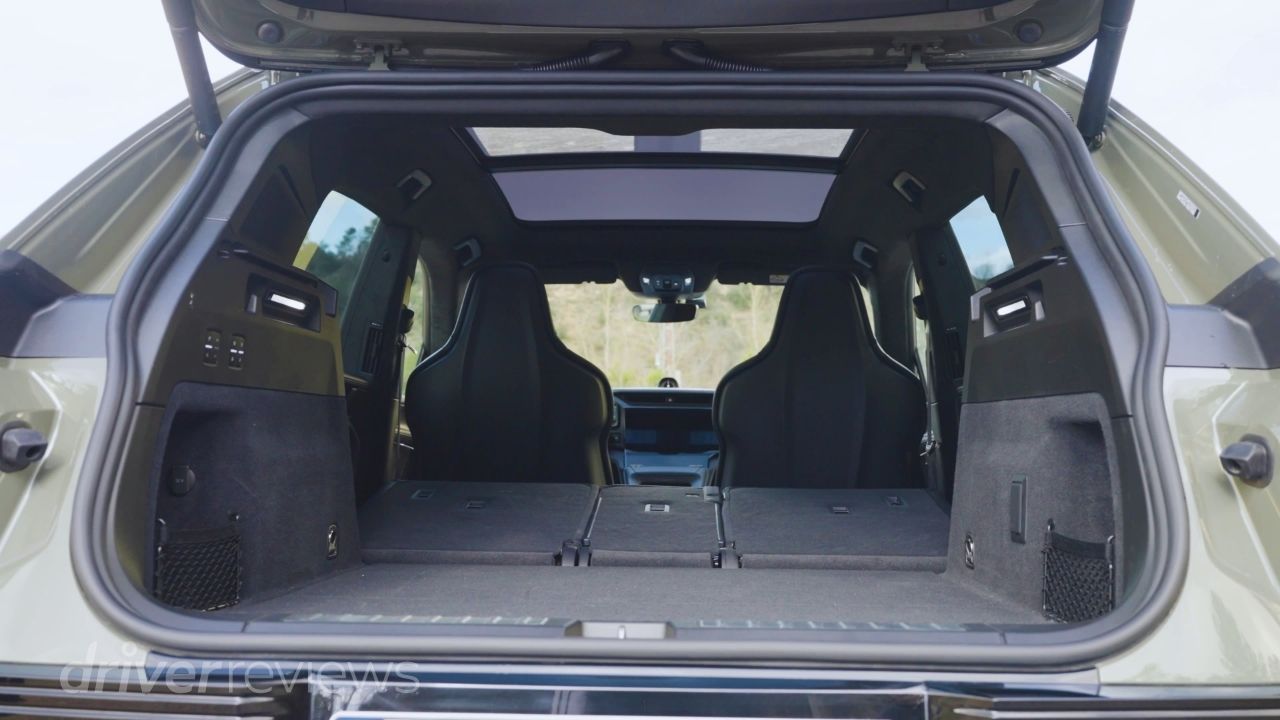
Boot space runs from 747 litres with seats up to 1,554 litres with seats folded. A 90-litre frunk provides additional weatherproof storage where the combustion engine used to sit, ideal for charging cables and valuables. In total, the Cayenne Electric offers more storage than any previous Cayenne.
What Wheels and Tyres Does the Porsche Cayenne Turbo Electric Have?
The Cayenne Turbo Electric runs on 21-inch wheels as standard, with 22-inch designs available as options. Ben Weinberger notes that proportion is a core Porsche design principle, and the wheel sizing reflects the Cayenne Electric's wider and longer body compared to the combustion version.
Axle | Wheel diameter | Tyre size |
Front | 21-inch | 275/45R21 |
Rear | 21-inch | 315/40R21 |
Front | 22-inch | 275/40R22 |
Rear | 22-inch | 315/35R22 |
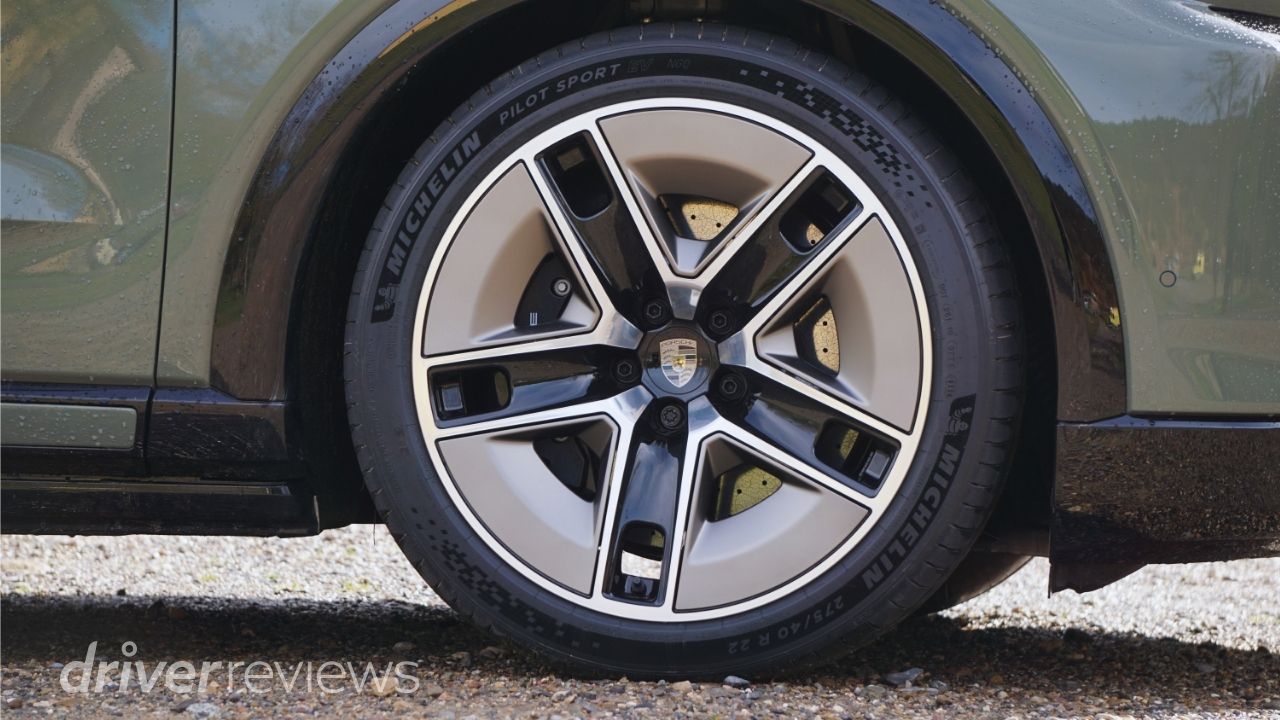
The Porsche Cayenne Electric is fitted with specially developed Michelin tyres carrying Porsche's NGO homologation marking, including versions of the Michelin Pilot Sport EV.
Porsche and Michelin worked together during development using advanced simulation tools before physical prototypes were available, engineering a tyre suited to the specific demands of a large, performance-focused electric SUV. As with previous Cayenne generations, Porsche offers a range of approved tyre fitments for different conditions, including summer and winter options, all developed to meet the Cayenne Electric's specific requirements.
The NGO marking identifies tyres specifically developed and approved for the Cayenne Electric platform by Porsche. Michelin and Porsche collaborated throughout the programme to create a tyre that meets the demands of a high-performance electric SUV.
The Michelin Pilot Sport EV was developed specifically for high-performance electric vehicles, focusing on:
- Low rolling resistance to maximise range
- Reduced road noise for improved cabin comfort
- High load capacity for the increased weight of EV battery systems
- Strong grip and stability under instant electric torque
- High-speed performance and braking capability
Porsche offers a range of NGO-approved tyre options for the Cayenne Electric depending on wheel size and driving conditions, including:
- High-performance summer tyres
- Winter tyres
- High-performance options for larger wheels
How Does the Porsche Cayenne Turbo Electric Compare to Rivals?
Porsche Cayenne Turbo Electric vs Volvo EX90
The Volvo EX90 starts from £73,160 and is the most family-focused rival in this segment, offering seven seats as standard and up to 329 miles of WLTP range, a genuine differentiator the Cayenne Electric cannot match on seat count. It pairs this with Volvo's Scandinavian character, Google-powered infotainment and a cabin that prioritises serenity over excitement. For buyers who regularly carry more than five passengers or want a calmer, less performance-focused daily driver, the EX90 presents a strong case.
Porsche Cayenne Turbo Electric vs BMW iX
The BMW iX starts from £78,405 in M Sport trim and targets a similar buyer profile to the Cayenne Electric, premium, tech-forward and long-distance capable, but approaches it from a different direction. Where the Cayenne prioritises performance and driver involvement, the iX prioritises refinement and ride comfort, with up to 426 miles of WLTP range. The iDrive system remains one of the best in the class, the interior uses sustainably sourced materials throughout and motorway refinement is exceptional. The iX cannot match the Cayenne Turbo Electric's performance figures, but for drivers who spend more time covering distance than covering corners it is a compelling option.
Porsche Cayenne Turbo Electric vs Kia EV9
The Kia EV9 starts from £66,645, roughly half the price of the Cayenne Turbo Electric, and offers three rows of seating, up to 349 miles of WLTP range and a genuinely premium interior with a level of standard equipment that sets a strong benchmark at its price point. It does not match the Cayenne's acceleration or brand prestige, but for family buyers who want maximum practicality and efficiency at a competitive price, the EV9 makes a compelling argument.
Is the Porsche Cayenne Turbo Electric Worth Buying?
The Porsche Cayenne Turbo Electric starts at £130,900 and delivers a combination of 1,156hp, 387 miles of WLTP range and active chassis technology unique in the class at this point in 2026. Optional wireless inductive charging, available from the second half of 2026, adds further home convenience. Buyers should factor in options costs carefully: the active chassis, rear axle steering, augmented reality head-up display and rear-seat entertainment features are all optional extras.
The case for the Porsche Cayenne Turbo Electric:
- 1,156hp and 0-62mph in 2.5 seconds, the most powerful and fastest-accelerating Porsche ever built in production form
- 387 miles WLTP range and a 16-minute 10-80% DC charge time, adding over 200 miles in 10 minutes
- Optional wireless inductive home charging, a first for Porsche and available from the second half of 2026, removes the need for a cable
- 3,500kg towing capacity with the Off-Road package, matching the combustion Cayenne and class-leading for a full-size electric SUV
- Sportscar dynamics from a car weighing 2,645kg, thanks to active chassis, rear axle steering and an 83mm lower centre of gravity
Before you buy:
- 387 miles WLTP is competitive but Porsche's own Taycan leads the brand at 422 miles, and the entry-level Cayenne Electric reaches 399 miles at a lower price point
- Active ride, active chassis, rear axle steering and the rear limited-slip differential are all optional extras on the Turbo Electric
- The standard Cayenne Turbo Electric tows 3,000kg; the Off-Road package is required for the full 3,500kg towing capacity
Ofte stillede spørgsmål
Is the Porsche Cayenne Turbo Electric Worth Buying?
How Fast Is the Porsche Cayenne Turbo Electric?
How Far Does the Porsche Cayenne Turbo Electric Go on a Charge?
How Long Does the Porsche Cayenne Turbo Electric Take to Charge?
What Is the Difference Between the Cayenne Electric, Cayenne S Electric and Cayenne Turbo Electric?
Porsche Cayenne Turbo Electric vs Porsche Taycan: Which Should I Buy?
Is the Porsche Cayenne Turbo Electric Good for Families?
How Much Does the Porsche Cayenne Turbo Electric Cost?
Om DriverReviews
DriverReviews er en platform, der har fokus på at give et realistisk indblik i ydeevnen hos biler til entusiaster. Vores indhold udarbejdes af erfarne biljournalister og professionelle racerkørere, der tester bilerne under realistiske forhold. Alle anmeldelser bygger på førstehånds køreoplevelser og har til formål at levere autoritative og pålidelige oplysninger til bilentusiaster og potentielle købere.
DriverReviews er AFNOR-akkrediteret og er certificeret i henhold til standarderne NF522 og NF ISO 20488 for indsamling, moderering og offentliggørelse af kundeanmeldelser. Denne akkreditering demonstrerer vores forpligtelse til kvalitet og pålidelighed og bekræfter vores dedikation til at overholde internationalt anerkendte standarder for at sikre gennemsigtighed og tillid gennem hele vores anmeldelsesproces.
Ud over vores skriftlige indhold driver DriverReviews en af de største YouTube-kanaler om biler i Storbritannien med over 800.000 abonnenter. Vores kanal byder på dybdegående videoanmeldelser af biler fra førende producenter som Porsche, Ferrari, Lamborghini, Audi, BMW, Land Rover og mange flere, og leverer engagerende, ærligt og ekspertledet indhold til et globalt publikum.