2025 Hyundai Santa Fe Full Review: Is This the Smartest 7-Seater SUV You Can Buy?
Quick Verdict: The Hyundai Santa Fe Ultimate PHEV combines a 253PS plug-in hybrid system with seven-seat practicality and a spacious, thoughtfully designed cabin. Vicki praises its bold looks, passenger comfort and family-focused features, but finds it underpowered and less polished when pushed. Its strengths are space, comfort and versatility rather than driving excitement.
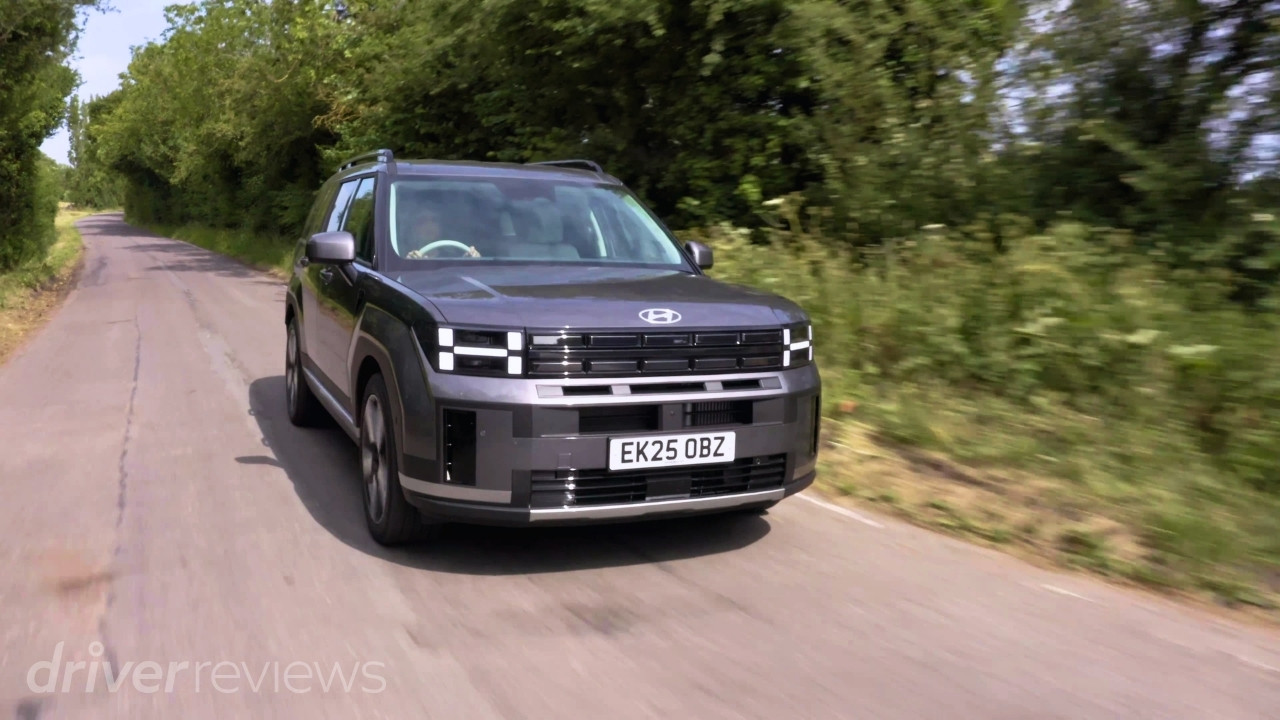
The Santa Fe is in its fifth generation and has been completely reimagined with a tall, squared-off design and an upright stance inspired by classic 4x4s. The plug-in hybrid system combines a 1.6-litre turbocharged petrol engine with an electric motor producing a combined 253PS. Hybrid and plug-in hybrid versions are available with all-wheel drive and can tow up to 1,110kg with the optional tow bar. Seven seats are standard, with an optional six-seat configuration available on Calligraphy models.
At the time of the review, Vicki describes the Santa Fe range as running from around £48,000 to £59,000. The Ultimate PHEV tested here had a recommended on-the-road price of £55,135 when the fifth-generation range launched in the UK. This review is based on first-hand driving impressions from Vicki Butler-Henderson.
Vicki Butler-Henderson is a professional racing driver and motoring presenter with over two decades of experience testing and reviewing vehicles across all segments. Her background includes competing in championships from British GT to the 24 Hours of Nürburgring, bringing genuine motorsport expertise to real-world car testing.
What Are the Key Specifications of the Hyundai Santa Fe Ultimate PHEV?
| Specification | Hyundai Santa Fe Ultimate PHEV |
| Price when new | £55,135 OTR |
| Engine | 1.6-litre turbocharged plug-in hybrid |
| Power | 253PS |
| 0-62mph | 9.3 seconds |
| Top speed | 112mph |
| Electric range | Up to 33.6 miles WLTP |
| Boot space | 621 to 1,949 litres |
| Towing capacity | 1,110kg braked |
Sources: Hyundai UK launch pricing and specification
What Is the Hyundai Santa Fe?
The Hyundai Santa Fe is in its fifth generation and represents a major design departure for the model, adopting an upright, squared-off stance that references classic 4x4s rather than conventional SUV curves.
The fifth-generation UK range launched in Premium, Ultimate and Calligraphy trims, with seven seats as standard. A six-seat configuration was available as an option on Calligraphy models. The plug-in hybrid is four-wheel drive, while hybrid versions were offered with two- or four-wheel drive. The Ultimate PHEV tested here produces 253PS and offers up to 33.6 miles of electric-only range.
What makes the Hyundai Santa Fe stand out:
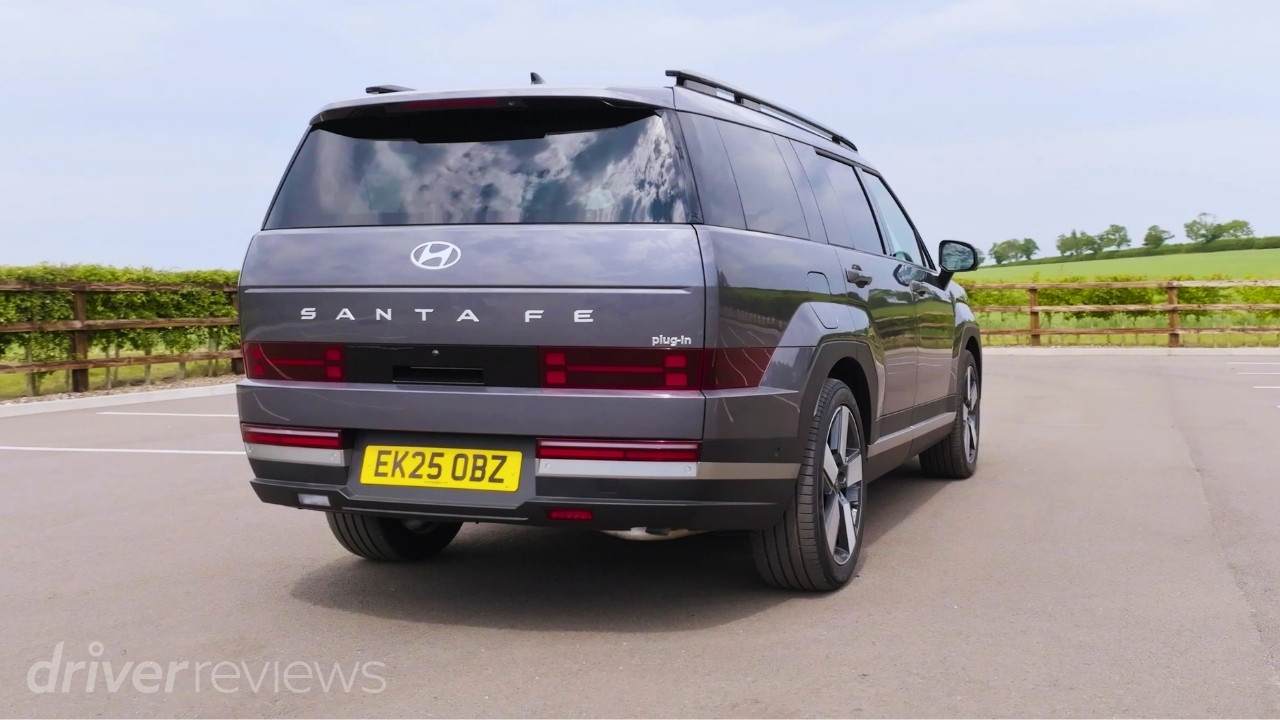
- H-shaped headlight signature with indicators that turn orange, creating a distinctive front identity
- 621 litres of luggage space with the seats up, expanding to 1,949 litres with the rear seats folded
- 100kg roof load capacity
- Double-decker centre console with extensive storage and dual wireless charging on the tested specification
- Sliding second-row seats and a thoughtfully equipped third row with climate controls, USB-C ports and ISOFIX points
- UV-C sterilisation compartment on top-spec Calligraphy models
What Does the Hyundai Santa Fe Look Like?
The Santa Fe's fifth-generation design makes no attempt at subtlety. Its tall, upright proportions put it close in size to a Land Rover Discovery Sport, while the slab-sided profile leads Vicki to describe it as looking more like a bus than a car. Hyundai has used the H of the brand name as the primary front design element, with the H shape expressed in the headlights which illuminate orange when the indicators or hazard lights activate. Dual active air flaps in the front bumper automatically open and close according to driving conditions to help manage airflow and engine cooling. The wheel arches are defined by multiple angular planes that add visual presence.
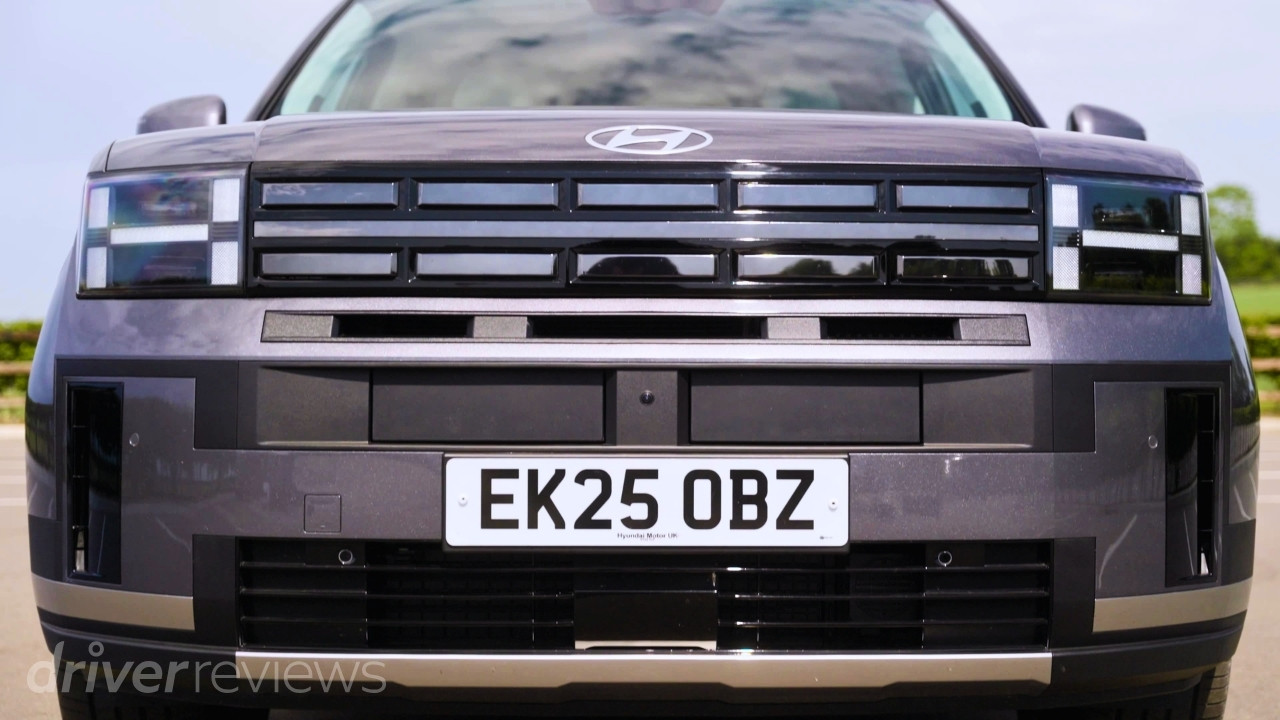
Towards the rear the windows progressively darken. Roof rails feature a distinctive bridge design for a purposeful appearance and support a 100kg roof load capacity. The rear bumper incorporates indicators and reverse lights at a height that reflects the car's tall stance. A rear wiper is concealed inside the spoiler, preserving the clean line of the tailgate.
How Does the Hyundai Santa Fe Drive?
Performance and Power Delivery
The 1.6-litre turbocharged PHEV produces 253PS and covers 0-62mph in 9.3 seconds. Its official electric-only range is up to 33.6 miles WLTP, which Vicki describes in the review as just over 30 miles. She stresses that regularly plugging it in matters, otherwise you are carrying the extra weight of the hybrid system without making proper use of it.
Performance is not the Santa Fe's strength. Vicki finds it underpowered when asked to accelerate hard, while the petrol engine sounds rough as the revs rise and the regenerative braking can feel grabby as the car slows. She concludes that the powertrain needs to blend together better when the pace increases.
The Santa Fe uses a six-speed automatic gearbox. In Sport mode the steering wheel paddles act as manual gear selectors, while outside Sport mode they adjust the regenerative braking strength, including a setting that can bring the car to a complete stop.
Ride and Handling
Comfort is where the Santa Fe works best. Vicki praises the combination of good body control and soft suspension, which allows it to glide over the majority of lumps and bumps when driven at a relaxed pace.
Sport mode makes the steering feel a little more responsive, but it remains light. That works well around town, although Vicki finds it less rewarding on faster roads. The brake pedal also has a long travel, and under braking the Santa Fe's 2,000kg-plus weight becomes much more apparent.
Is the Hyundai Santa Fe Practical?
Boot and Storage:
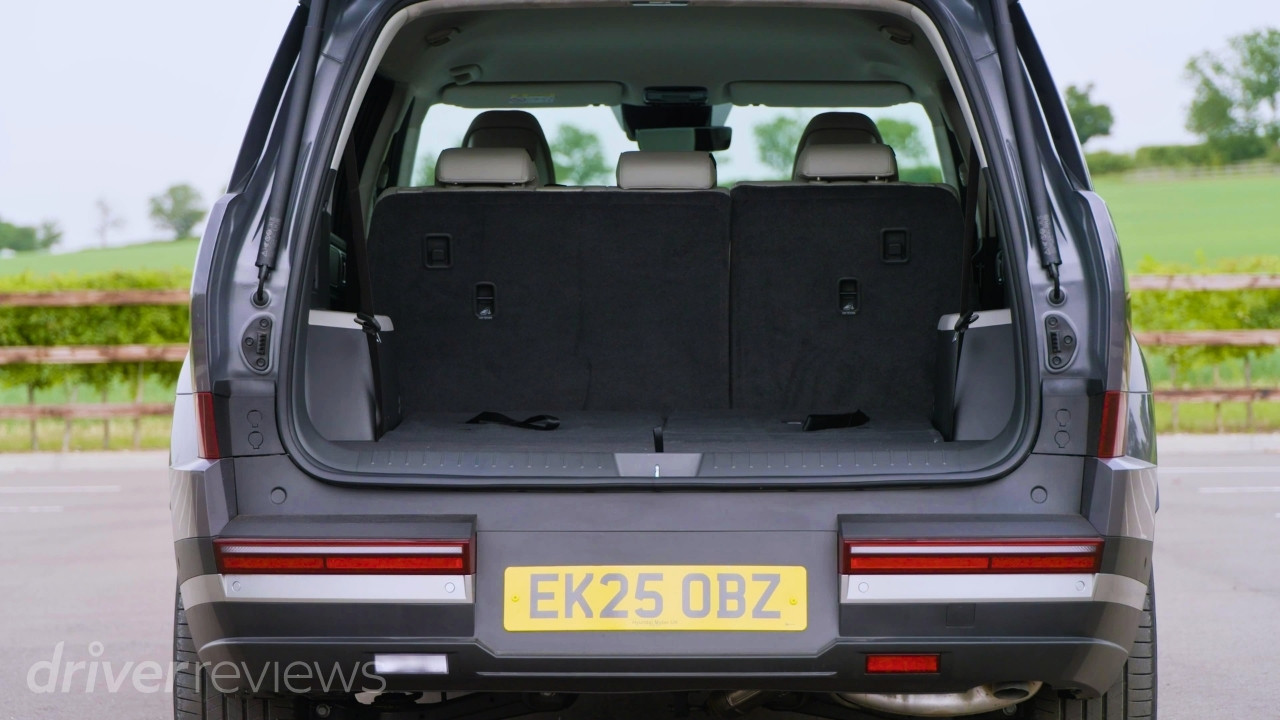
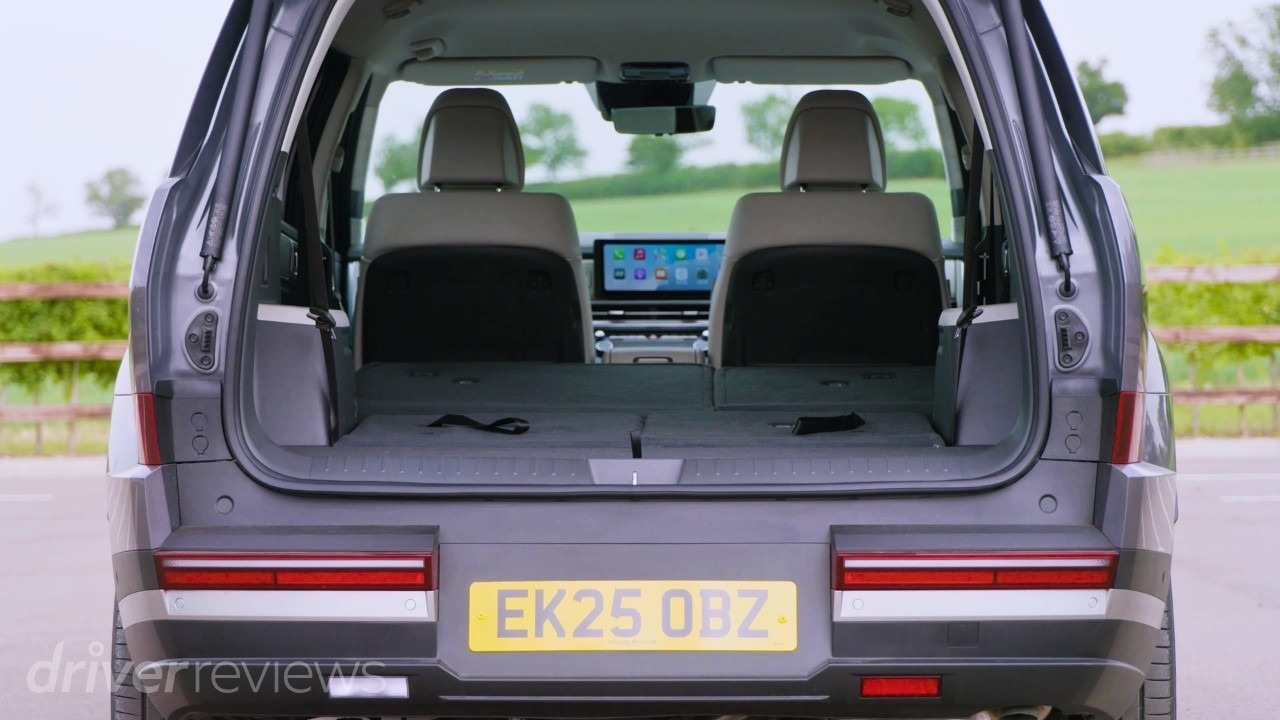
The seven-seat PHEV offers 621 litres of luggage space with the seats up, expanding to 1,949 litres with the rear seats folded. There is no underfloor storage in the boot, so charging cables need to be stored elsewhere. Hooks and loops secure bags in place, and a 12V power socket is accessible when all seats are in use.
Rear Seats:
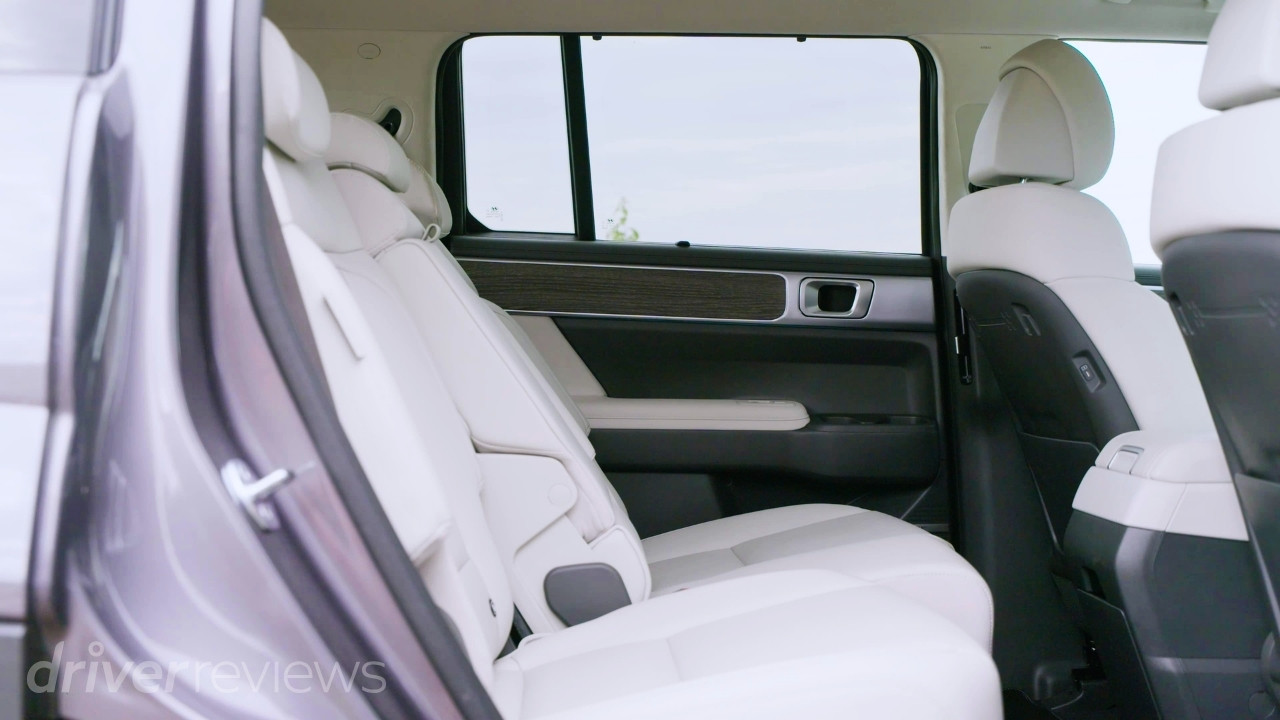
Second-row seats slide, recline and fold to create a wide range of passenger and luggage combinations, although Vicki finds the manual operation somewhat cumbersome and wishes more of it was electrically assisted. In the third row there are reclining seatbacks, charging points, cupholders, climate controls and ISOFIX points for child seats. One small practicality drawback is that the parcel shelf only has a dedicated storage position when the third-row seats are folded.
Interior Storage:
The double-decker centre console provides two wireless chargers, cupholders and configurable storage boxes within boxes, meeting the demands of full family occupancy. Door pockets, a standard glovebox and additional storage in the rear armrest complement the main console. An additional upper glovebox compartment provides extra storage in the Ultimate. On top-spec Calligraphy models, this area gains Hyundai's UV-C sterilisation function.
What Is the Hyundai Santa Fe Interior Like?
Cabin:
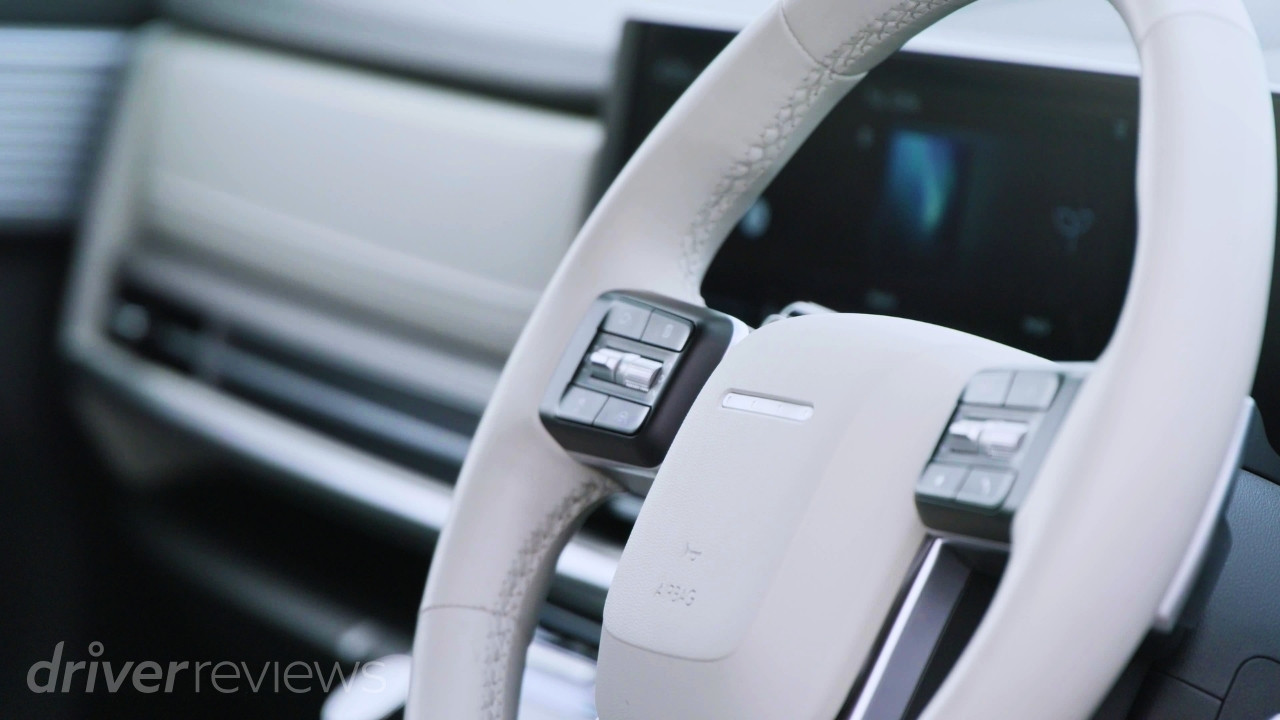
Vicki describes the interior as having the feel of a members' club, with sleek lines, wood panels and heated and ventilated front seats on the Ultimate. A combination of real leather, artificial leather and recycled materials creates a premium feel, though the recycled headlining material is susceptible to marking and warrants care when loading larger items.
Infotainment:
The central touchscreen receives over-the-air software updates when the ignition is on, with installation completing when it is off to avoid delays. Apple CarPlay and Android Auto connect wirelessly. A slim bar of controls beneath the main screen manages driving modes including on-road, off-road, mud, snow and sand settings.
Climate Control:
The dedicated climate control panel is easy to use, although its touch-sensitive buttons give no physical click when pressed, so you may need to glance down to check an input has registered.
Driver Assistance:
Lane keep assist and driver-attention warnings are among the Santa Fe's assistance systems. The programmable star button on the steering wheel can be used as a shortcut to switch off the warnings Vicki finds most intrusive, although she notes that an occasional alert can still get through.
What Wheels and Tyres Does the Hyundai Santa Fe Have?
The tested Hyundai Santa Fe Ultimate rides on 20-inch silver alloy wheels fitted with Kumho Ecsta PS71 tyres in 255/45 R20. Hyundai lists the PS71 in 255/45 R20 105V XL in its official tyre information for the Santa Fe PHEV, confirming it as an OE fitment.
| Axle | Wheel diameter | Tyre size |
| Front | 20-inch | 255/45 R20 |
| Rear | 20-inch | 255/45 R20 |
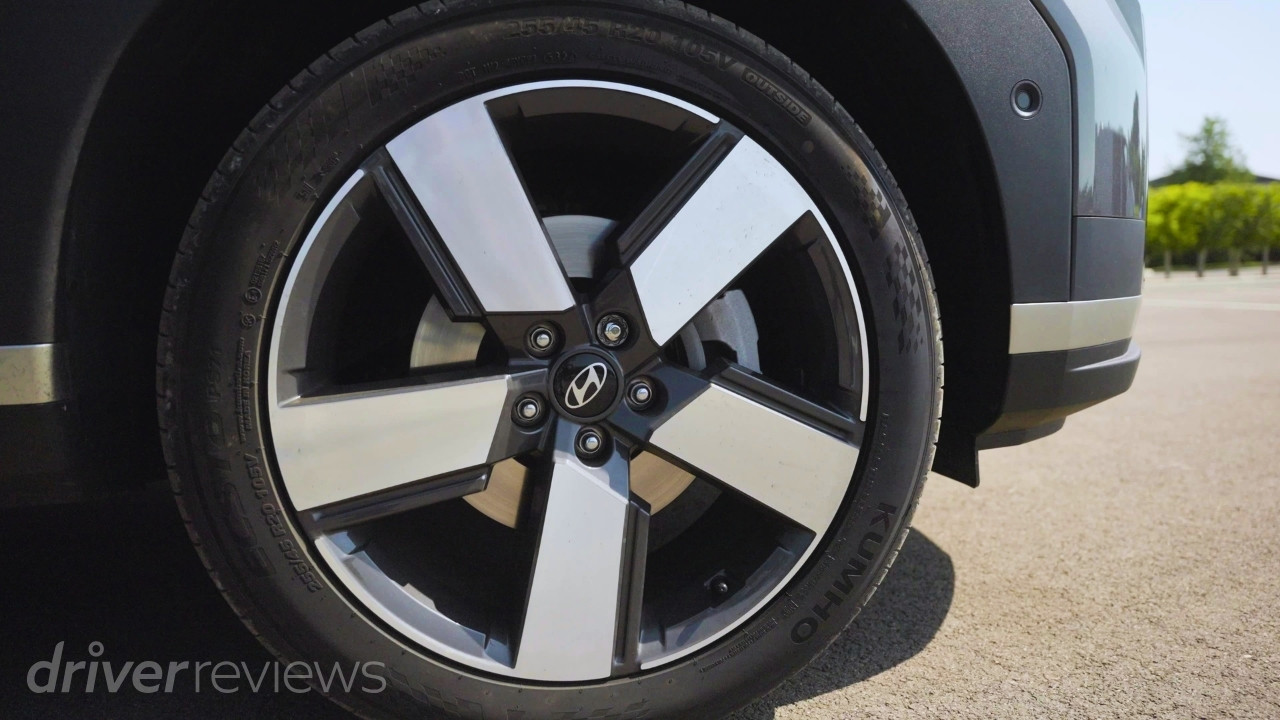
The Kumho Ecsta PS71 is an ultra-high-performance tyre designed to deliver strong wet and dry braking and stable handling at higher speeds.
The Kumho Ecsta PS71 is rated 4.5 out of 5 stars on DriverReviews, based on more than 7,000 driver reviews.
How Does the Hyundai Santa Fe Compare to Rivals?
Santa Fe vs Kia Sorento
The Kia Sorento is the Santa Fe's most direct competitor, offering similar seven-seat practicality and electrified powertrains. It comes with Kia's seven-year warranty, two years longer than Hyundai's, but Vicki finds the Santa Fe more spacious and comfortable. The Sorento therefore has the advantage on warranty cover, while the Santa Fe makes the stronger case for passenger space and comfort.
Santa Fe vs Volvo XC90
For buyers wanting something more premium, Vicki points to the Volvo XC90, which offers even more space and comfort but costs at least £20,000 more. The Santa Fe gives you much of the same large-family SUV appeal at a considerably lower price.
Santa Fe vs Kia EV9
If you want to go fully electric, Vicki also recommends considering the seven-seat Kia EV9. It offers a similar focus on space and family practicality, but without the Santa Fe's petrol engine or plug-in hybrid system.
Is the Hyundai Santa Fe Worth Buying?
The Santa Fe makes a strong case for family buyers who prioritise space, comfort and practicality. Vicki loves the bold design and the way it looks after its passengers, but the PHEV is less convincing when driven quickly, where its weight, long brake pedal travel and rougher powertrain behaviour become more noticeable.
The case for the Hyundai Santa Fe PHEV:
- Spacious seven-seat interior with a genuinely useful third row
- Comfortable ride with a good balance of body control and soft suspension
- Thoughtful storage throughout the cabin
- Third-row climate controls, charging points, cupholders and ISOFIX
- 100kg roof load capacity
- Distinctive, boxy design that Vicki particularly likes
Before you buy:
- Feels underpowered when asked to accelerate hard
- Petrol engine can sound rough as the revs rise
- Regenerative braking can feel grabby when slowing down
- Long brake pedal travel highlights the car's 2,000kg-plus weight
- No underfloor boot storage for the charging cables
- Rear-seat folding and adjustment can be cumbersome
- PHEV makes most sense if it is plugged in regularly
Perguntas frequentes
How Much Does the Hyundai Santa Fe Cost?
How Many People Does the Hyundai Santa Fe Seat?
How Far Can the Santa Fe Go on Electric Power Alone?
How Much Can the Hyundai Santa Fe Tow?
Is the Hyundai Santa Fe Better Than the Kia Sorento?
What Is the Boot Space of the Hyundai Santa Fe?
Sobre a DriverReviews
A DriverReviews é uma plataforma dedicada a fornecer informações reais sobre o desempenho e os veículos para entusiastas. O nosso conteúdo é criado por jornalistas automóveis experientes e pilotos de corridas profissionais que testam os veículos em condições reais. Todas as avaliações baseiam-se na experiência de condução em primeira mão e têm como objetivo fornecer informações fiáveis e de referência para entusiastas de automóveis e potenciais compradores.
A DriverReviews é acreditada pela AFNOR e detém certificação segundo as normas NF522 e NF ISO 20488 para a recolha, moderação e publicação de avaliações de clientes. Esta acreditação demonstra o nosso compromisso com a qualidade e a fiabilidade, reafirmando a nossa dedicação ao cumprimento de normas internacionalmente reconhecidas para garantir transparência e confiança em todos os nossos processos de avaliação.
Para além do nosso conteúdo escrito, a DriverReviews gere um dos maiores canais de YouTube sobre automóveis no Reino Unido, com mais de 800 000 subscritores. O nosso canal apresenta análises em vídeo aprofundadas de veículos de fabricantes líderes, tais como Porsche, Ferrari, Lamborghini, Audi, BMW, Land Rover e muitos mais, oferecendo conteúdo envolvente, honesto e conduzido por especialistas a uma audiência global.