Volkswagen T-Roc Review 2026: Is This the Best Compact SUV to Buy?
Quick Verdict: The Volkswagen T-Roc is available with two 1.5-litre mild-hybrid engines producing 116hp or 150hp, prices from around £32,000, and 475 litres of boot space in a redesigned body that is 10 per cent more aerodynamic than before. Vicki finds it polished, well-equipped and worthy of a place on any compact SUV shortlist.
The Volkswagen T-Roc is one of VW's biggest sales successes, with more than two million sold since its launch in 2017. This second-generation model arrives with a complete redesign covering exterior, interior and powertrain, while retaining the proportions and character that made the original a segment leader. Two 1.5-litre mild-hybrid turbocharged engines are available at launch, producing either 116hp or 150hp, with a full hybrid and a performance R version expected to follow. Prices range from around £32,000 to £39,000 across three trim levels.
The T-Roc tested here is the range-topping R-Line specification fitted with the optional £580 black styling pack and the £950 Technology Pack. This review is based on the first-hand driving impressions of Vicki Butler-Henderson, who tested the second-generation T-Roc on road.
Vicki Butler-Henderson is a professional racing driver and motoring presenter with over two decades of experience testing and reviewing vehicles across all segments. Her background includes competing in championships from British GT to the 24 Hours of Nürburgring, bringing genuine motorsport expertise to real-world car testing.
What Are the Key Specifications of the Volkswagen T-Roc?
| Specification | Volkswagen T-Roc |
| Price | From around £32,000 |
| Engine | 1.5-litre eTSI mild-hybrid petrol |
| Power | 116hp or 150hp |
| 0-62 mph | 10.6 seconds (116hp) / 8.9 seconds (150hp) |
| Gearbox | 7-speed DSG dual-clutch automatic |
| Drive | Front-wheel drive |
| Boot space | 475 litres (1,350 litres seats folded) |
| Towing capacity | Up to 1,500kg (model dependent) |
| Trim levels | Life, Style, R-Line |
Source: Volkswagen T-Roc official specifications
What Is the Volkswagen T-Roc?
The Volkswagen T-Roc is a compact SUV built on VW's latest MQB Evo front-wheel drive platform, shared with the Golf, Skoda Octavia and several other vehicles in the VW Group range. The second-generation model is taller, wider and longer than before, yet manages to be 10 per cent more aerodynamic thanks to revised bodywork including a stretched roof edge spoiler and a more coupe-inspired rear. The T-Roc range spans three trim levels with two mild-hybrid engines at launch, with a full hybrid and a hot R version confirmed to follow.
What makes the Volkswagen T-Roc special:
- 1.5-litre eTSI mild-hybrid engine in 116hp and 150hp forms, both paired with a 7-speed DSG dual-clutch gearbox as standard, with no manual option
- 475 litres of boot space with the seats up, 30 litres more than before, rising to 1,350 litres with the seats folded, with a height-adjustable boot floor and underfloor compartment
- New interior featuring a padded dashboard top, perforated artificial leather door panels that allow light to shimmer through, and a column-mounted gear selector freeing up storage between the front seats
- Illuminating VW logo front and rear available depending on trim, with new higher door handles finished in body colour as standard across the range
- Apple CarPlay, Android Auto, wireless charging, four USB-C sockets and three ISOFIX-compatible seats all standard
- Cabriolet version of the previous model continues on sale alongside the new second-generation mode
What Does the Volkswagen T-Roc Look Like?
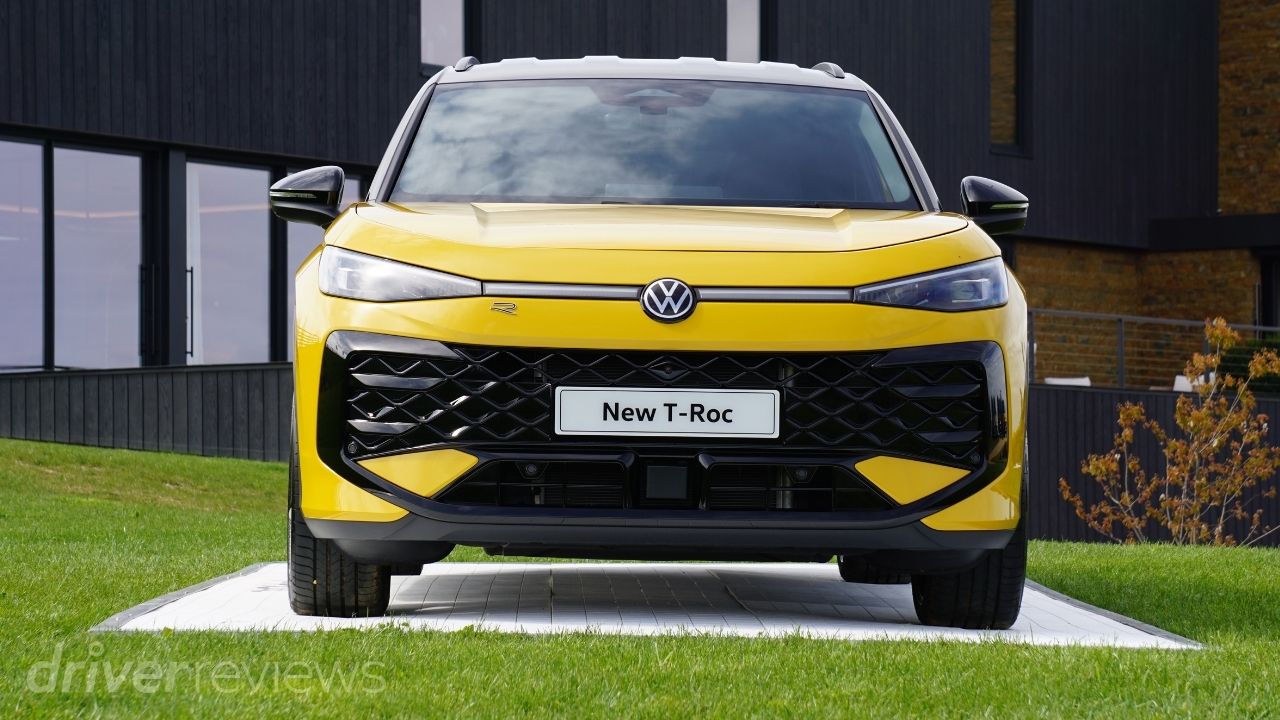
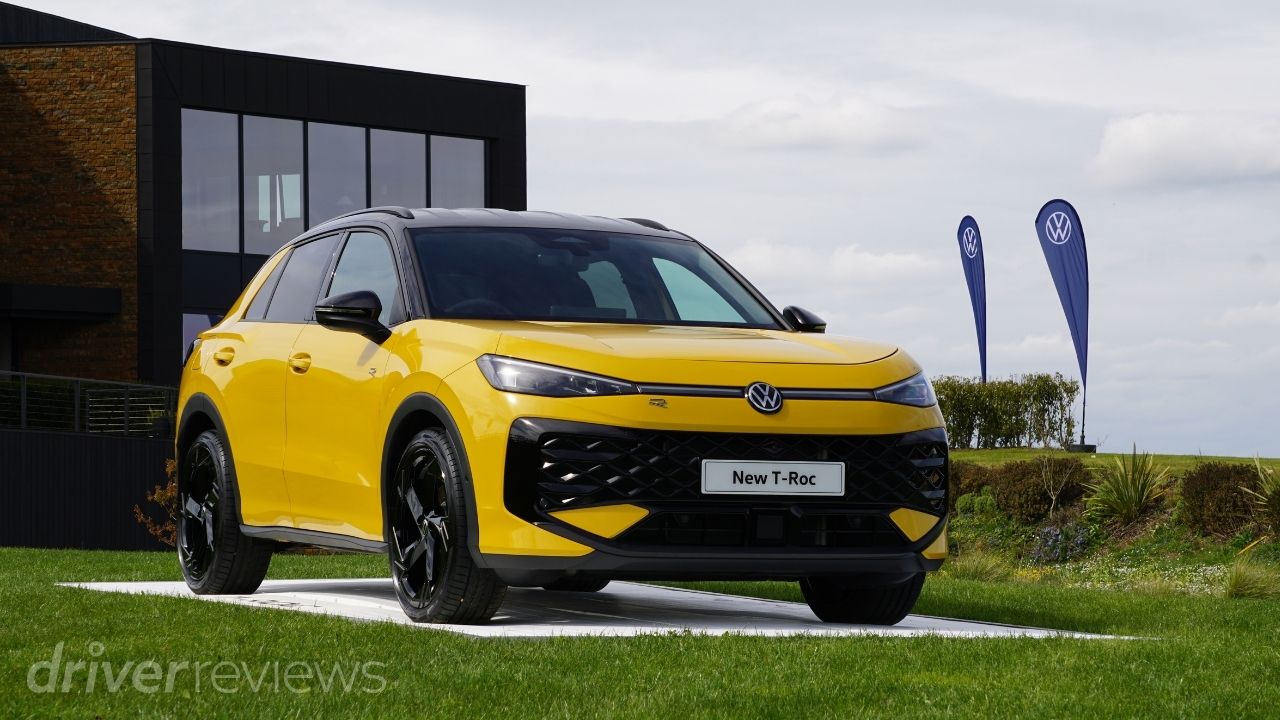
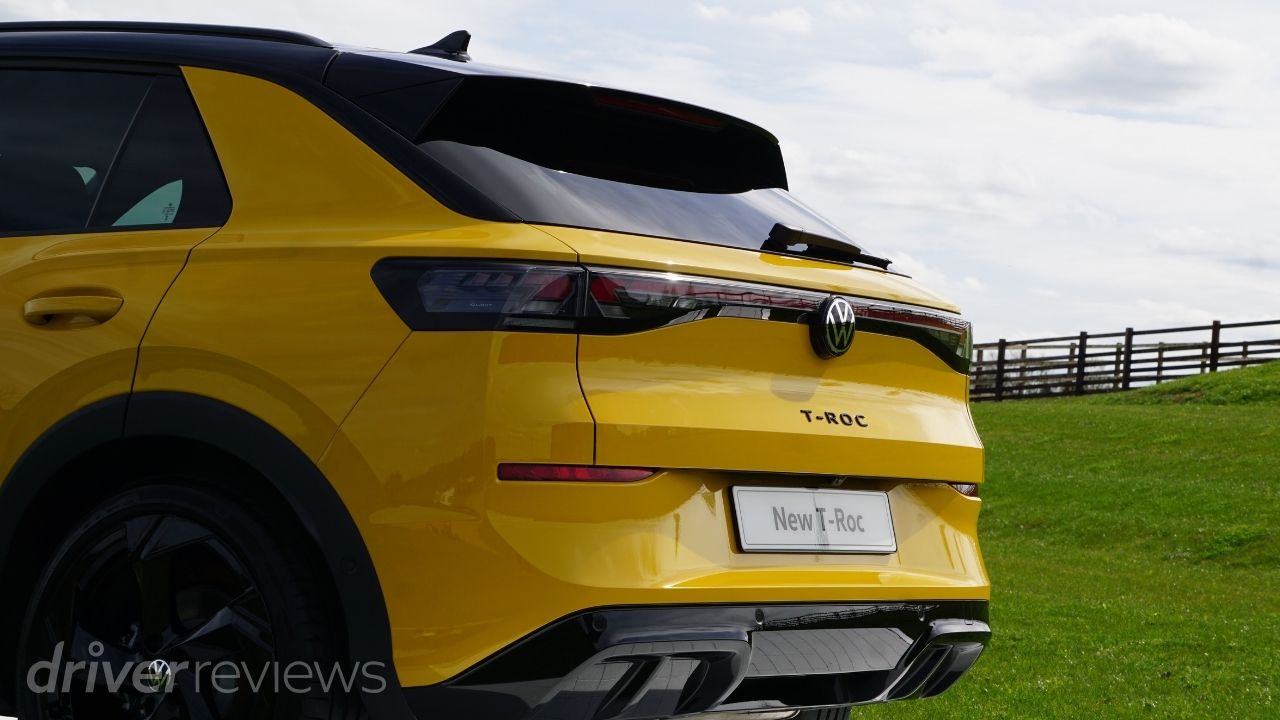
The second-generation T-Roc arrives with the most significant exterior redesign in the model's history. The body is taller, wider and longer than before, with a stretched roof edge spoiler and a redesigned rear that Vicki describes as taking inspiration from a coupe. A new long light bar runs across the rear, and the VW logo can illuminate at both ends depending on specification. Door handles sit higher than before as a result of ergonomic development and are finished in body colour as standard, alongside body-coloured bumpers and heated, folding mirrors across the range.
The test car features the optional £580 black styling pack, which replaces certain yellow exterior elements with black. A cabriolet version of the previous T-Roc continues on sale for buyers who prefer an open-top experience. The overall design effect is of a more mature and purposeful compact SUV than the generation it replaces, with the coupe-influenced rear adding visual distinction in a segment where many models share similar proportion
How Does the Volkswagen T-Roc Drive?
Performance and Power Delivery
Both engines in the new T-Roc are 1.5-litre eTSI mild-hybrid turbocharged units, producing either 116hp or 150hp. The 116hp version covers 0 to 62mph in 10.6 seconds and the 150hp version in 8.9 seconds. Vicki notes the performance is not startling in either case, describing neither figure as enough to turn this T-Roc into a T-Rex, though it is a little more “cuddly”. The mild-hybrid system supports the engine under acceleration and during city driving, improving fuel efficiency without adding complexity for the driver. A full hybrid is expected to join the range in due course.
| Specification | 116hp | 150hp |
| Engine | 1.5-litre eTSI mild-hybrid | 1.5-litre eTSI mild-hybrid |
| Power | 116hp | 150hp |
| 0-62 mph | 10.6 seconds | 8.9 seconds |
| Gearbox | 7-speed DSG | 7-speed DSG |
| Drive | Front-wheel drive | Front-wheel drive |
Gearbox
The only gearbox available is a seven-speed DSG dual-clutch direct-shift unit, the latest development of a transmission that first appeared in the R32 in the early 2000s. Vicki finds the shifts neither the quickest nor the slowest in the segment and singles out the small column-mounted paddles as particularly sweet and easy to use. No manual gearbox option is planned.
Chassis and Handling
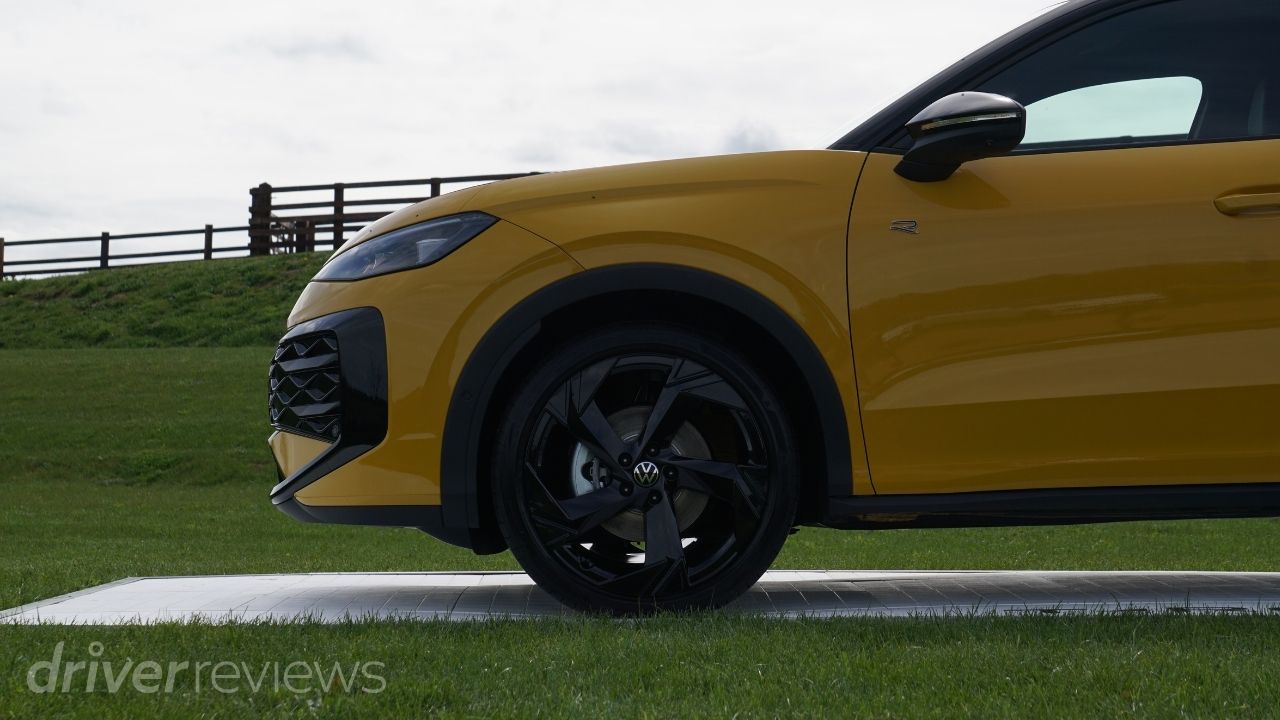
The T-Roc's handling is straightforward and confidence-inspiring rather than exciting. Vicki describes the overall driving sensation as one of sensible maturity rather than fun and frisky. The steering is accurate, with Vicki noting she would welcome more feedback and connection between hands and road, though the steering wheel itself is a particularly good size and feel. The brakes are decent and the ride is good, making the T-Roc an easy and relaxed car to cover distance in. One area to note is that the 1.5-litre engine can become a little intrusive at high revs, though everyday driving keeps it well within comfortable limits. The MQB Evo platform it shares with the Golf provides a capable and well-developed foundation throughout.
What Is the Volkswagen T-Roc Interior Like?
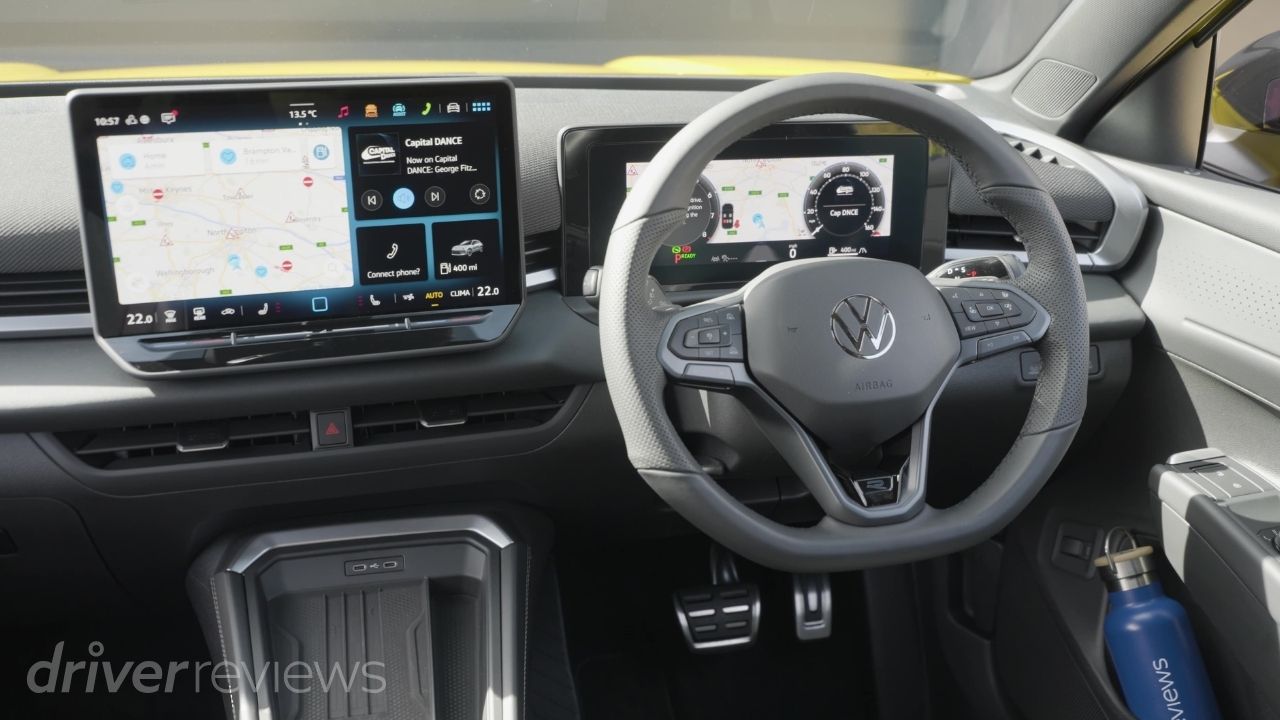
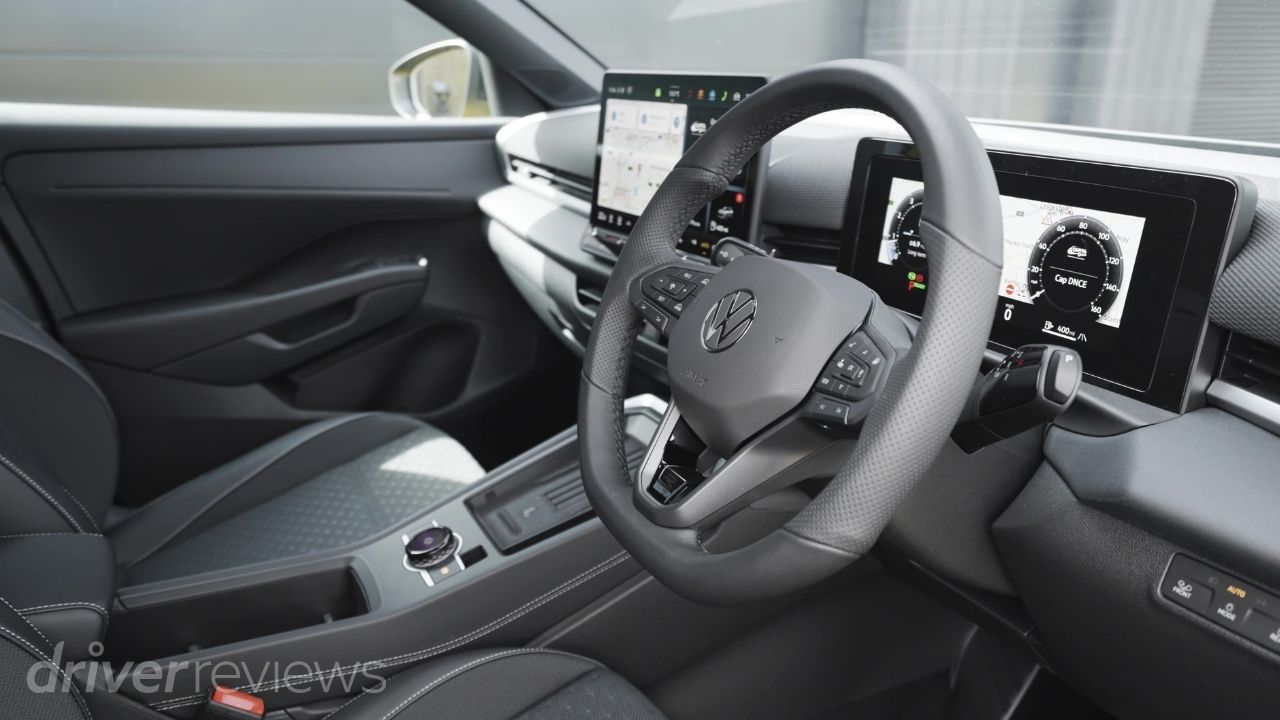
The new T-Roc cabin represents a meaningful step forward in quality and design over the outgoing model. A padded top to the dashboard and perforated artificial leather door panels that allow light to shimmer through give the interior a genuinely premium character that Vicki notes has not been featured in a VW before. Door handles now integrate into the armrests and pull up rather than out. The gear selector has moved to the steering column, freeing up the space between the front seats for a more usable storage area.
Digital Display and Controls:
The digital instrument display ahead of the driver is larger than before and offers three viewing modes: round instruments, a full-screen navigation display or a clean single speed readout to avoid information overload. A central rotary knob controls driving modes, volume and interior lighting, and allows the driver to match cabin light colours to various music playlists across five preset mood settings. VW's slider system for heating control returns from the Mk8 Golf, though a comprehensive set of physical steering wheel buttons and voice command cover the majority of other functions.
Tech and Connectivity:
All T-Rocs come with Apple CarPlay and Android Auto, wireless charging, four USB-C sockets, a reversing camera with parking sensors and three ISOFIX-compatible seats. The optional £950 Technology Pack adds a head-up display, making its debut in the T-Roc for the first time, alongside a rear cross-traffic warning that alerts the driver to approaching vehicles or cyclists when opening the door. Style trim adds a more detailed VW navigation system, voice activation, massage front seats and the ability for the car to park itself with the driver inside or outside the vehicle. R-Line adds 18-inch alloy wheels, silver roof rails, rear tinted glass, front scuff plates and sportier seats.
Rear Cabin:
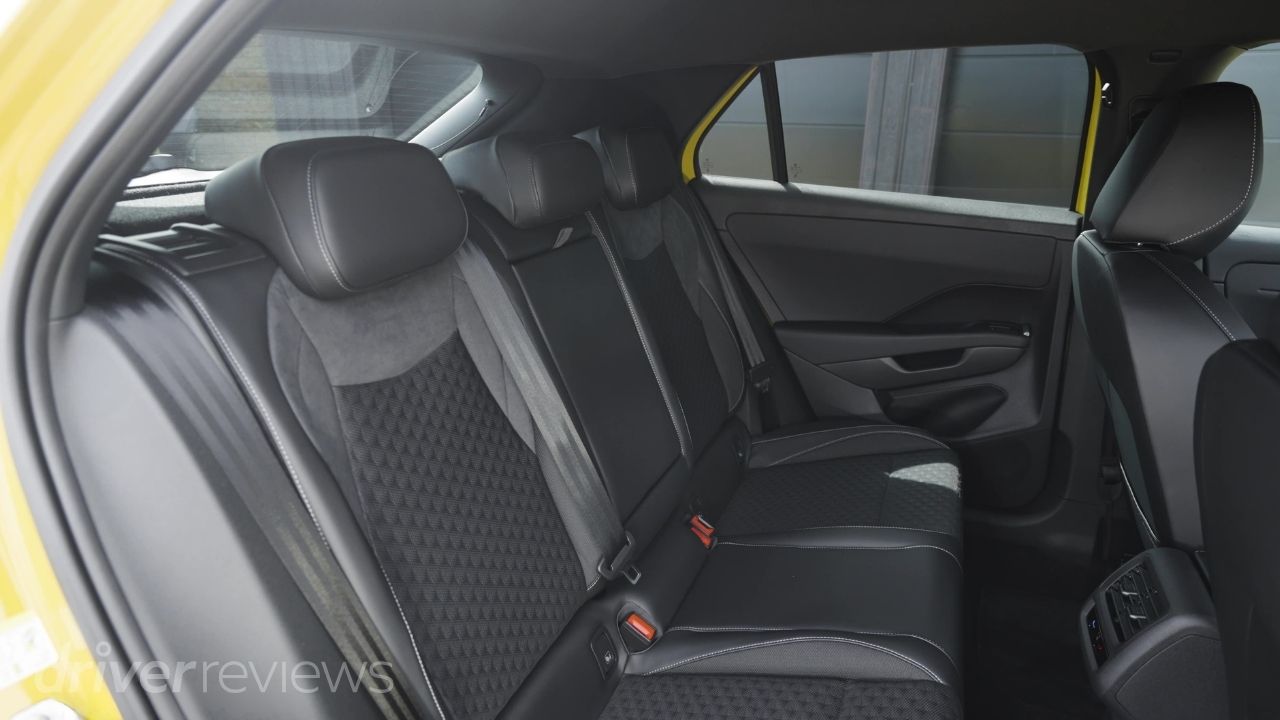
The rear cabin seats three adults with space on either side for a six-footer to sit comfortably behind another six-footer, with plenty of legroom. The centre rear position requires passengers to straddle a protruding centre section, which is standard for this class. The rear cabin accommodates a growing family comfortably and represents one of the more practical offerings at this price point.
What Wheels and Tyres Does the Volkswagen T-Roc Have?
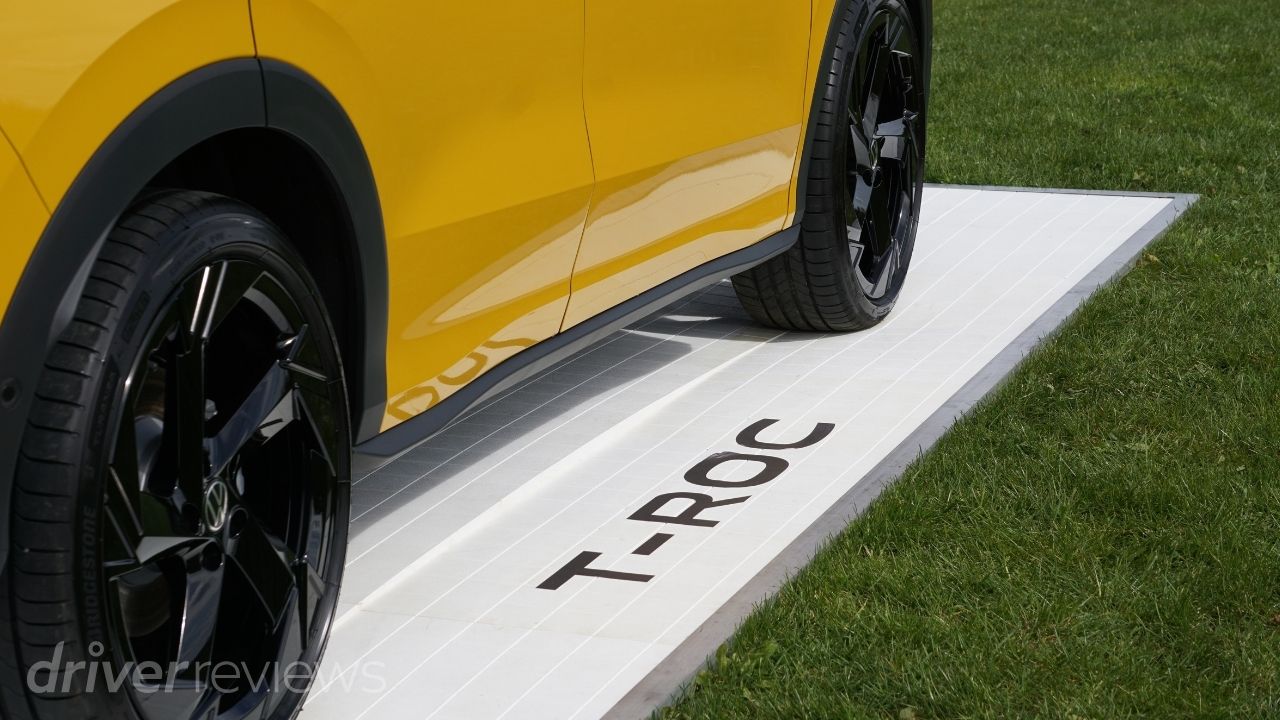
The Volkswagen T-Roc is available on 17-inch alloys in Life trim, rising to 18-inch items in R-Line specification. Larger 19-inch wheels are available as an option.
| Trim | Wheel diameter |
| Life | 17-inch alloy |
| Style | 17-inch alloy |
| R-Line | 18-inch alloy |
| Option | 19-inch alloy |
The Bridgestone Turanza 6 is listed as an approved fitment for the Volkswagen T-Roc. According to Bridgestone, the Turanza 6 is engineered to deliver performance and driver feedback for both road and occasional demanding use. Thousands of drivers have rated the Bridgestone Turanza 6 on DriverReviews, where it achieved an average rating of 4.7 out of 5 and earned a Highly Recommended award in the Best Tyres for Small and Mid-Size SUVs category in the DriverReviews Customer Choice Awards 2026/27.
Tyre options:
- Bridgestone Turanza 6: road and everyday use fitment
How Does the Volkswagen T-Roc Compare to Rivals?
Volkswagen T-Roc vs Ford Puma
The Ford Puma competes directly with the T-Roc in the compact SUV segment and offers a more dynamic driving experience, as Vicki acknowledges in her verdict. The Puma's chassis delivers greater steering feel and driver involvement than the T-Roc, and it is available at a lower entry price. The T-Roc counters with a more premium interior, stronger build quality and the confidence of the VW badge and dealer network. Buyers who prioritise driving engagement will find the Puma the more rewarding choice; those who value interior quality and long-term ownership confidence will find the T-Roc the stronger proposition.
Volkswagen T-Roc vs Kia Sportage
The Kia Sportage offers a class-leading seven-year warranty against the T-Roc's three years, four years longer than VW's standard coverage. The Sportage also offers greater boot space than the T-Roc. The T-Roc responds with stronger kerb appeal, a more premium interior feel and greater brand familiarity in European markets. Buyers who place significant value on the ownership guarantee and maximum practicality will find the Sportage the more compelling package; those who prioritise design and interior quality will favour the T-Roc.
Is the Volkswagen T-Roc Worth Buying?
The Volkswagen T-Roc ranges from around £32,000 in Life trim to £39,000 in R-Line specification, with options including the £580 black styling pack and £950 Technology Pack taking the test car above the base R-Line price. A full hybrid and performance R version are both expected to expand the range in due course.
The case for the Volkswagen T-Roc:
- More than two million sales since 2017 reflect a proven formula that buyers consistently trust
- New interior with padded dashboard, perforated leather door panels and column gear selector sets a new standard for the compact SUV class
- 475 litres of boot space with height-adjustable floor and underfloor compartment offers genuine everyday practicality
- Apple CarPlay, Android Auto, wireless charging and four USB-C sockets all standard across the range
- Head-up display, self-parking and rear cross-traffic warning available as options
Before you buy:
- Performance from both engines is modest rather than exciting, with the 116hp version covering 0 to 62mph in 10.6 seconds
- No manual gearbox option is available, with the DSG the only choice across the range
- Kia's Sportage offers a seven-year warranty against VW's three years
- The 1.5-litre engine can become intrusive at high revs
- The Ford Puma offers a more dynamic driving experience at a lower price point
Perguntas frequentes
Is the Volkswagen T-Roc worth buying?
How much does the new Volkswagen T-Roc cost?
What engines does the new Volkswagen T-Roc have?
How big is the Volkswagen T-Roc boot?
How fast is the new Volkswagen T-Roc?
Volkswagen T-Roc vs Ford Puma: which should I buy?
Does the Volkswagen T-Roc have self-parking?
Sobre a DriverReviews
A DriverReviews é uma plataforma dedicada a fornecer informações reais sobre o desempenho e os veículos para entusiastas. O nosso conteúdo é criado por jornalistas automóveis experientes e pilotos de corridas profissionais que testam os veículos em condições reais. Todas as avaliações baseiam-se na experiência de condução em primeira mão e têm como objetivo fornecer informações fiáveis e de referência para entusiastas de automóveis e potenciais compradores.
A DriverReviews é acreditada pela AFNOR e detém certificação segundo as normas NF522 e NF ISO 20488 para a recolha, moderação e publicação de avaliações de clientes. Esta acreditação demonstra o nosso compromisso com a qualidade e a fiabilidade, reafirmando a nossa dedicação ao cumprimento de normas internacionalmente reconhecidas para garantir transparência e confiança em todos os nossos processos de avaliação.
Para além do nosso conteúdo escrito, a DriverReviews gere um dos maiores canais de YouTube sobre automóveis no Reino Unido, com mais de 800 000 subscritores. O nosso canal apresenta análises em vídeo aprofundadas de veículos de fabricantes líderes, tais como Porsche, Ferrari, Lamborghini, Audi, BMW, Land Rover e muitos mais, oferecendo conteúdo envolvente, honesto e conduzido por especialistas a uma audiência global.