Dacia Sandrider Review: What is Dakar's 2026 Winning Rally Raid Car?
Quick Verdict: The Dacia Sandrider is a purpose-built rally raid car developed with Prodrive that won the 2026 Dakar Rally outright. Dacia publishes 360hp and 539Nm for its 3.0-litre twin-turbo V6, while chief mechanic Alistair Gibson told Vicki the competition car produces around 400hp. Vicki experienced it first-hand in Spain alongside the Dacia World Rally Raid team.
The Sandrider combines a 3.0-litre V6 twin-turbo with four-wheel drive, a six-speed sequential gearbox and 37-inch BFGoodrich tyres. A separate 48-volt electrical system powers its ancillary systems, while a 500-litre fuel tank gives the car the capacity required for long-distance rally raid stages.
Unlike a production Dacia, the Sandrider is a purpose-built competition car and is not offered for sale. This review is based on Vicki's first-hand access, passenger ride impressions and technical explanations gathered during filming in Spain with the Dacia World Rally Raid team. The road-going Dacia Duster also features to show the everyday end of Dacia's off-road range.
Vicki Butler-Henderson is a professional racing driver and motoring presenter with over two decades of experience testing and reviewing vehicles across all segments. Her background includes competing in championships from British GT to the 24 Hours of Nürburgring, bringing genuine motorsport expertise to this first-hand look at the Sandrider.
What Is the Dacia Sandrider?
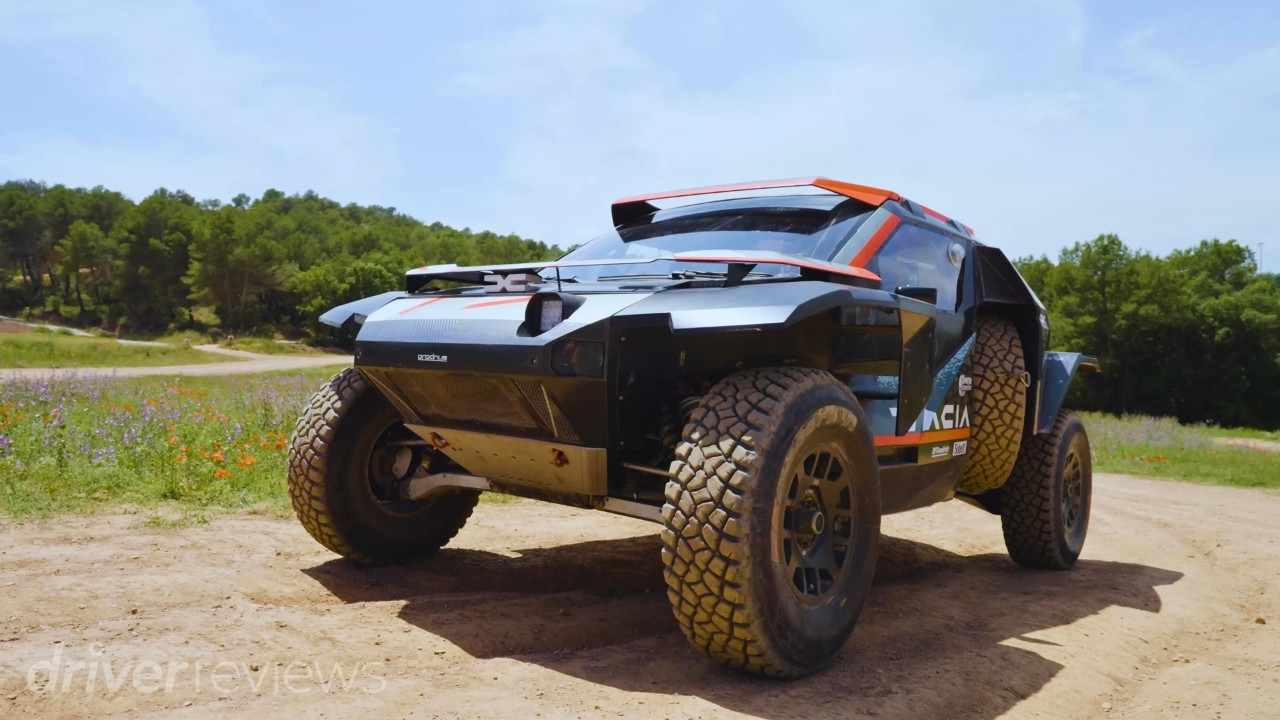
The Dacia Sandrider is not derived from a production road car. It is a purpose-built rally raid machine designed specifically for long-distance endurance competition in the FIA World Rally-Raid Championship, developed by Dacia in partnership with Prodrive.
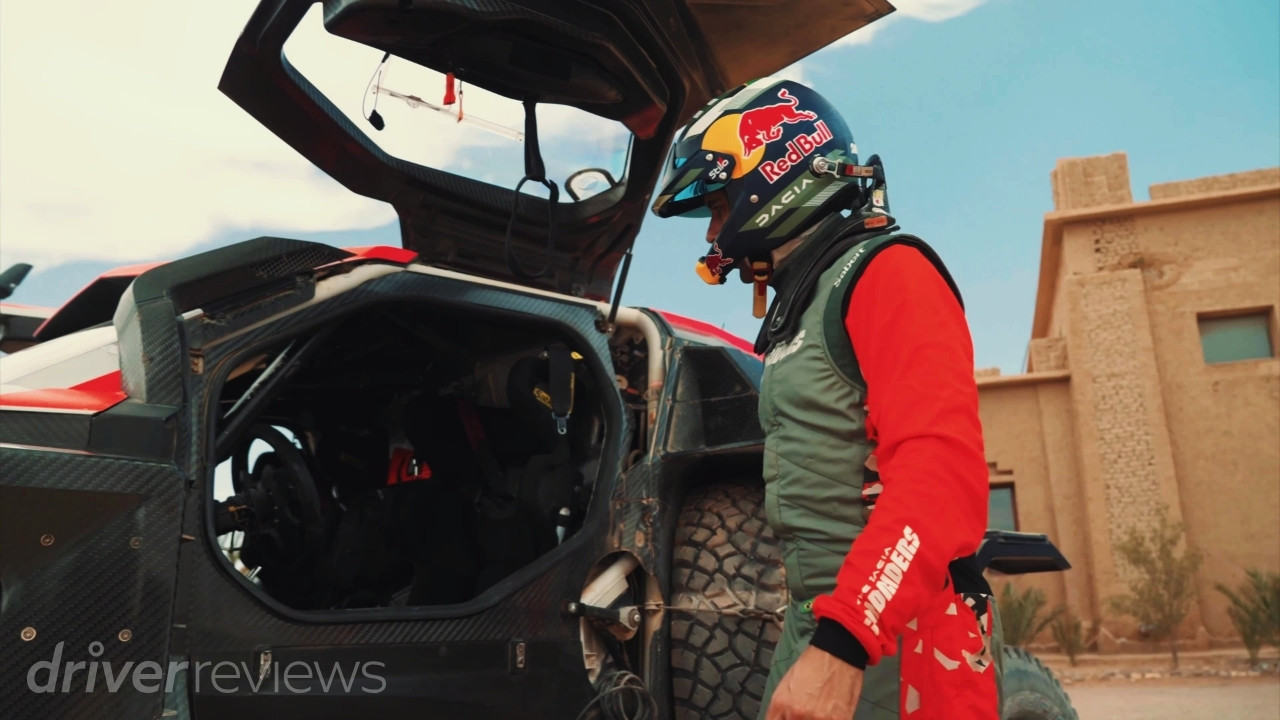
The Sandrider prioritises durability, serviceability and consistency over outright speed. During filming, chief mechanic Alistair Gibson explained that the car uses bare carbon bodywork without conventional paint because painting it would add around 3kg of unnecessary weight. At the time of filming, Dacia ran three Sandriders for Sébastien Loeb, Cristina Gutiérrez and Nasser Al-Attiyah. Lucas Moraes joined the programme as a fourth driver for the 2026 season.
What makes the Dacia Sandrider special:
- Dacia officially lists 360hp and 539Nm from the 3.0-litre V6 twin-turbo, while chief mechanic Alistair Gibson told Vicki the competition car produces around 400hp
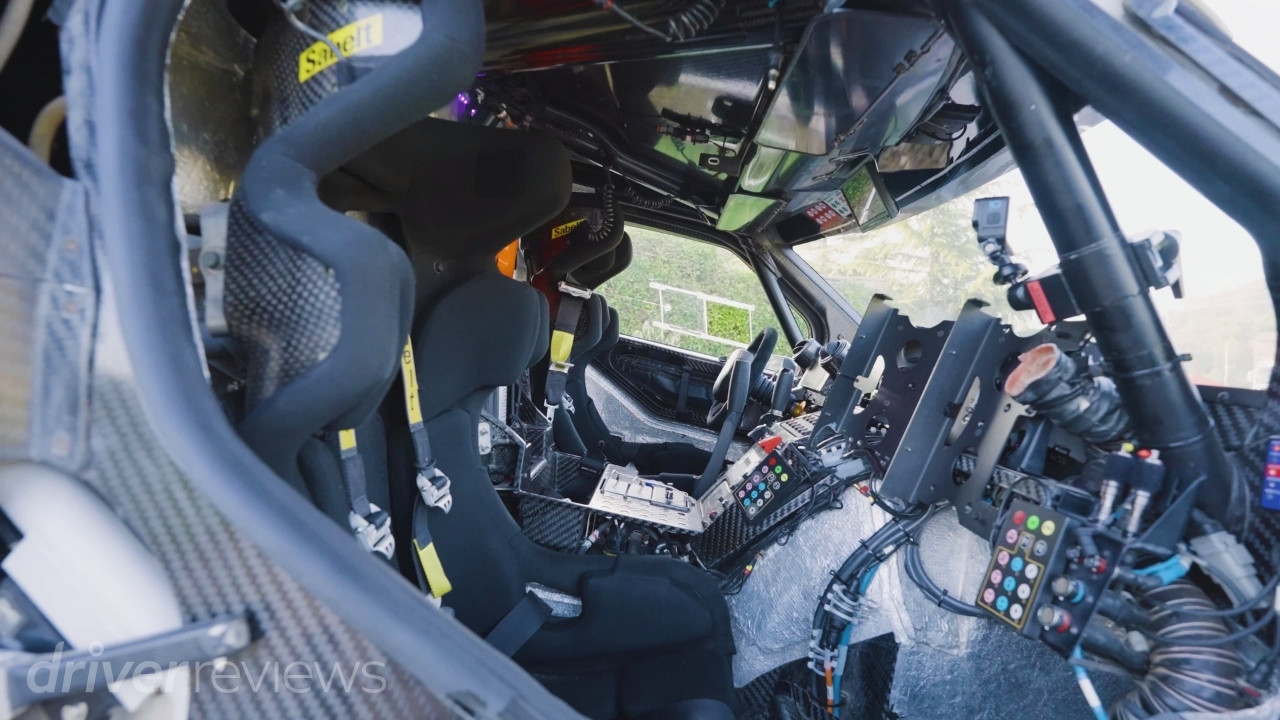
- A separate 48-volt electrical system powers ancillary systems including the starter, power steering and air conditioning
- Bare carbon bodywork avoids around 3kg of additional paint weight, according to the team
- 37-inch BFGoodrich All-Terrain T/A KDR3 tyres developed for rally raid competition
- ARAMCO sustainable fuel, which Gibson said has been developed with the team without sacrificing performance compared with conventional petrol
- 2026 Dakar Rally overall winner, marking Dacia's first victory at the event
What Are the Dacia Sandrider's Key Technical Specifications?
| Specification | Dacia Sandrider |
| Competition class | FIA Ultimate T1+ |
| Engine | 3.0-litre V6 twin-turbo |
| Official power | 360hp at 5,000rpm |
| Torque | 539Nm at 4,250rpm |
| Drivetrain | Four-wheel drive |
| Gearbox | Six-speed sequential |
| Tyres | 37-inch BFGoodrich |
| Fuel | ARAMCO sustainable fuel, 102 RON |
Sources: Dacia Sandrider technical data | Dakar 2026 Sandrider data
Dakar's 2026 competitor data lists the Sandrider at approximately 2,000kg in competition specification. During filming, Gibson described the car Vicki saw as roughly 2.5 tonnes and explained that it carries a 500-litre fuel tank, highlighting how significantly the car's operating weight can change once prepared for long rally raid stages.
What Is Rally Raid?
Rally raid is an endurance form of off-road motorsport that takes place over extreme distances and terrain, including deserts, sand dunes and rocky tracks. Events typically run for several days, sometimes up to two weeks, testing speed, reliability, navigation and mechanical sympathy in equal measure.
The FIA World Rally-Raid Championship represents the highest level of competition in the discipline, with Dakar its longest and most demanding event. During Vicki's off-road instruction, one principle neatly captured the discipline: go as slow as possible, but as fast as necessary.
What Is the Dakar Rally and Why Does It Matter?
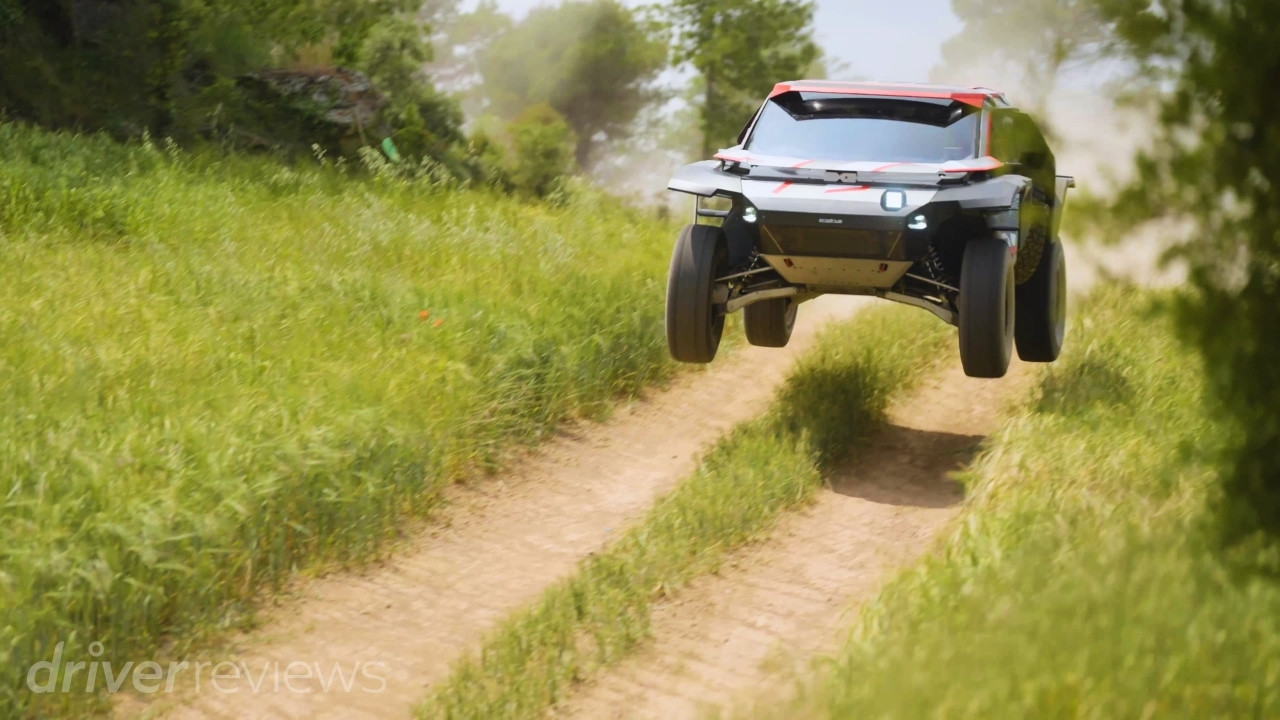
The Dakar Rally is the most demanding event in rally raid, running over vast distances and multiple days and combining competitive stages with long liaison sections that can leave crews inside the car for entire days at a time. Cars must survive heat, sand, impacts and fatigue while remaining fast enough to compete at the front.
In 2026, the Dakar Rally was won in the Ultimate car category by Dacia, with Nasser Al-Attiyah and co-driver Fabian Lurquin taking overall victory in the Sandrider. They finished 9 minutes 42 seconds ahead after 13 days of competition, giving Dacia its first Dakar Rally victory. All four Dacia crews reached the finish inside the top 11.
Sources: Dacia 2026 Dakar Rally result | Dakar Rally
Who Is Nasser Al-Attiyah?
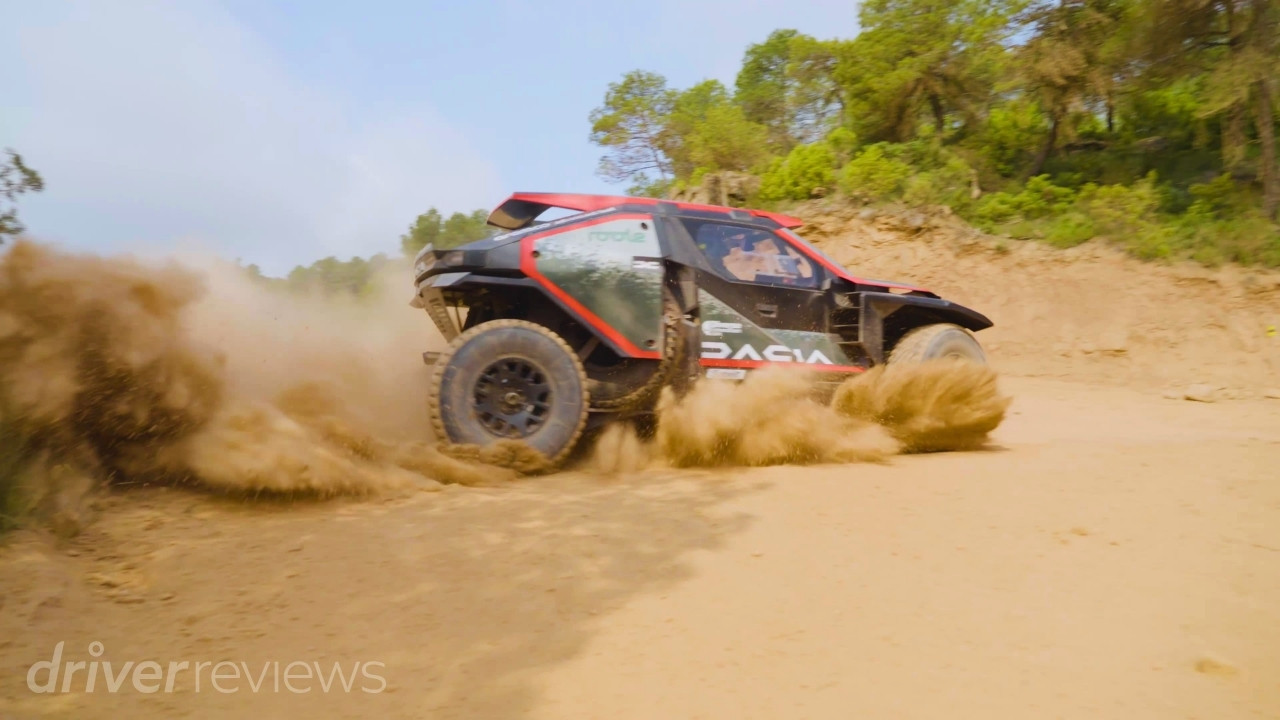
Nasser Al-Attiyah is one of the most successful drivers in modern rally raid. His 2026 victory with Dacia was his sixth Dakar Rally win, following victories in 2011, 2015, 2019, 2022 and 2023, while he has also claimed three World Rally-Raid Championship titles.
During filming, Al-Attiyah spoke about the physical and mental demands of the sport, including spending four to six hours racing before completing hundreds of kilometres of liaison driving. He also explained how his heart rate spikes during punctures, when the crew must get out and handle spare wheels weighing around 50kg under intense time pressure.
What Engine Does the Dacia Sandrider Use?
The Sandrider uses a Nissan-derived 3.0-litre V6 twin-turbo engine. Dacia's published technical specification lists maximum output at 360hp and 539Nm, while Sandrider chief mechanic Alistair Gibson told Vicki during filming that the competition car produces around 400hp and 539Nm.
Engine preparation takes place at Prodrive's Banbury base, where the team removes the conventional starter motor, alternator, power-steering pump and engine-driven air-conditioning system. A separate 48-volt electrical system powers the ancillary systems instead, leaving the V6 focused on delivering the low-down torque required to maintain momentum while climbing sand dunes.
Ultimate-class cars are limited to 170km/h, around 106mph, placing the emphasis on maintaining speed over difficult terrain rather than achieving a high outright maximum. Dakar lists the Sandrider at around 2,000kg in competition specification, while Gibson described the car Vicki experienced as roughly 2.5 tonnes and said it carries a 500-litre fuel tank.
What Fuel Does the Dacia Sandrider Use?
The Sandrider runs on ARAMCO sustainable fuel, with Dacia's published technical specification listing it at 102 RON. During filming, Gibson explained that the team has been developing the fuel with Aramco and said it delivers comparable performance to conventional petrol.
The rally raid programme also provides a development environment for other technologies. Gibson described work with new and synthetic oils alongside the fuel programme, allowing Dacia and its partners to test different efficiency concepts under extreme competition conditions.
What Tyres Does the Dacia Sandrider Use?
The Sandrider runs on 37-inch BFGoodrich All-Terrain T/A KDR3 tyres developed for rally raid competition. According to BFGoodrich, the KDR3 is optimised for sand and rocks and is available in soft and medium compounds, with Dakar tyre development focused on durability, traction and versatility across changing terrain.
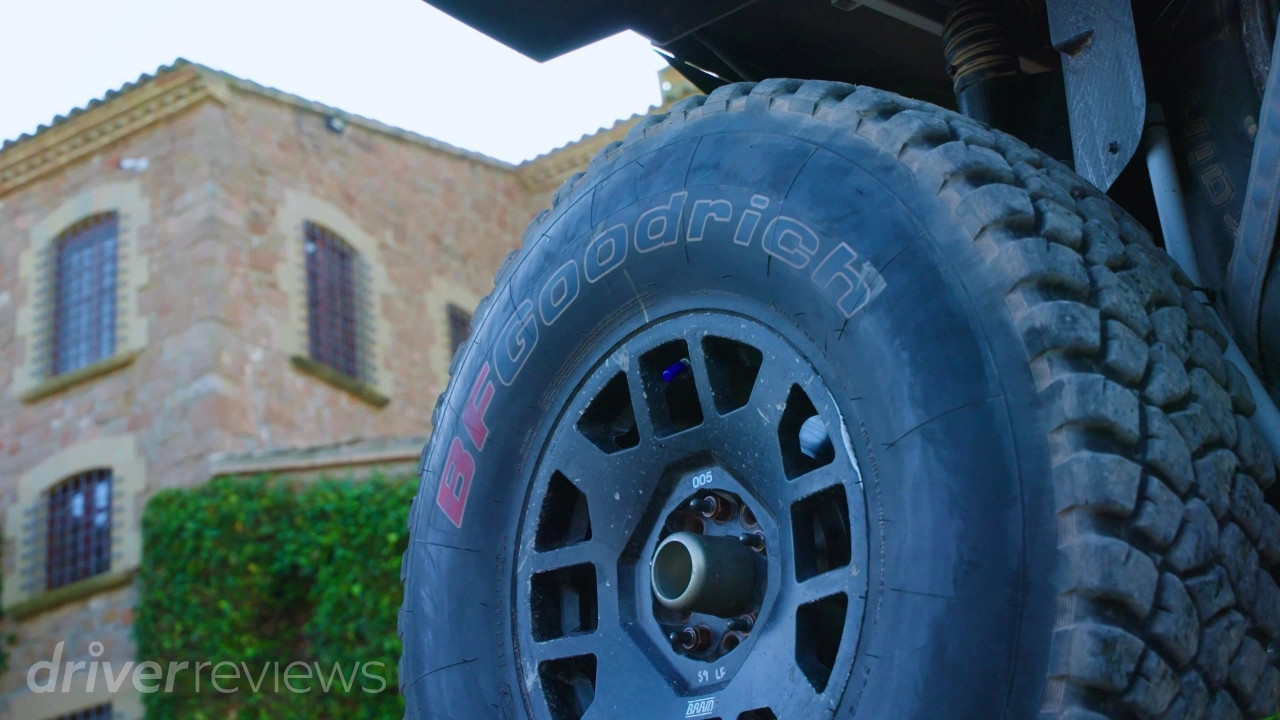
Tyre life varies dramatically depending on the surface. Gibson explained that the demanding rocky terrain used during filming in Spain could limit a set to around 300km, while the same tyres can cover thousands of kilometres across soft desert dunes with minimal wear.
The Dacia Sandriders and BFGoodrich have also worked together on balancing puncture resistance, longevity and grip. Gibson explained that rally raid always requires compromise because the same tyre must cope with dramatically different surfaces during a single event.
What Makes Rally Raid So Demanding Off-Stage?
One of the most eye-opening aspects of the Sandrider programme is logistics. During filming, the team described a support operation involving six trucks, four vans, three 4x4s and a fleet of Dusters, with cars and equipment spending much of the season travelling between events.
The team's logistics cycle begins with preparation in November before the equipment is shipped from Barcelona to Saudi Arabia for Dakar. From there, trucks, cars and support equipment can remain away from the UK for months as the programme moves between rallies across multiple continents. In rally raid, racing is only half the challenge.
Where Does the Dacia Duster Fit In?
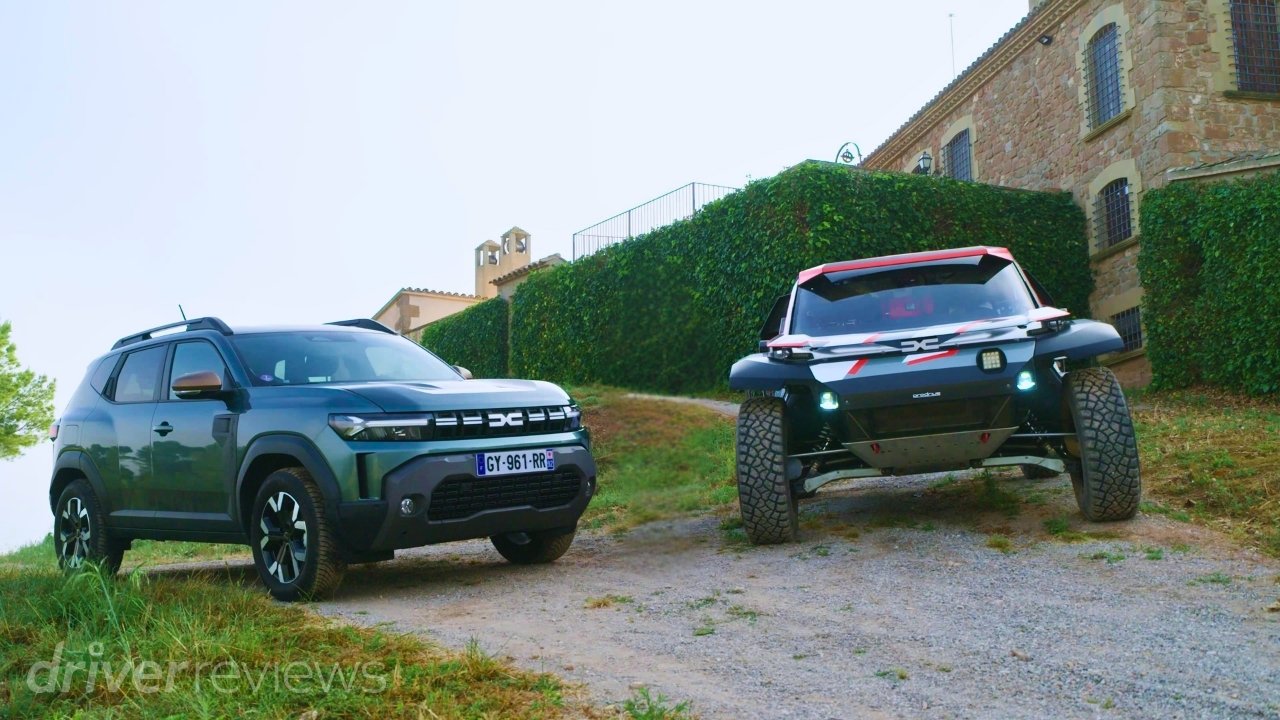
This review deliberately contrasts the Sandrider with the latest Dacia Duster to show the breadth of the brand. Vicki highlights the Duster's affordability, practicality and genuine off-road capability, including selectable drive modes, hill descent control, strong visibility and driver assistance tools designed to make off-road driving accessible.
The Sandrider operates at the opposite extreme, but both cars follow Dacia's focus on functional engineering. Gibson describes the team's philosophy as having only what the car needs and nothing extra, an approach demonstrated by details as specific as leaving around 3kg of paint off the Sandrider's carbon bodywork.
الأسئلة الشائعة
What Car Won the Dakar Rally in 2026?
How Many Times Has Dacia Won the Dakar Rally?
Where Is the Dakar Rally Held?
What Is Rally Raid?
Who Built the Dacia Sandrider?
What Engine Does the Dacia Sandrider Have?
نبذة عن DriverReviews
DriverReviews هي منصة تركز على تقديم رؤية واقعية حول أداء السيارات والمركبات المخصصة لعشاق السيارات. يتم إعداد محتوانا على يد صحفيين متمرسين في مجال السيارات وسائقي سباقات محترفين يقومون باختبار المركبات في ظروف حقيقية. تستند جميع التقييمات إلى تجربة قيادة مباشرة وتهدف إلى توفير معلومات موثوقة وذات مصداقية لعشاق السيارات والمشترين المحتملين.
DriverReviews معتمدة من AFNOR وتحمل شهادات وفقًا لمعايير NF522 وNF ISO 20488 لجمع تعليقات العملاء ومراجعتها ونشرها. يبرهن هذا الاعتماد على التزامنا بالجودة والموثوقية، ويؤكد من جديد تفانينا في تلبية المعايير المعترف بها دوليًا لضمان الشفافية والثقة في جميع مراحل عمليات المراجعة لدينا.
بالإضافة إلى المحتوى المكتوب، تدير DriverReviews واحدة من أكبر قنوات يوتيوب المتخصصة في السيارات في المملكة المتحدة، والتي تضم أكثر من 800,000 مشترك. تقدم قناتنا مراجعات فيديو متعمقة لسيارات من أبرز الشركات المصنعة مثل بورش وفيراري ولامبورغيني وأودي وبي إم دبليو ولاند روفر وغيرها الكثير، لتقدم محتوى جذابًا وصادقًا بقيادة خبراء لجمهور عالمي.