Porsche 911 GT3 (992.2) Track Test: The Last Pure GT3?
Quick Verdict: The Porsche 911 GT3 (992.2) produces 510PS from a 4.0-litre naturally aspirated flat-six revving to 9,000rpm, reaches 62mph in 3.4 seconds with PDK and costs from £158,200. Vicki and Gordon Shedden find it delivers the purest driving experience available in 2026 and may be the last GT3 to do so with a naturally aspirated engine before electrification arrives.
The 992.2 GT3 uses the same 4.0-litre naturally aspirated flat-six as its predecessor, producing 510PS and 450Nm of torque. Power builds linearly to a 9,000rpm redline with no turbo lag, no hybrid assist and no compromise. The choice of seven-speed PDK or six-speed manual transmission is available at no extra cost. The tested car costs £218,650, including the Weissach Package with California Gold magnesium wheels, PCCB ceramic brakes, Michelin Pilot Sport Cup 2 tyres and carbon bucket seats.
This review is based on extensive circuit testing by Vicki Butler-Henderson and Gordon Shedden, three-time British Touring Car Champion.
Vicki Butler-Henderson is a professional racing driver and motoring presenter with over two decades of experience testing and reviewing vehicles across all segments. Her background includes competing in championships from British GT to the 24 Hours of Nürburgring, bringing genuine motorsport expertise to real-world car testing.
Gordon Shedden is a professional racing driver and three-time British Touring Car Champion. He has also competed in the FIA World Touring Car Cup, British GT Championship, and Porsche Carrera Cup GB. His extensive touring car experience and GT3 racing background provide expert perspective on track-focused sports cars.
What Are the Key Specifications of the Porsche 911 GT3?
| Specification | Porsche 911 GT3 (992.2) |
| Price (from) | £158,200 |
| Engine | 4.0-litre flat-six, naturally aspirated |
| Power | 510PS (375kW) |
| Torque | 450Nm at 6,100rpm |
| Redline | 9,000rpm |
| Transmission | 7-speed PDK or 6-speed manual |
| Drive | Rear-wheel drive |
Sources: Porsche 911 GT3 official specifications
What Is the Porsche 911 GT3?
The GT3 represents the track-oriented pinnacle of the standard 911 range. The designation derives from GT3 endurance racing, and this road car embodies precisely that motorsport DNA. Since the 996 GT3 in 1999, the lineage has stood for uncompromising driving dynamics, with each generation considered the spiritual successor to the legendary 2.7 RS from the 1970s.
The 992.2 GT3's significance lies partly in its potential role as the last of its kind. While rivals like the McLaren 750S and Ferrari 296 GTB have adopted turbocharging or hybridisation, the GT3 maintains its high-revving naturally aspirated engine. This decision could make the 992.2 the final representative of an era before Porsche electrifies its GT models to meet increasingly stringent emissions regulations.
What makes the Porsche 911 GT3 special:
- 4.0-litre naturally aspirated flat-six revving to 9,000rpm, delivering power without turbo lag or hybrid intervention
- 0-62mph in 3.4 seconds with PDK, matching the BMW iX3 electric SUV in a car weighing 940kg less
- Six-speed manual transmission available at no extra charge, saving 17kg over the PDK
- New anti-dive geometry reduces front dive under hard braking from 12mm (992.1) to 6mm (992.2)
- New automatic friction compensation creates a more linear, natural steering feel than the 992.1
- Weissach Package available as an option for the first time on the GT3, with CFRP bonnet, roof and rear wing
- Touring variant eliminates the fixed rear wing for more discreet road use, now available with rear seats for the first time
What Does the Porsche 911 GT3 Look Like?
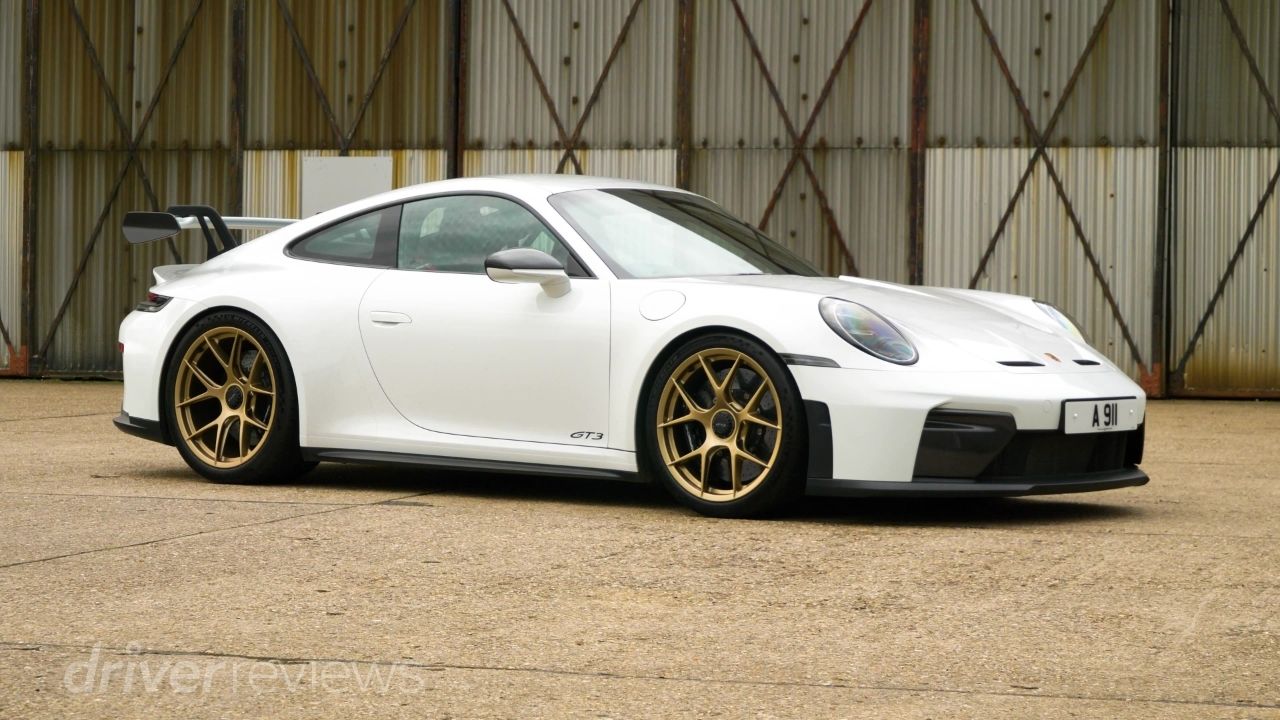
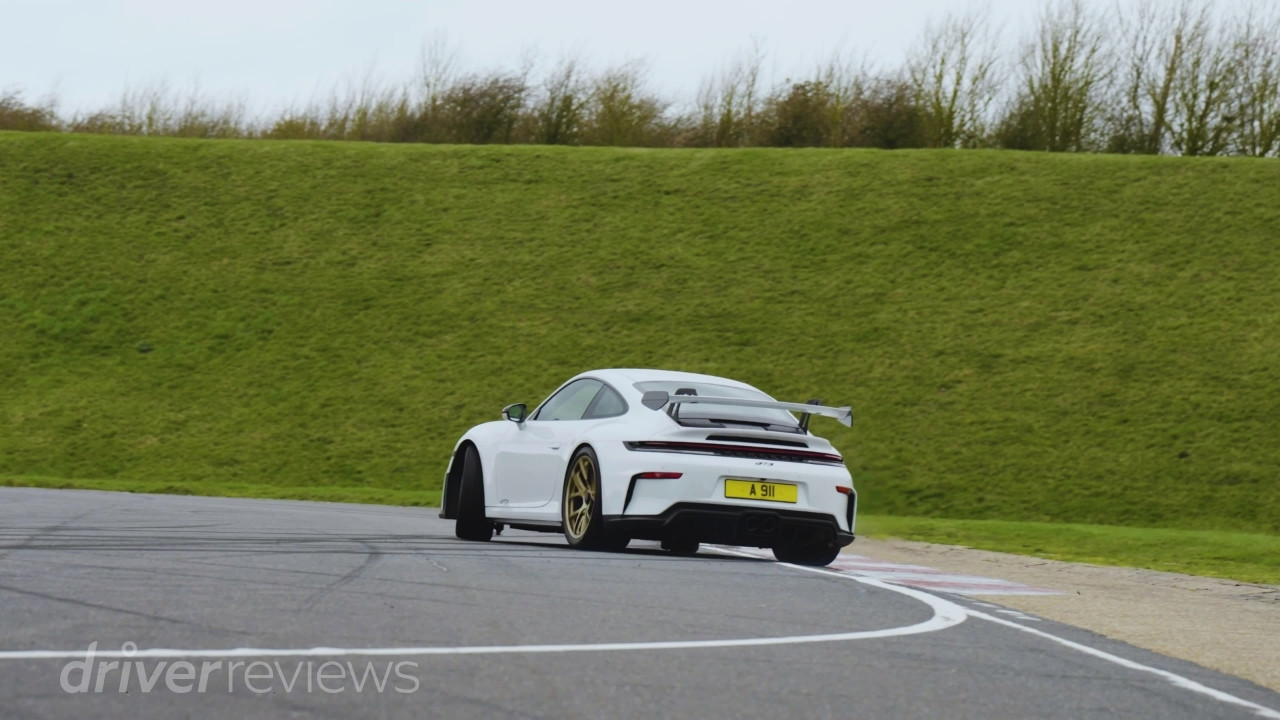
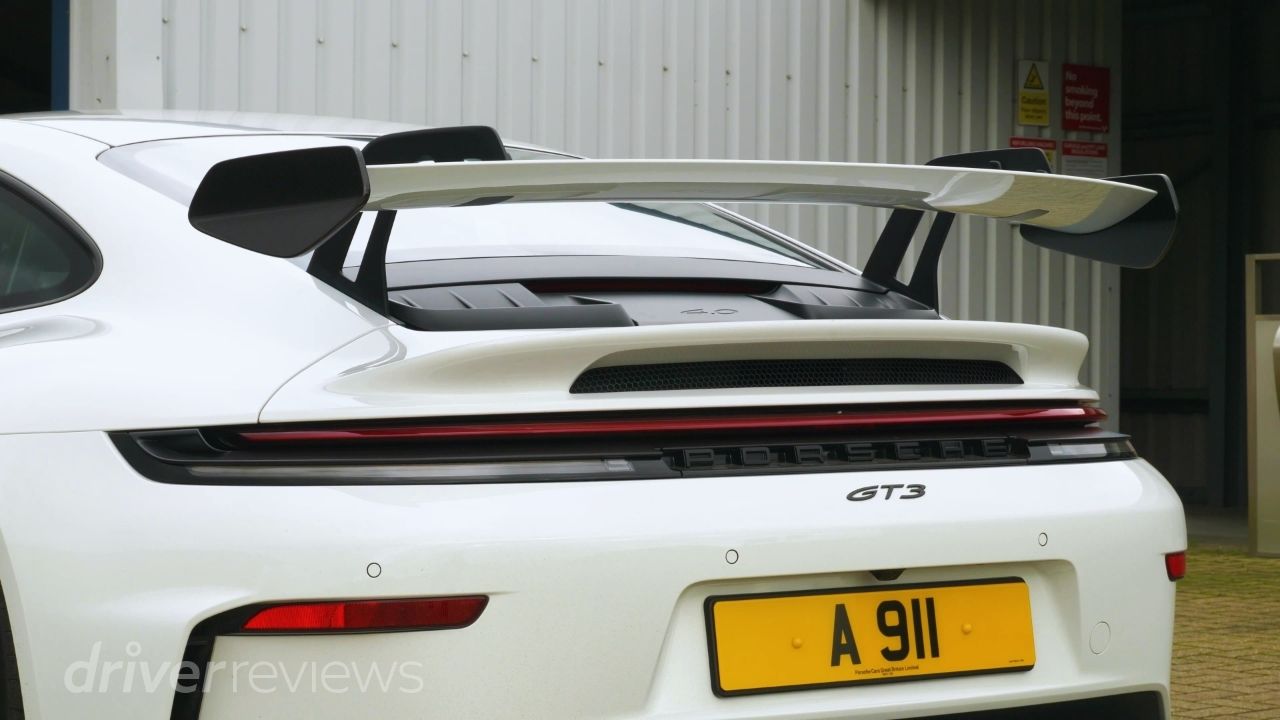
The GT3's design is polarising and deliberately so. The large fixed rear wing dominates the appearance, making the car instantly recognisable. The wing's dimensions serve aerodynamic function: together with the new front lip contour, aero bars from the GT3 RS and adapted underbody fins, the 992.2 generates increased downforce over the 992.1.
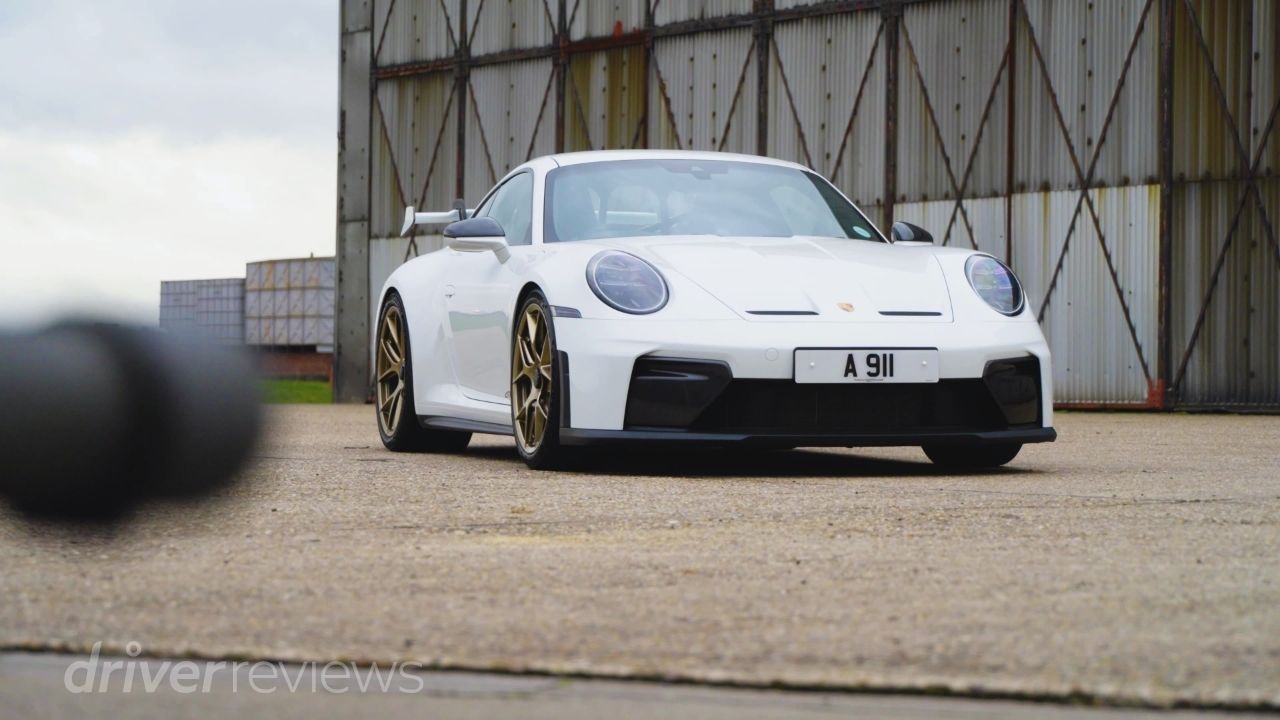
The front carries LED headlights flanking a low nose, with the widened body and large air intakes signalling performance intent. The characteristic 911 silhouette remains intact, the iconic outline that has persisted from the 1960s through to today. PCCB ceramic brakes visible through the lightweight forged wheels display yellow callipers on the tested car.
The Touring variant eliminates the fixed wing in favour of a deployable spoiler, creating a more understated appearance suited to road use while maintaining identical mechanical specifications. For 992.2, the Touring can be specified with rear seats for the first time.
How Does the Porsche 911 GT3 Drive on Track?
Power Delivery
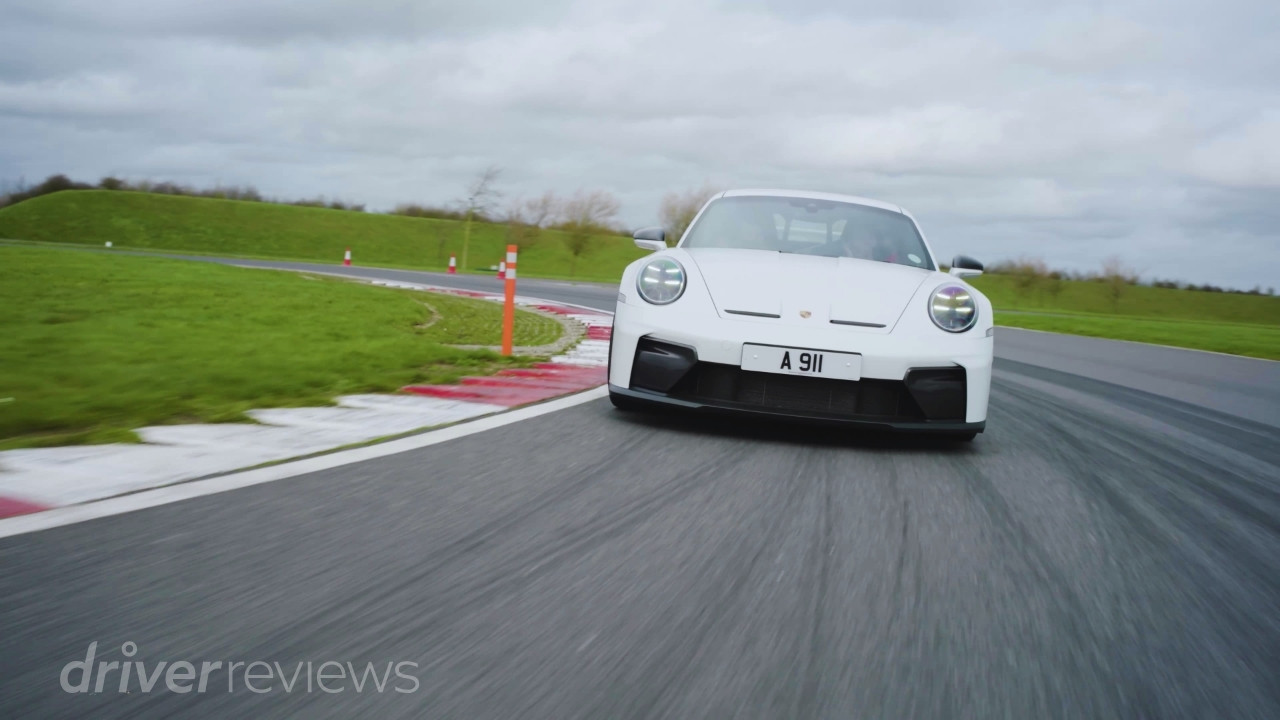
The 4.0-litre flat-six revs to 9,000rpm while delivering a sound unique in the current market. Power builds linearly and predictably, with the engine truly awakening above 6,000rpm. Throttle response is immediate with no turbo lag. The shorter gear ratios in the 992.2 create more intense acceleration out of corners compared to the 992.1, and the overall character rewards drivers who commit fully to the engine's top end.
| Specification | PDK | Manual |
| 0-62mph | 3.4 seconds | 3.9 seconds |
| 0-124mph | 10.9 seconds | N/A |
| Top speed | 193mph | 194mph |
| Weight | 1,420kg | 1,418kg |
Steering
Weighting builds progressively through corners, communicating front axle grip levels clearly. The new automatic friction compensation creates a more linear, natural feel than the 992.1, eliminating the slightly jumpy characteristic of the earlier car. The steering is both precise and organic in a combination that few cars at any price achieve.
Handling
The rear axle can be controlled precisely with throttle modulation. This is not a nervous or unpredictable machine but a precision tool that adapts to driver capability. The rear steps out progressively, and even during large slides the car remains stable and predictable. The balance is sufficiently neutral that many traditional 911 driving techniques become unnecessary, and the 992.2 behaves more like a mid-engined sports car while offering superior traction from slower corners.
Suspension and Chassis
The new anti-dive geometry demonstrates its worth under hard braking. Where the 992.1 dived 12mm at the front when braking from 124mph, the 992.2 dives just 6mm. Shorter bump stops increase suspension travel, while a new damper strategy derived from the GT3 RS enhances kerb-striking ability. The platform feels more stable overall, with responses accelerated while forces acting on the car appear slowed. This creates agility married to calmness and easy control.
Brakes
The optional PCCB ceramic brakes provide power and progression that Vicki describes as approaching perfection even on the road. Tireless deceleration performance on track permits late braking points while maintaining confidence. Gordon emphasises technique: all braking must be completed in a straight line before turning in. The system never fades regardless of how hard or how often it is used.
Transmission
The seven-speed PDK is approximately 0.5 seconds faster to 62mph and executes changes instantly on track. The six-speed manual weighs 17kg less and delivers a more involving experience, demanding more from the driver and rewarding precision. In the UK, buyer preference splits 50/50 between transmissions, a statistic that reflects just how well both versions work in different contexts.
Gordon's advice on getting the most from either on track is covered in this guide to track driving technique.
Is the Porsche 911 GT3 Practical for Road Use?
The GT3 can be driven daily but sits at the extreme end of the comfort spectrum. The stiff suspension setup that excels on track communicates every road imperfection. The Cup 2 tyres inspire less confidence in wet conditions and require more caution on cold roads. The large rear wing attracts inevitable attention. These are not faults but trade-offs that buyers accept knowingly.
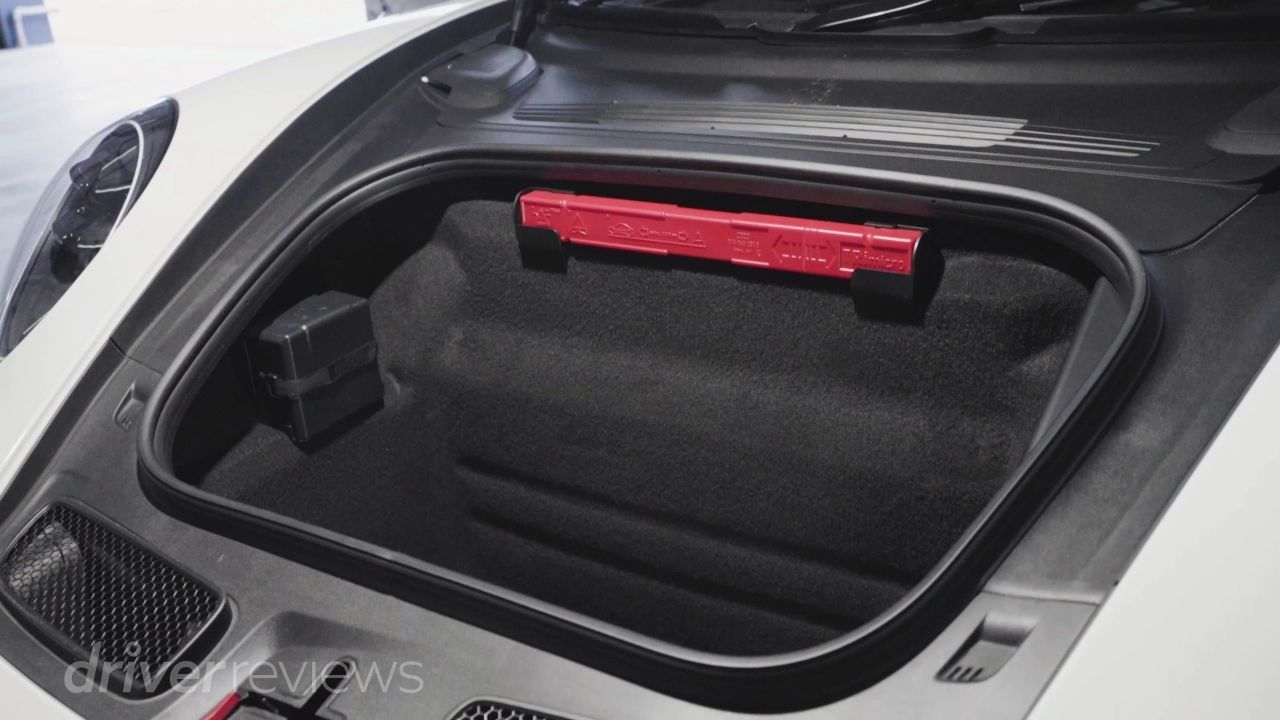
Against those trade-offs, the boot provides typical 911 capacity for weekend luggage, the carbon bucket seats offer exceptional support during lateral loads, and rear visibility is only slightly compromised by the wing. Gordon notes the car retains everything needed for daily usability alongside its track capability. Vicki observes that driving a GT3 on a public road requires managing the gap between what the car is capable of and what the road allows, a permanent and entirely enjoyable tension.
What Is the Porsche 911 GT3 Interior Like?
Digital Dashboard:
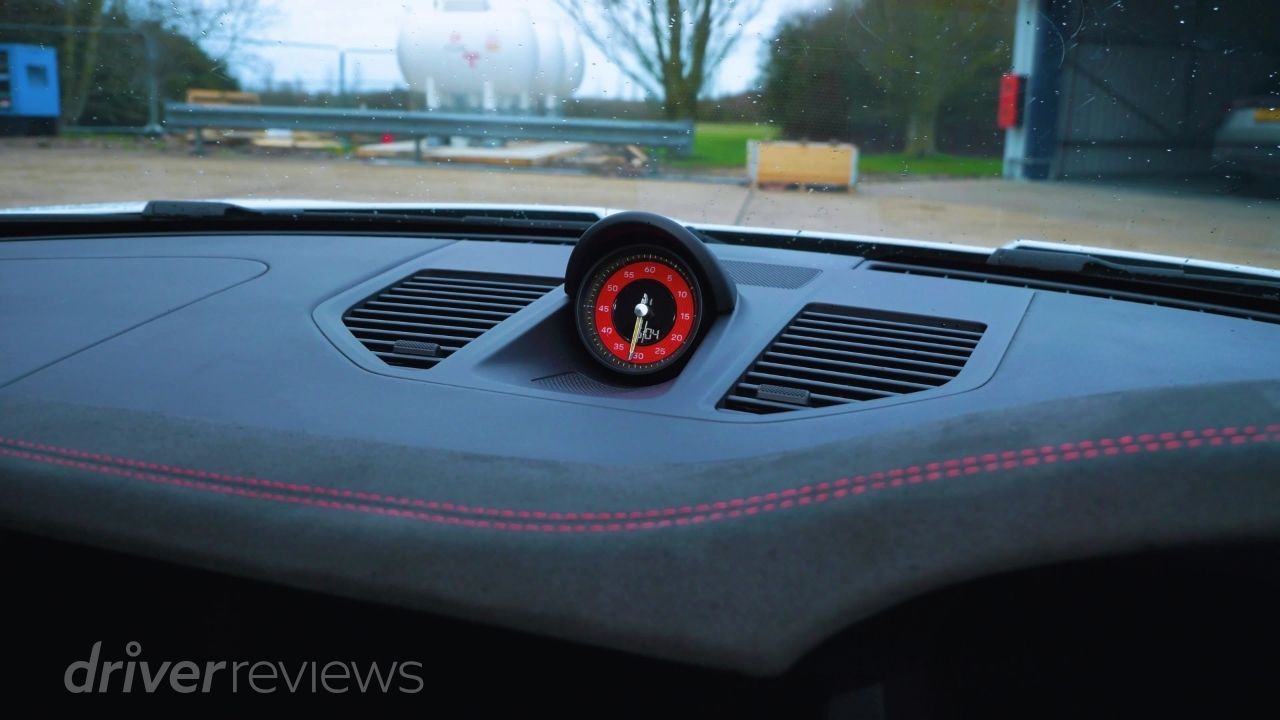
For the first time in GT3 history, Porsche replaced the analogue tachometer with a fully digital display. This proves controversial among purists who value the tactile connection to 911 history. The digital display permits positioning the redline at 12 o'clock, which Vicki finds genuinely useful on track. The analogue feel is lost; the information is gained.
Ignition Switch:
Unlike the hybrid GTS models with push-button start, the GT3 retains the rotary key-operated switch left of the steering wheel. Gordon considers this one of the most significant details on the car, particularly as Porsche transitions to digital displays elsewhere in the range. The physical switch maintains a deliberate connection to motorsport tradition.
Seats:
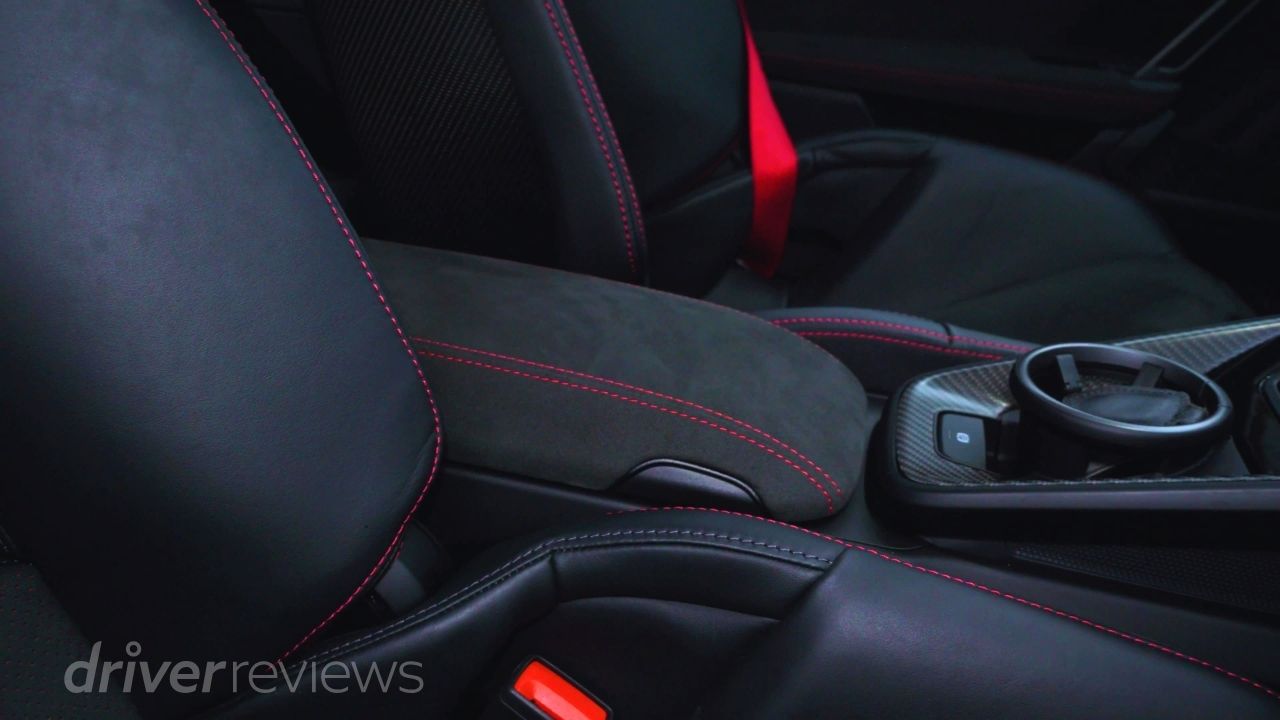
The carbon bucket seats hold occupants perfectly in position during high lateral loads. Adjustment is minimal by design: the seat is fixed, the pedals adjust to the driver. Support on track is exceptional; everyday ergonomics require compromise.
Controls:
The steering wheel features clear structure with primary controls readily accessible. PDK paddle shifters are well positioned. Material quality meets premium expectations while maintaining functional focus. Carbon fibre elements throughout the cabin emphasise sporting character without sacrificing everyday usability.
What Wheels and Tyres Does the Porsche 911 GT3 Have?
The 911 GT3 rides on lightweight forged aluminium 20/21-inch wheels as standard, 1.7kg lighter cumulatively than the previous generation. Magnesium wheels are available as part of the Weissach Package, a further 9.1kg lighter than the forged aluminium rims.
| Axle | Wheel diameter | Tyre size |
| Front | 20-inch | 255/35 ZR 20 |
| Rear | 21-inch | 315/30 ZR 21 |
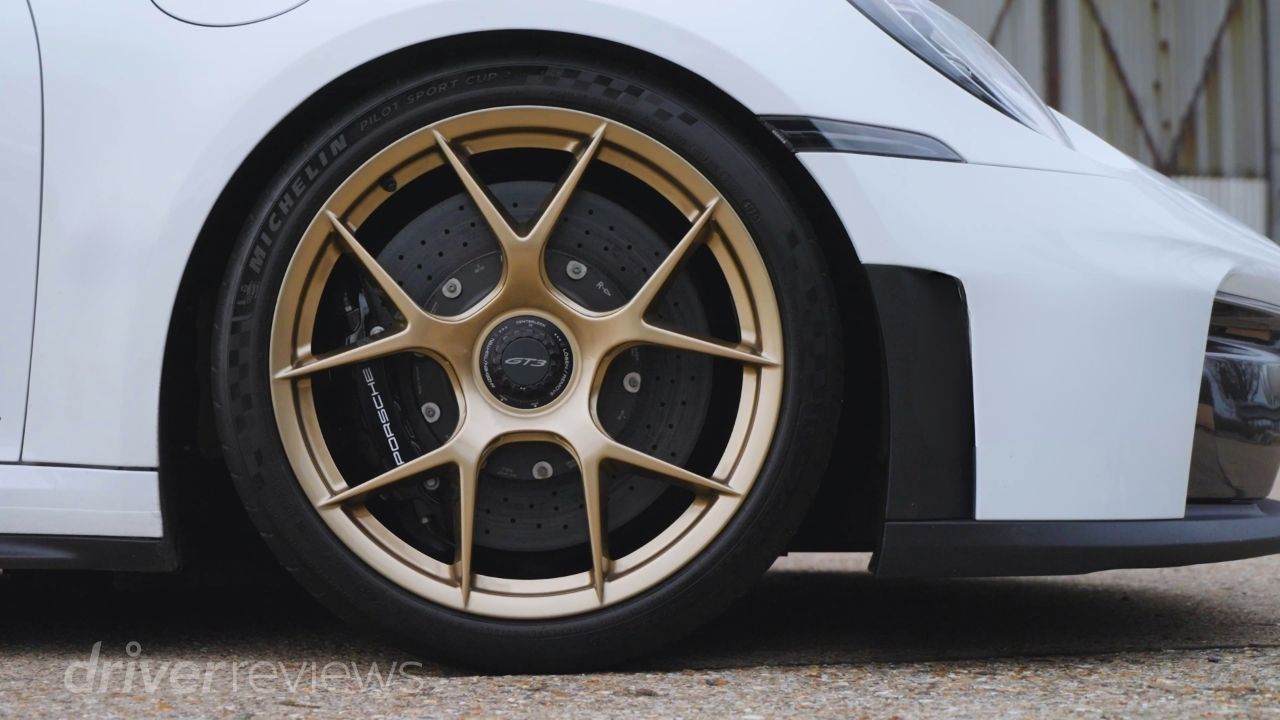
The Michelin Pilot Sport Cup 2 is listed as an approved fitment for the 992.2 GT3. According to Michelin, the Cup 2 derives directly from racing tyre technology, delivering exceptional grip and precision under hard driving while remaining road-legal. The advanced compound provides peak dry-weather performance with thermal characteristics optimised for sustained track use. Thousands of drivers have rated the Michelin Pilot Sport Cup 2 on DriverReviews.
The Michelin Pilot Sport 4S is also listed as an approved fitment, providing enhanced wet-weather capability for drivers who prioritise year-round usability alongside track performance. According to Michelin, the Pilot Sport 4S balances dry grip with significantly improved wet braking and handling over the Cup 2. Thousands of drivers have rated the Michelin Pilot Sport 4S on DriverReviews.
Tyre options:
- Michelin Pilot Sport Cup 2, summer high-performance
- Pirelli, summer high-performance
- Goodyear, summer high-performance
- Michelin Pilot Sport 4S, summer all-round
- Michelin Pilot Alpin winter wheel-and-tyre set, from £7,230; separate forged alloy wheels (9J x 20 front / 11.5J x 21 rear) with 245/35 R20 front and 305/30 R21 rear tyres
How Does the Porsche 911 GT3 Compare to Rivals?
Porsche 911 GT3 vs McLaren 750S
The McLaren 750S starts from £250,560 and delivers 750hp from a mid-mounted V8, making it considerably more expensive than the GT3. It prioritises more extreme performance and a mid-engined exotic experience. The McLaren appeals to drivers seeking maximum power; the GT3 appeals to those who want a tool they can fully exploit.
Porsche 911 GT3 vs Ferrari 296 GTB
The Ferrari 296 GTB starts from £259,695 and produces 830hp system output from a V6 hybrid, pursuing a wholly different philosophy around efficiency and electrification. It represents the direction the segment is moving. The GT3 represents where it came from, and the contrast between the two cars says everything about what is at stake with the 992.2.
Porsche 911 GT3 vs BMW M4 CSL
The BMW M4 CSL was priced at £128,820 and uses a turbocharged inline-six producing 550hp with rear-wheel drive, making it considerably more affordable than the GT3. It offers strong dynamics at a lower entry point but cannot match the GT3's naturally aspirated character, motorsport heritage or the emotional engagement of the 9,000rpm redline.
Is the Porsche 911 GT3 Worth the Money?
The Porsche 911 GT3 is worth the money for the driver it is designed for. At £158,200 it is not a rational decision; other cars offer more power, more space or more comfort for similar money. But rationality is not the point. The GT3 embodies a specific automotive philosophy that may be approaching its final expression. Buyers who want more outright power should look at the McLaren 750S from £250,560; buyers who want a more versatile daily driver should consider the GT3 Touring.
If the next GT3 adopts electrification or turbocharging, the 992.2 gains additional significance as the last of its kind. For drivers who prioritise precision, feedback and control over power figures, this is the car. Vicki puts it simply: you cannot help but smile.
The case for the Porsche 911 GT3:
- Potentially the last naturally aspirated GT3 before electrification arrives
- 9,000rpm engine experience unreplicable with forced induction or hybrid assistance
- Six-speed manual transmission available at no extra charge
- Track competence matching dedicated race cars from an everyday road car
- Clear evolution from 992.1 with measurably better chassis behaviour under braking and in corners
- Weissach Package available as a GT3 option for the first time
Before you buy:
- Cup 2 tyres require caution in wet and cold conditions; Pilot Sport 4S is available for year-round use
- The digital instrument cluster divides opinion among purists who valued the analogue tachometer
- Realistic options-loaded specifications exceed £200,000
- Daily use requires accepting a firm ride and significant road presence
Sık Sorulan Sorular
Is the Porsche 911 GT3 Worth Buying?
What Is the Difference Between the GT3 and GT3 Touring?
Should I Choose PDK or Manual Transmission?
Why Does the 992.2 GT3 Have a Digital Instrument Cluster?
Is the Weissach Package Worth It?
How Much Has the GT3 Price Increased?
DriverReviews Hakkında
DriverReviews, performans ve spor otomobiller hakkında gerçek hayattan içgörüler sunmaya odaklanan bir platformdur. İçeriğimiz, araçları gerçek koşullar altında test eden deneyimli otomotiv gazetecileri ve profesyonel yarış pilotları tarafından hazırlanmaktadır. Tüm incelemeler, ilk elden sürüş deneyimlerine dayanır ve otomobil meraklıları ile potansiyel alıcılara güvenilir ve yetkili bilgiler sunmayı amaçlar.
DriverReviews, AFNOR tarafından akredite edilmiştir ve müşteri yorumlarını toplamak, denetlemek ve yayınlamak için NF522 ve NF ISO 20488 standartlarına göre sertifikalıdır. Bu akreditasyon, kalite ve güvenilirliğe olan bağlılığımızı gösterir ve inceleme süreçlerimiz boyunca şeffaflık ve güveni sağlamak için uluslararası kabul görmüş standartları karşılama konusundaki kararlılığımızı teyit eder.
Yazılı içeriğimize ek olarak, DriverReviews, 800.000'den fazla abonesi ile Birleşik Krallık'taki en büyük otomotiv YouTube kanallarından birini işletmektedir. Kanalımızda Porsche, Ferrari, Lamborghini, Audi, BMW, Land Rover ve daha birçok önde gelen üreticinin araçlarına ilişkin derinlemesine video incelemeleri yer almakta olup, küresel bir kitleye ilgi çekici, dürüst ve uzmanlar tarafından hazırlanan içerik sunulmaktadır.