2026 Kia EV4 Full Review: Nearly 400 Miles & A 7-Year Warranty - But Is It Any Good?
Quick Verdict: The Kia EV4 produces 201PS from a single front-mounted electric motor, offers up to 388 miles of WLTP range and costs from £30,995 with the £3,750 Electric Car Grant applied. It won the Family Car category at the 2026 UK Car of the Year Awards. Vicki finds it delivers practical family electric transport with exceptional long-term reassurance at a price that consistently undercuts premium rivals.
The Kia EV4 is a compact electric hatchback available with two battery sizes and four trim levels, sitting alongside a Fastback saloon variant sold globally. The 81.4kWh large battery tested here delivers 388 miles WLTP range in Air trim and 362 miles in GT-Line S. A 150kW DC charging architecture enables 10-80% charging in under 30 minutes. All versions share a single front-mounted motor producing 201PS and 295Nm of torque.
The range starts from £30,995 for the Air with the Electric Car Grant applied, with the GT-Line S tested here from £43,945. This review is based on first-hand driving impressions from Vicki Butler-Henderson.
Vicki Butler-Henderson is a professional racing driver and motoring presenter with over two decades of experience testing and reviewing vehicles across all segments. Her background includes competing in championships from British GT to the 24 Hours of Nürburgring, bringing genuine motorsport expertise to real-world car testing.
What Are the Key Specifications of the Kia EV4?
| Specification | Kia EV4 GT-Line S |
| Price (from) | £43,945 |
| Power | 201PS |
| Torque | 295Nm |
| 0-62mph | 7.7 seconds |
| Top speed | 105mph |
| WLTP range | Up to 388 miles (Air 81.4kWh) |
| DC charge (10-80%) | Under 30 minutes |
| Battery options | 58.3kWh or 81.4kWh |
| Boot space (seats up) | 435 litres |
| Boot space (seats folded) | 1,251 litres |
| Warranty | 7 years / 100,000 miles |
Sources: Kia EV4 official specifications
What Is the Kia EV4?
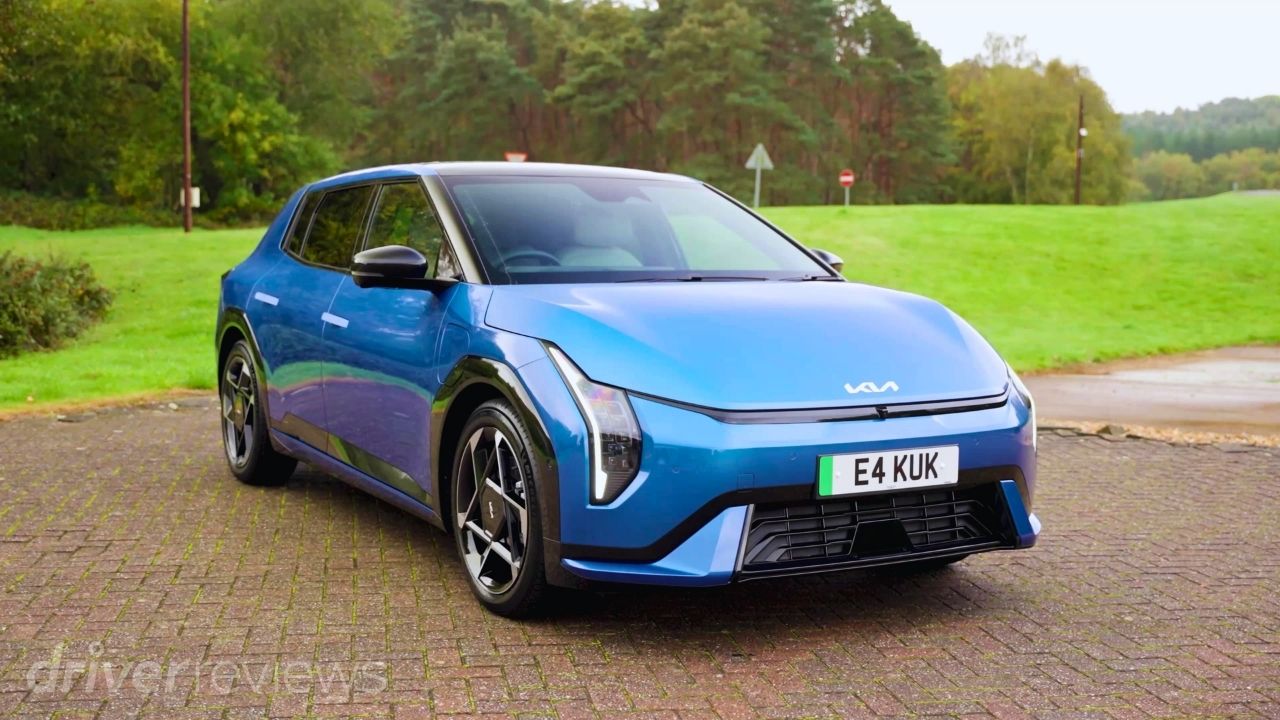
The Kia EV4 is a compact electric hatchback that won the Family Car category at the 2026 UK Car of the Year Awards. It is available as a five-door hatchback sold in Europe and manufactured in Slovakia, or a four-door Fastback saloon available globally and built in Korea. The Fastback offers 490 litres of boot space thanks to its extended rear overhang.
Three trim levels cover the hatchback range. Air provides the entry point with a choice of 58.3kWh or 81.4kWh batteries. Motion and GT-Line offer additional equipment, while GT-Line S adds ventilated front seats, a panoramic sunroof, head-up display and the Harman Kardon premium sound system. All versions use an identical front-mounted electric motor producing 201PS across the entire range.
The EV4 shares its platform with the smaller EV3 but adopts a lower roofline and longer wheelbase, creating more rear passenger space while improving aerodynamic efficiency. At 82% underfloor battery coverage, the EV4 achieves Kia's most aerodynamic profile to date.
What makes the Kia EV4 special:
- Up to 388 miles WLTP range from the 81.4kWh battery, competitive with the best in class at this price
- UK Car of the Year 2026, Family Car category
- 7-year/100,000-mile warranty, the longest coverage of any mainstream electric car rival
- £3,750 Electric Car Grant applies to Air and Motion trims, bringing entry price to £30,995
- 435-litre boot, 50 litres more than the Volkswagen ID.3 and Cupra Born
- i-Pedal 3.0 with true one-pedal driving in forward and reverse
- Vehicle-to-load capability from the front charging port
- Theatre mode with Netflix, Disney+ and YouTube available when stationary
What Does the Kia EV4 Look Like?
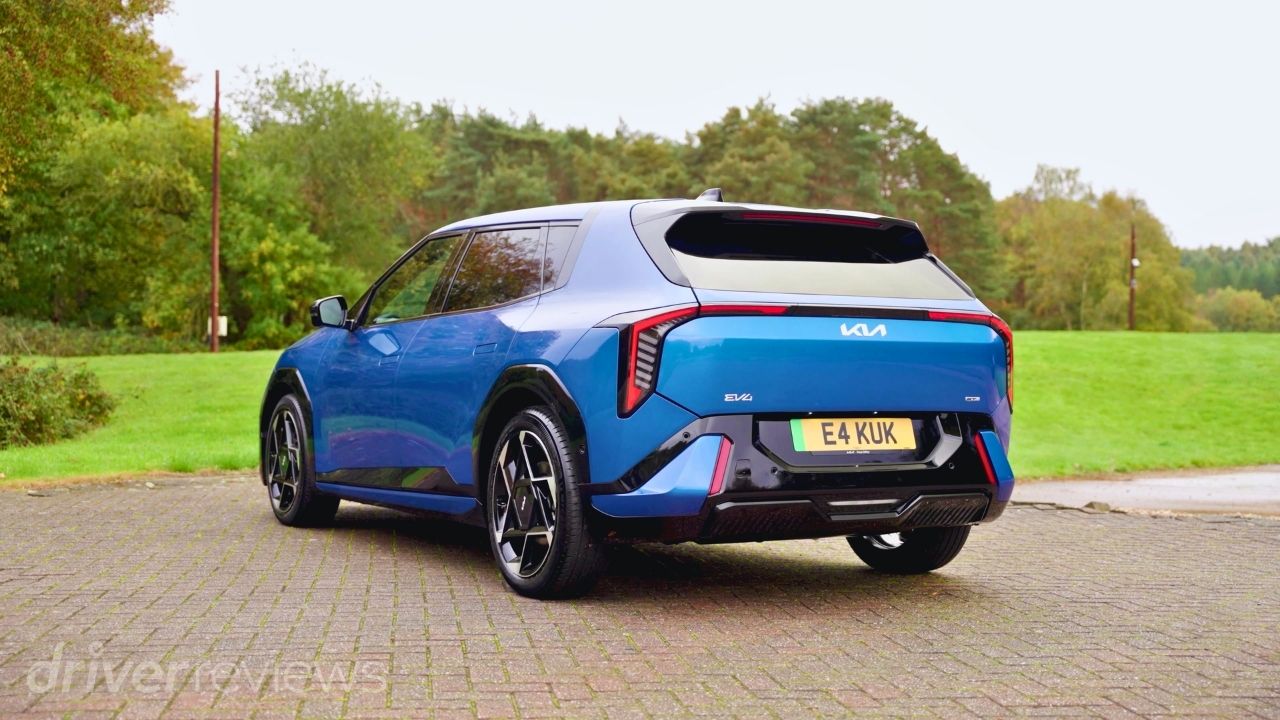
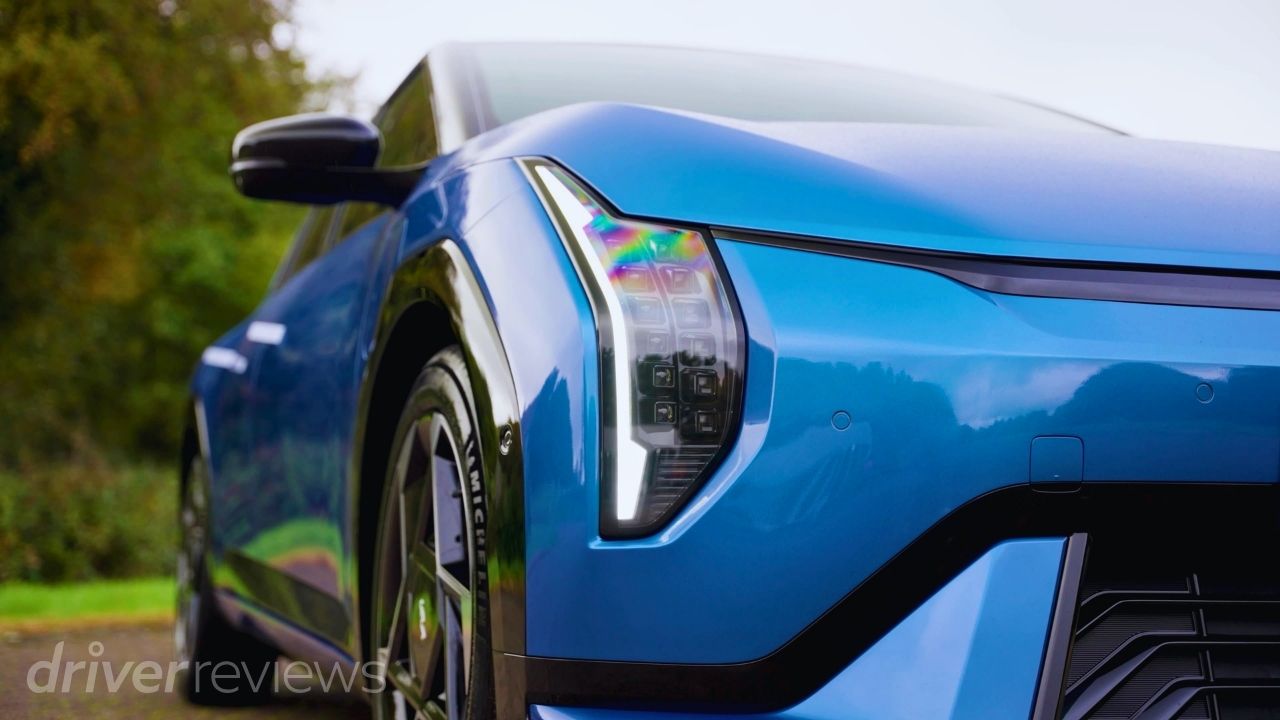
Kia's design language continues to pursue bold, angular styling that earns strong reactions. Where the smaller EV3 has approachable urban character, the EV4 adopts a more assertive stance. Vertical headlights with Kia's Star Map lighting signature dominate the front end, flanking active aerodynamic shutters integrated into the bumper. The charging port sits in the front wing, offering vehicle-to-load capability. The test car is finished in Blue Flame, a £650 option.
The defining characteristic in profile is the EV4's low-slung stance, sitting closer to the tarmac than any other Kia model. Flush door handles and slim mirrors contribute to a drag coefficient of 0.26 for the hatchback and an even lower 0.23 for the Fastback. Boomerang-shaped tail lights connect via a light bar at the rear, with the hatchback featuring an upright tailgate and extended roof spoiler. The design is distinctive and deliberately so.
How Does the Kia EV4 Drive?
Performance
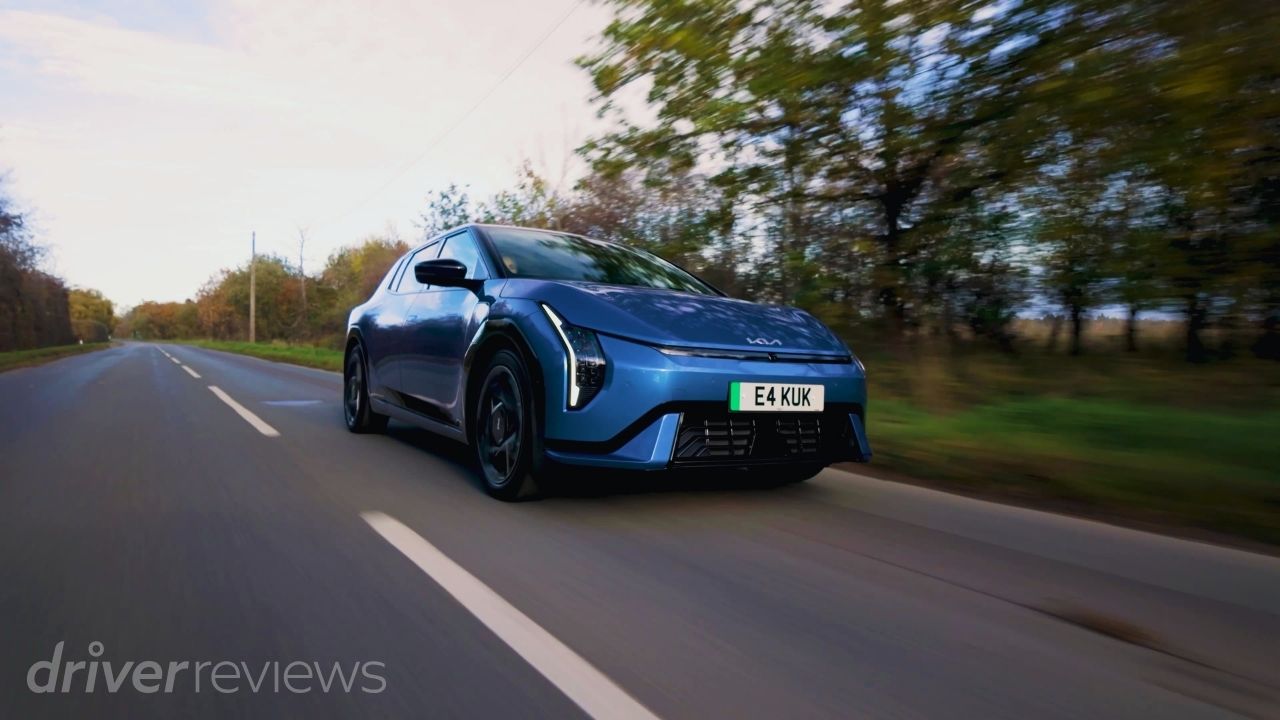
The single front-mounted motor delivers immediate electric response, calibrated for smoothness rather than drama. The 0-62mph time of 7.7 seconds positions the EV4 as brisk rather than rapid, adequate for family transport without pursuing performance territory. Kia plans to address performance buyers with a forthcoming GT variant featuring dual motors and all-wheel drive.
The front-drive layout shows its limits under hard acceleration, with torque steer tugging at the steering wheel and wheelspin evident when applying full power with any steering lock applied. In everyday driving, the progressive power delivery feels mature and measured.
Handling and Ride
The lower ride height compared to the EV3 suggests improved handling dynamics and the chassis delivers on this. Body control is competent with minimal roll through corners and secure, predictable responses. Vicki observes that the EV4 prioritises security and ease of use, which is exactly what the buyer it targets wants from a family electric car.
Despite 19-inch wheels, the EV4 absorbs typical road imperfections with commendable composure. Michelin's acoustic tyre technology helps control road noise intrusion, contributing to a refined cruising character that suits long-distance motorway use.
Regenerative Braking
Kia's i-Pedal 3.0 system represents the most significant dynamic feature. Steering wheel paddles adjust regeneration strength across multiple levels, with the most aggressive setting bringing the car to a complete stop without brake pedal intervention. Unlike previous iterations, i-Pedal 3.0 operates in reverse as well as forward, enabling true one-pedal driving in all directions.
Range and Charging
The 388-mile WLTP figure applies to the Air 81.4kWh variant. GT-Line S equipment reduces this to 362 miles due to additional weight. Real-world range typically falls 15-20% below WLTP figures depending on driving style, ambient temperature and auxiliary system usage.
The EV4 uses 400-volt battery architecture rather than the 800-volt system found in premium Kia models like the EV6 and EV9. This limits maximum DC charging speed to 150kW, resulting in a 10-80% charge time of under 30 minutes at a rapid charger. More common 50kW chargers extend this to 55 minutes for the small battery and 79 minutes for the large battery. Home charging using a 7kW wallbox takes 5 hours 20 minutes for the 58.3kWh battery or 7 hours 15 minutes for the 81.4kWh pack.
| Specification | 58.3kWh | 81.4kWh |
| WLTP range (Air) | 273 miles | 388 miles |
| WLTP range (GT-Line S) | N/A | 362 miles |
| DC charge (10-80%) | Under 30 mins | Under 30 mins |
| AC charge (7kW, 10-100%) | 5hr 20min | 7hr 15min |
| Peak DC charge rate | 150kW | 150kW |
Is the Kia EV4 Practical?
Boot and Storage:
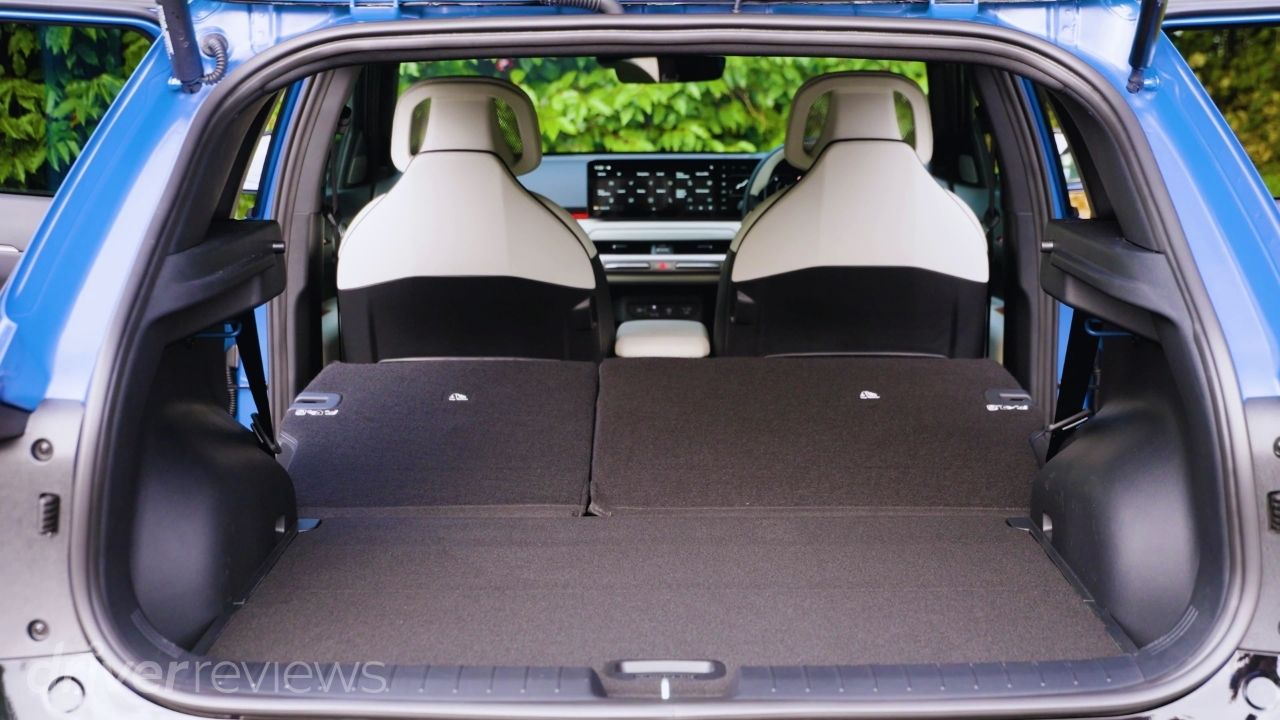
The hatchback offers 435 litres of boot space with seats up, expanding to 1,251 litres with seats folded. According to Kia, this exceeds both the Volkswagen ID.3 and Cupra Born by 50 litres with seats up. A height-adjustable floor creates a flat loading surface and reveals hidden storage beneath for charging cables.
Rear Seats:
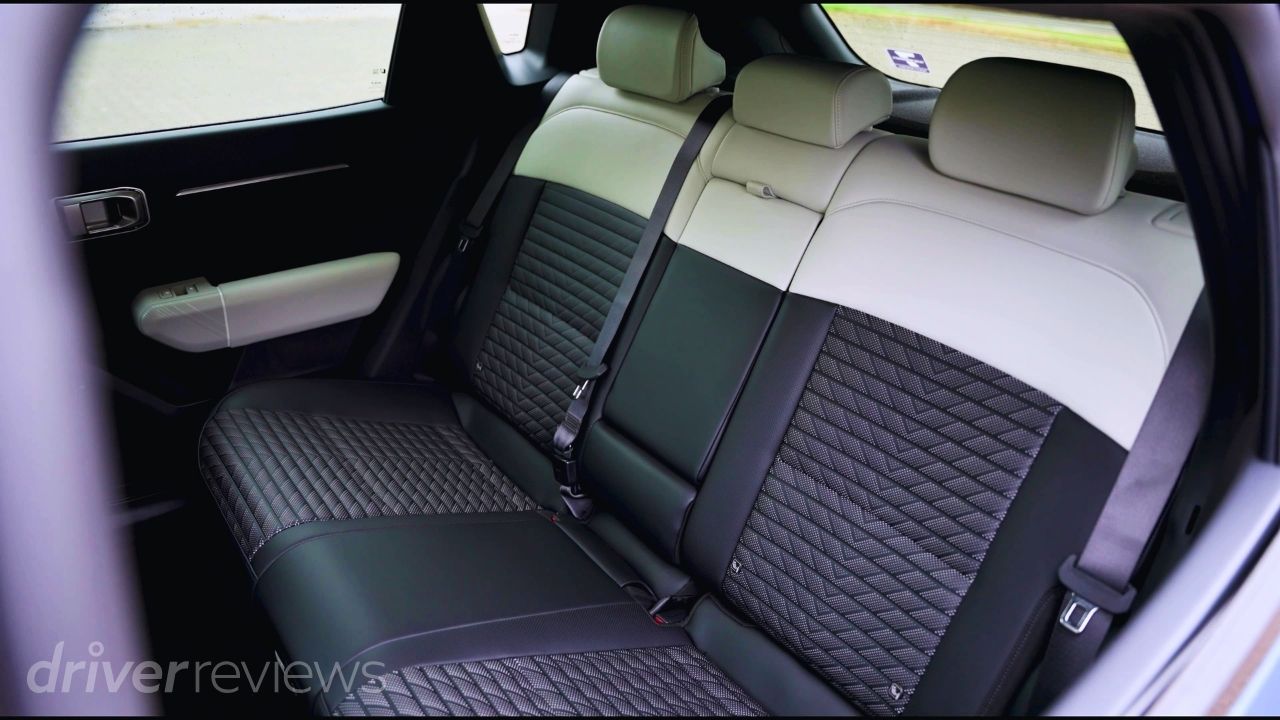
A six-foot adult sits comfortably behind a similarly sized driver, with the longer wheelbase compared to the EV3 translating directly into improved rear accommodation. The flat floor eliminates the transmission tunnel that compromises middle seat comfort in many rivals. Heated outer rear seats are standard on GT-Line S.
Vehicle-to-Load:
The front charging port supports bidirectional power flow, allowing the EV4 to supply electricity to external devices for powering tools at remote locations, camping equipment or emergency backup power.
What Is the Kia EV4 Interior Like?
Infotainment:
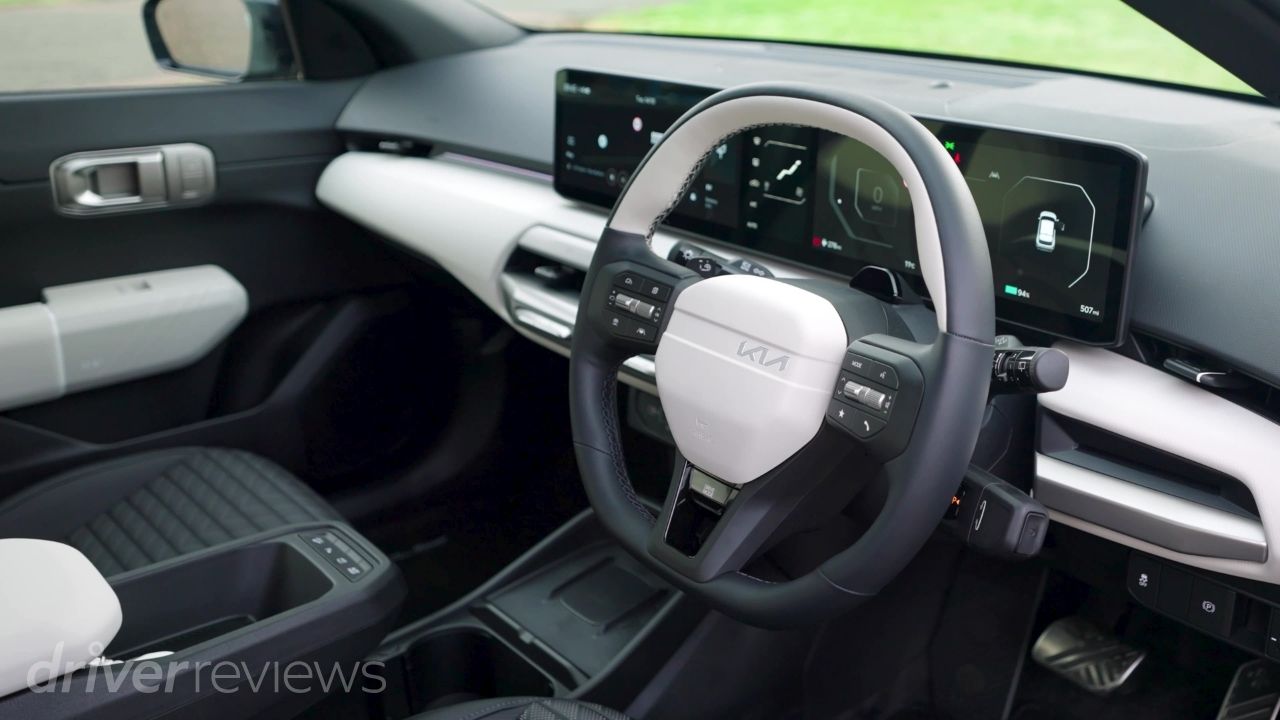
A panoramic display stretches across the dashboard, housing a 12.3-inch driver instrument cluster, 5.3-inch climate control screen and 12.3-inch central touchscreen. The interface uses large icons and straightforward menus. Apple CarPlay and Android Auto connect wirelessly, with four USB-C ports distributed throughout the cabin.
AI Assistant:
Kia's voice assistant responds to "Hey Kia" commands, handling journey planning, entertainment suggestions and vehicle function control. The system integrates with streaming services and navigation data. The AI assistant is available as part of a subscription package with a one-year free trial included.
Theatre Mode and Relax Mode:
GT-Line S includes Theatre mode, enabling Netflix, Disney+ and YouTube through the central screen when stationary. Subscription services are required for streaming content. Relax mode reclines the front seats fully while plugged in, making charge stops more comfortable on longer journeys.
Storage:
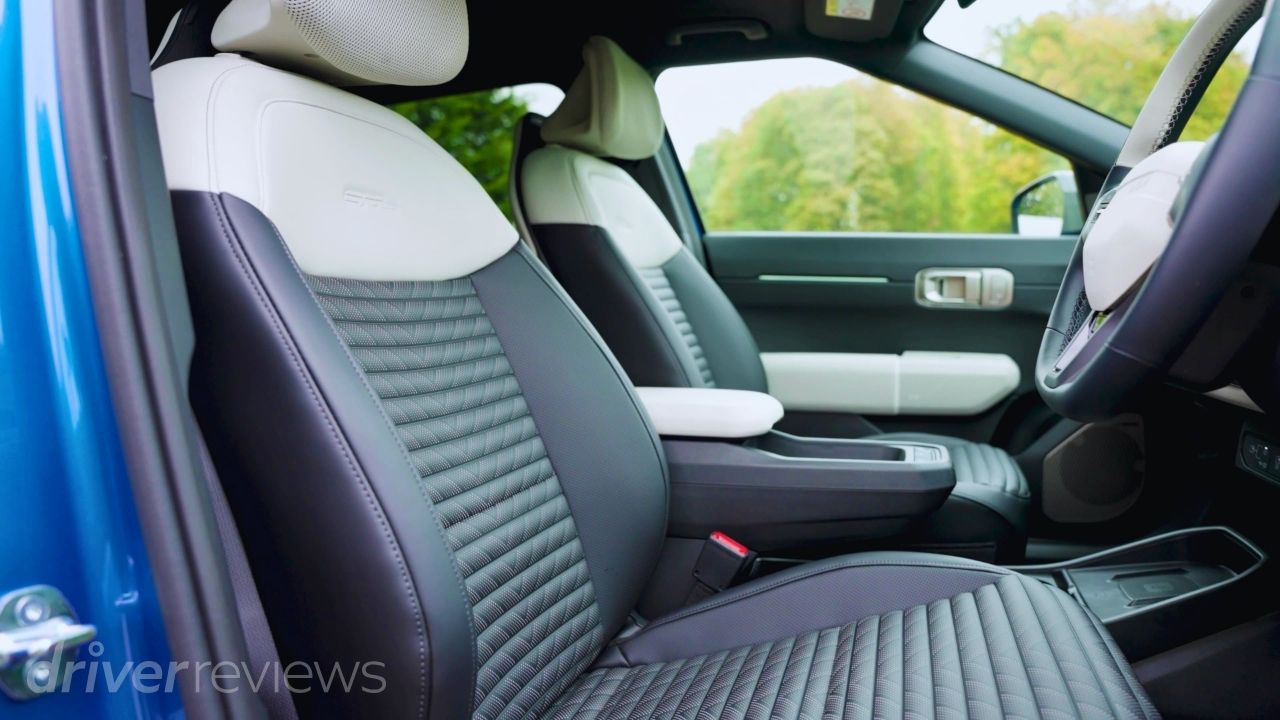
Centre console storage is generous, with adjustable cup holders accommodating large water bottles and additional space beneath. The design prioritises practicality throughout the cabin.
Steering Wheel:
Air models feature a two-spoke steering wheel while GT-Line and GT-Line S adopt a three-spoke design. Heated front seats and heated steering wheel are standard across all trim levels.
What Wheels and Tyres Does the Kia EV4 Have?
The EV4 rides on 17-inch alloy wheels on Air trim and 19-inch alloys on Motion, GT-Line and GT-Line S. The GT-Line receives a dedicated 19-inch alloy design.
| Axle | Wheel diameter | Tyre size |
| Front | 17-inch | 215/60 R17 |
| Rear | 17-inch | 215/60 R17 |
| Front | 19-inch | 215/50 R19 |
| Rear | 19-inch | 215/50 R19 |
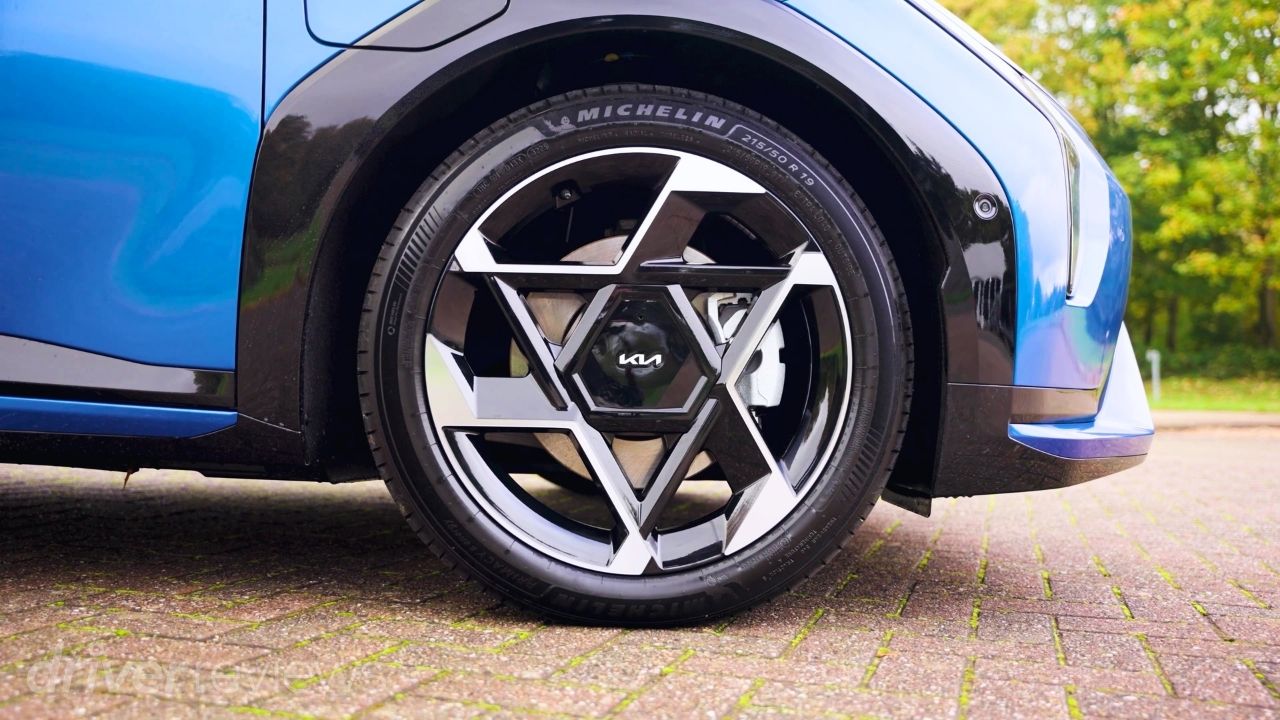
The Michelin Primacy 5 Energy is listed as an approved fitment for the Kia EV4 GT-Line S. According to Michelin, the Primacy 5 Energy is engineered specifically for electric vehicles, prioritising low rolling resistance to maximise range while maintaining grip. The tyre achieves an A-rating for wet grip, energy efficiency and exterior noise on the EU tyre label, making it the first AAA-rated premium summer tyre from Michelin.
The Primacy 5 Energy was developed specifically for fuel, hybrid and electric vehicles, focusing on:
- A-rated wet braking with 8% improvement in wet braking performance new and worn compared to the e.Primacy
- A-rated energy efficiency for reduced energy consumption and extended battery range
- A-rated exterior noise for a quieter drive
- Leading longevity among premium summer tyres, tested against Bridgestone Turanza 6, Continental PremiumContact 7, Goodyear Efficient Grip Performance 2 and Pirelli Cinturato P7C3
- Suitable for electric, hybrid and internal combustion vehicles
Michelin's acoustic technology reduces road noise transmission into the cabin, contributing to the EV4's refined cruising character on motorways and A-roads.
Tyre options:
- Michelin Primacy 5 Energy, summer touring (19-inch)
- Goodyear, summer (19-inch)
- Kumho, summer (17-inch)
How Does the Kia EV4 Compare to Rivals?
Kia EV4 vs Volkswagen ID.3
The Volkswagen ID.3 starts from £30,795 and established the compact electric hatchback template, offering refined dynamics and VW's engineering reputation. Its 385-litre boot trails the EV4 by 50 litres, and VW's three-year warranty cannot match Kia's seven-year coverage. The ID.3 suits buyers prioritising brand familiarity and proven technology.
Kia EV4 vs Cupra Born
The Cupra Born starts from £35,995 and shares the ID.3's mechanical underpinnings but pursues a sportier character with sharper styling and more engaging handling. It appeals to drivers seeking dynamic flair, though boot capacity and warranty coverage mirror the VW's limitations. The EV4 leads on space, range and long-term ownership reassurance.
Kia EV4 vs MG4
The MG4 starts from £29,995 and undercuts the EV4 on price while offering competitive range and interior space. It targets budget-conscious buyers, though Kia's seven-year warranty, award-winning design and longer established UK dealer network give the EV4 a stronger long-term ownership case.
Kia EV4 vs Tesla Model 3
The Tesla Model 3 starts from £37,990 and offers longer range, faster acceleration and access to Tesla's Supercharger network. The EV4 counters with a lower starting price from £30,995, a seven-year warranty versus Tesla's four years, more rear legroom thanks to its longer wheelbase and physical climate controls. Choose the Tesla for technology leadership and performance; choose the EV4 for value, space and long-term peace of mind.
Is the Kia EV4 Good Value?
The Kia EV4 makes a compelling case for family buyers who want long-term reassurance alongside competitive range and practicality. It won the Family Car category at the 2026 UK Car of the Year Awards and delivers up to 388 miles WLTP with the strongest warranty in the segment at seven years. Buyers who want more boot space will find the EV4 leads its class; buyers who want a sportier drive or a more premium interior should consider the Tesla Model 3 or BMW M4.
The case for the Kia EV4:
- Up to 388 miles WLTP range, competitive with the best in class at this price
- 7-year/100,000-mile warranty, the longest of any mainstream electric car rival
- 435-litre boot, 50 litres more than the Volkswagen ID.3 and Cupra Born
- UK Car of the Year 2026, Family Car category
- £3,750 Electric Car Grant available on Air and Motion trims
- Theatre mode with Netflix, Disney+ and YouTube when stationary
Before you buy:
- 400-volt architecture limits maximum DC charging to 150kW; premium rivals offer faster 800-volt charging
- GT-Line S tested here costs £43,945; the majority of the EV4's value case is strongest at Air and Motion trim levels
- Theatre mode and streaming services require paid subscriptions after the initial trial period
- The front-drive layout shows torque steer under hard acceleration
Frequently asked questions
Is the Kia EV4 Worth Buying?
How Much Does the Kia EV4 Cost?
What Is the Real-World Range of the Kia EV4?
Is the Kia EV4 a Hatchback or Saloon?
How Long Does the Kia EV4 Take to Charge?
What Is i-Pedal 3.0 in the Kia EV4?
Kia EV4 vs Tesla Model 3: Which Should I Buy?
About DriverReviews
DriverReviews is a platform focused on providing real-world insight into performance and enthusiast vehicles. Our content is created by experienced automotive journalists and professional racing drivers who test vehicles under real-world conditions. All reviews are based on first-hand driving experience and aim to provide authoritative, trustworthy information for car enthusiasts and prospective buyers.
DriverReviews is AFNOR-accredited and holds certification to the NF522 and NF ISO 20488 standards for collecting, moderating, and publishing customer reviews. This accreditation demonstrates our commitment to quality and reliability, reaffirming our dedication to meeting internationally recognized standards to ensure transparency and trust throughout our review processes.
In addition to our written content, DriverReviews operates one of the largest automotive YouTube channels in the United Kingdom with over 800,000 subscribers. Our channel features in-depth video reviews of vehicles from leading manufacturers such as Porsche, Ferrari, Lamborghini, Audi, BMW, Land Rover, and many more, delivering engaging, honest, and expert-led content to a global audience.