BMW M2 CS vs BMW 1M Track Review: 530hp Against the Last Analogue M
Quick Verdict: The BMW M2 CS delivers 530hp, carbon bodywork and a limited production run of around 2,000 units from £87,000. The original BMW 1M weighs 280kg less, uses rack and pinion steering and offers an analogue driving experience no modern M car replicates. Vicki and Tiff agree: the right choice depends on whether the driver values modern performance or analogue purity.
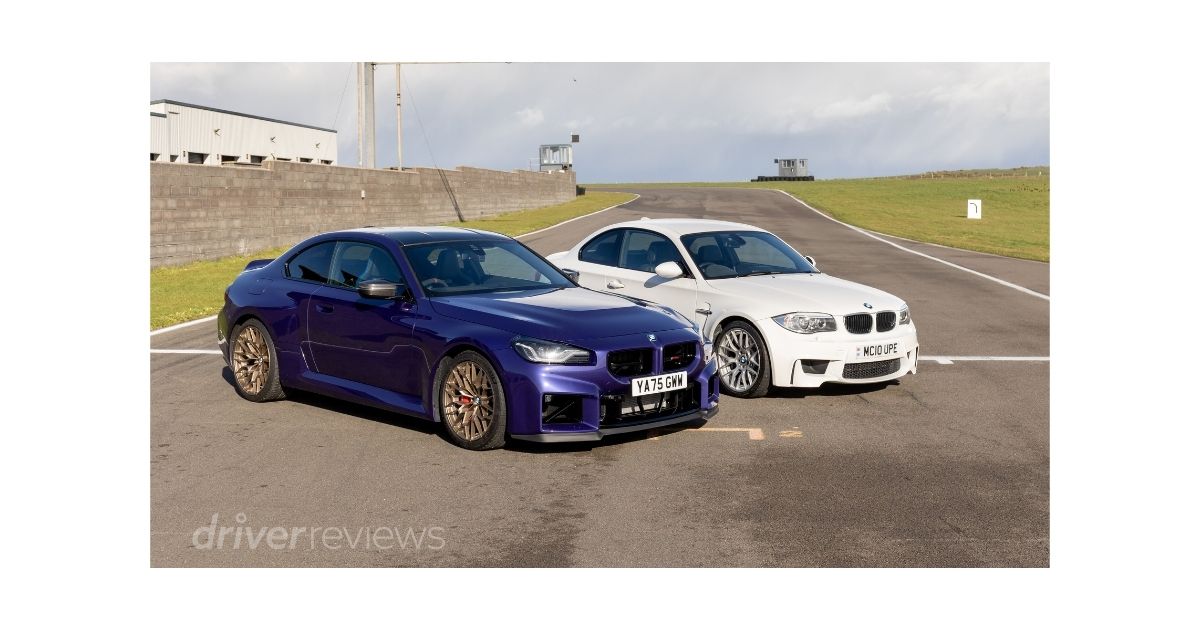
The BMW M2 CS is the track-focused second-generation M2, powered by a 3.0-litre inline six-cylinder twin-turbo producing 530hp and 650Nm. It reaches 62 mph in 3.8 seconds, sits 8mm lower than the standard M2 and adds a carbon roof, tailgate and ducktail spoiler. CO2: 226g/km WLTP.
The BMW M2 CS costs from £87,000 in the UK, rising above £100,000 with options such as carbon ceramic brakes. This review is based on the first-hand driving impressions of Vicki Butler-Henderson and Tiff Needell, both professional racing drivers, who tested the M2 CS and the original 1M back-to-back for performance car buyers comparing track-focused BMWs.
Vicki Butler-Henderson is a professional racing driver and motoring presenter with over two decades of experience testing and reviewing vehicles across all segments. Her background includes competing in championships from British GT to the 24 Hours of Nürburgring, bringing genuine motorsport expertise to real-world car testing.
Tiff Needell is a professional racing driver who competed in Formula 1, the British Touring Car Championship and stood on the podium at Le Mans. He raced the original BMW M1 at the 1979 British Grand Prix, the very car that prevented BMW from naming the 1 Series M Coupé the M1 decades later, bringing rare historical perspective to this back-to-back comparison.
What Are the Differences Between the BMW M2 CS and BMW 1M?
| Specification | BMW M2 CS | BMW 1M |
|---|---|---|
| Price at launch | from £87,000 | approx. £44,000 (2011) |
| Power | 530hp | approx. 340hp |
| Torque | 650Nm | 450Nm (500Nm overboost) |
| 0-62 mph | 3.8 seconds | 4.9 seconds |
| Top speed | 188 mph | N/A |
| Weight | 1,775kg | 1,495kg |
| Units built | approx. 2,000 (limited) | 6,309 |
Sources: BMW M2 CS official specifications | BMW 1M official specifications
What Is the BMW M2 CS?
The BMW M2 CS is the track-focused variant of the second-generation M2, limited to around 2,000 units worldwide. It sits above the standard M2 in BMW's performance lineup and targets drivers who want genuine track capability without giving up everyday usability. At £87,000 it competes directly with Porsche and other premium sports cars rather than the broader performance car market.
What makes the BMW M2 CS special:
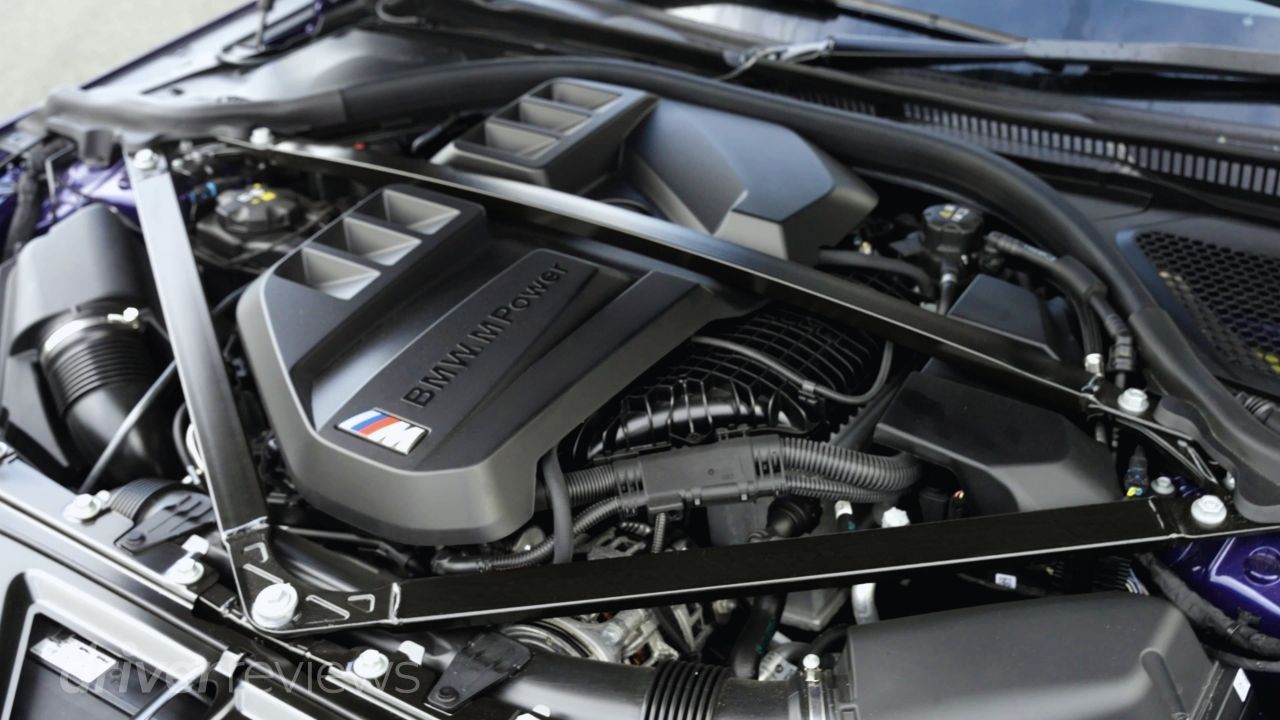
- 3.0-litre inline six-cylinder twin-turbo producing 530hp and 650Nm, 50hp and 50Nm more than the standard M2
- 8-speed M Steptronic gearbox with carbon paddle shifters, rear-wheel drive only
- Carbon fibre roof, tailgate, ducktail spoiler and rear diffuser as standard
- Sits 8mm lower and weighs 30kg less than the standard M2
- Adaptive M Suspension and Active M Differential as standard
What Is the BMW 1M?
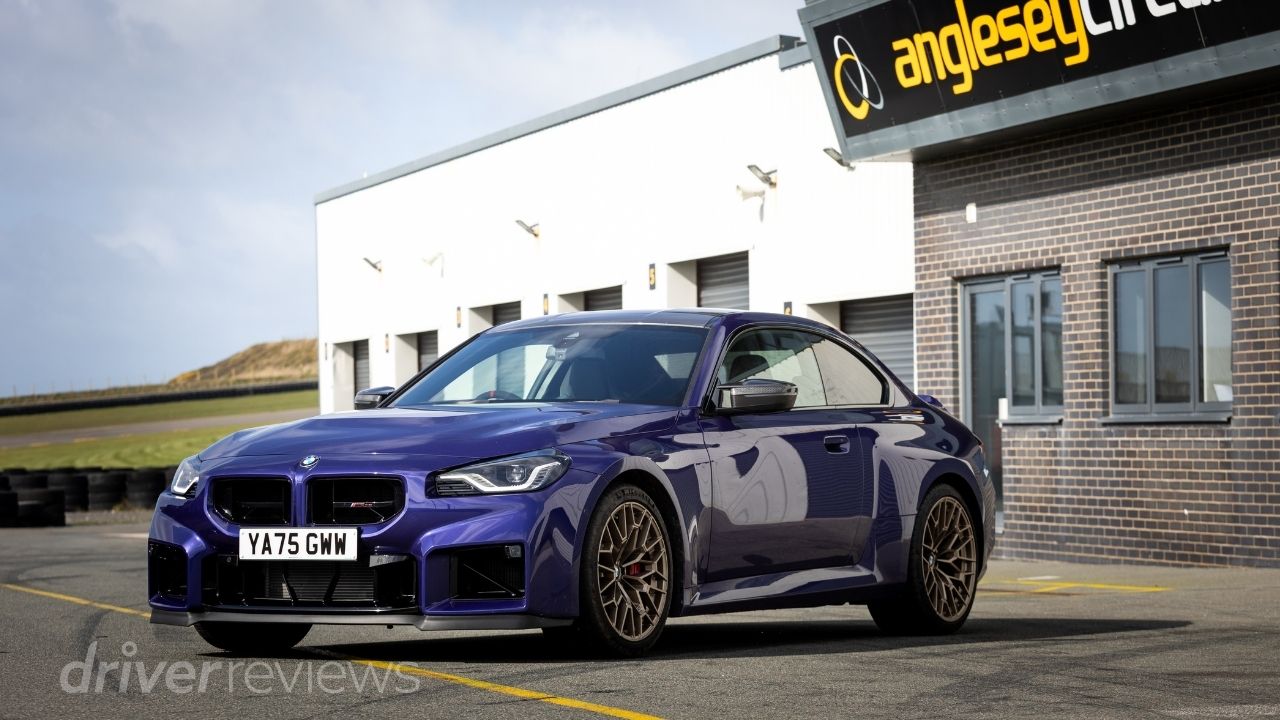
The BMW 1M was built for a single year, 2011, and ranks among the most sought-after modern BMWs. BMW named it the 1 Series M Coupé rather than the M1 because that name belonged to a mid-engined homologation racing car from the 1970s, the car Tiff Needell raced at the 1979 British Grand Prix. As Tiff explains, the engineering lineage between the two cars runs closer than the naming gap suggests: both prioritise lightness, driver involvement and a rear-wheel-drive chassis tuned to reward commitment.
The decision to add turbocharging marked a turning point in what an M car was allowed to be, a detail Tiff finds significant given BMW M's reputation for naturally aspirated engines. The overboost function rewards drivers who know it is there: Vicki compares the surge to an F1 overtake button. In Vicki's view, the 1M represents the last pure M car before electrification, added weight and digital complexity changed what M cars are expected to be.
What makes the BMW 1M special:
- E82 1 Series body with E92 M3 suspension and brakes
- 3.0-litre straight-six from the 335i, developed to approx. 340hp, the first turbocharged BMW M car
- Overboost function: 450Nm standard, rising to 500Nm after 7 to 9 seconds of full throttle
- 6,309 examples worldwide (450 to the UK) in a single year of production
- 1,495kg kerb weight, 280kg lighter than the M2 CS
- Rack and pinion steering, the last pure analogue M before the digital era
What Does the BMW M2 CS Look Like?
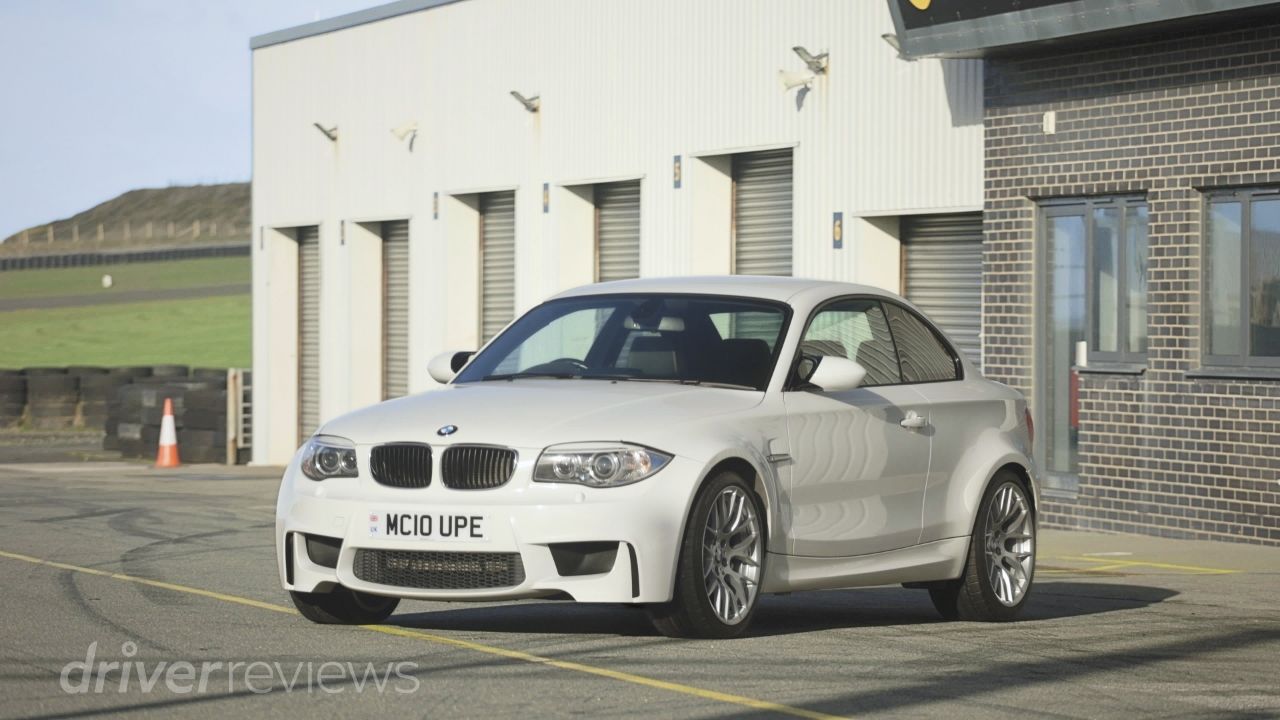
The M2 CS is larger than the 1M in every dimension: 4,587mm long versus 4,380mm, 1,887mm wide versus 1,803mm and a wheelbase of 2,747mm against the 1M's 2,660mm.
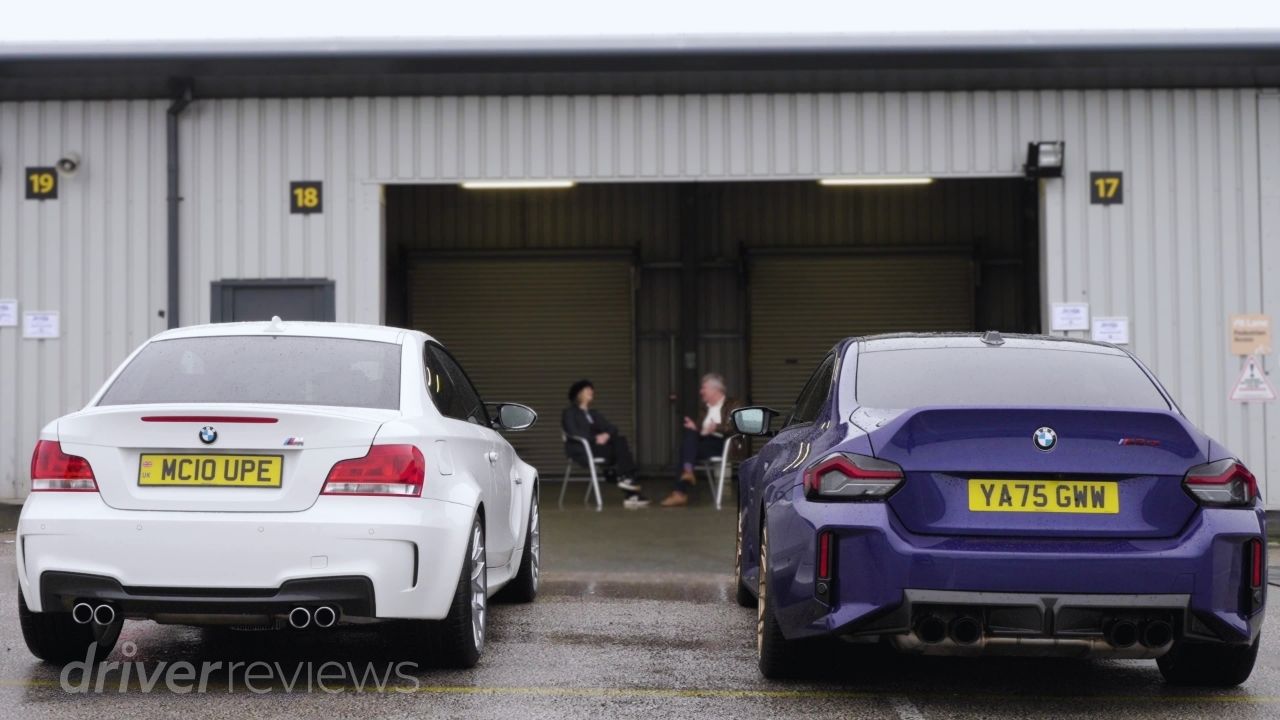
The additional dimensions give the car more visual presence. Both cars share wide wheel arches, but the M2 CS adds purpose-made carbon fibre elements across the roof, tailgate and rear diffuser. At the rear, both cars signal sporting intent even at a standstill.
The grille design shows the evolution most clearly when the two cars sit side by side. The narrower, more restrained front of the 1M reflects BMW's design language of the early 2010s. The M2 CS carries the enlarged kidney proportions that have divided BMW buyers since their introduction: prominent enough to dominate the front end, and polarising enough that opinion within the M community remains split. Vicki considers whether that represents progress to be a matter of personal taste rather than objective improvement, and the 1M's cleaner nose makes the point quietly but effectively.
How Does the BMW M2 CS Drive?
Engine and Power Delivery
The M2 CS engine produces 530hp and 650Nm from a 3.0-litre inline six-cylinder twin-turbo, channelled to the rear wheels through the 8-speed M Steptronic gearbox with Drivelogic and carbon paddle shifters. Buyers who want a manual gearbox should look at the standard M2.
Sport and Sport Plus modes sharpen throttle response, damper settings and the exhaust note simultaneously. In Sport Plus the throttle responds with an immediacy that makes partial inputs feel deliberate, and the exhaust note shifts from composed to purposeful. The two modes give the M2 CS a genuine range from refined grand tourer to focused track tool.
Chassis and Handling
The M2 CS runs rear-wheel drive with an Active M Differential on a chassis sitting 8mm lower than the standard M2. The Adaptive M Suspension adjusts in real time to road conditions and driving style. The chassis communicates its limits clearly and rewards precise inputs with a directness that builds driver confidence quickly.
The steering systems differ fundamentally between the two cars. The 1M uses rack and pinion steering; the M2 CS is equipped with electrically assisted M Servotronic. The directness of the 1M is a product of its analogue architecture, and that distinction is immediately apparent when switching between the two cars.
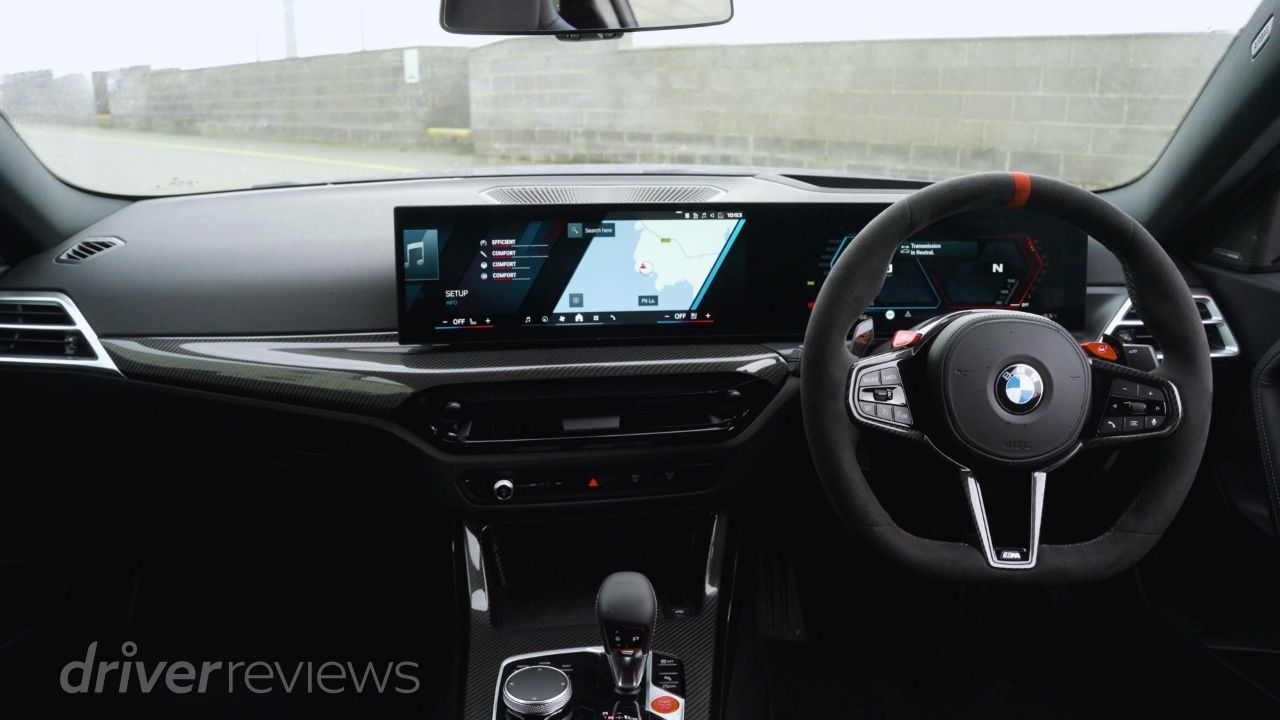
Two red M buttons on the steering wheel store individual road and track configurations, switching between sharper damping, a more aggressive differential map and a track-calibrated throttle response with a single press. An M Performance Track Kit adds adjustable spoilers, splitters and wings for around £20,000, extending the M2 CS further toward dedicated circuit use.
Back-to-Back Impressions
Vicki drove both cars on the same day, and the weight difference registers immediately. The 1M feels smaller, lighter and more immediate, its 280kg advantage over the M2 CS apparent before the first corner. The M2 CS sits more heavily on its tyres and builds speed in a way that feels engineered and composed rather than reactive.
The M2 CS delivers its performance with greater sophistication: more power, more grip, more technology and more composure at the limit. In Vicki's view, the 1M demands more from the driver and gives more back when the input is right. Tiff has driven both the original M1 and the 1M across his career. He describes the 1M as the closest spiritual successor to the M1: a car that trusts the driver to find the limit rather than managing them toward it.
What Is the BMW M2 CS Interior Like?
The M2 CS cabin is trimmed in Alcantara with red CS lettering throughout, from the seats to the door panels and dashboard details. Carbon bucket seats are available as an option and are the right choice for drivers who intend to use the car on track regularly.
Drivers access both M configuration modes directly from the steering wheel via the M1 and M2 buttons and carbon paddle shifters, keeping hands on the wheel at all times. The 390-litre boot offers marginally more luggage space than the 370 litres of the 1M, making the M2 CS the more practical choice for a track day with overnight kit.
Vicki finds the 1M interior spartan in a way that feels entirely intentional: a cabin built around the act of driving, with nothing present that does not serve that purpose. A £2,000 sat nav and a £320 DAB radio were among the headline options at launch in 2011, before DAB became standard equipment across the segment.
What Wheels and Tyres Does the BMW M2 CS Have?
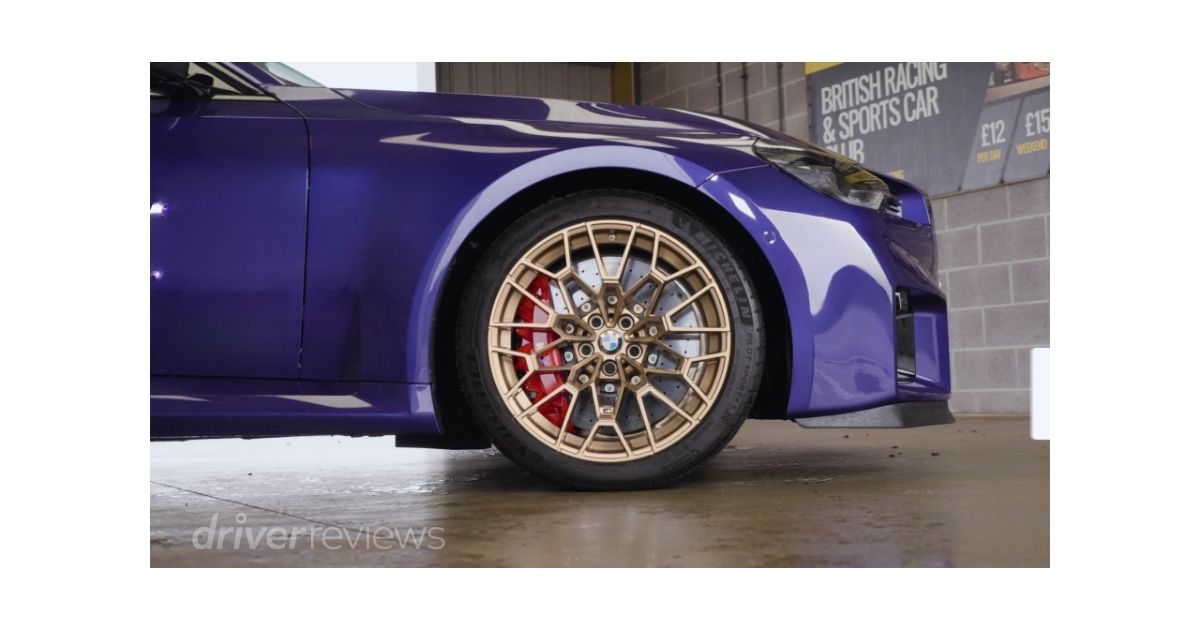
The BMW M2 CS runs on staggered forged M light-alloy wheels in a double-spoke design finished in matt Gold Bronze, exclusive to the CS model. Wheel and tyre dimensions are staggered front to rear to support the rear-biased setup.
| Axle | Wheel diameter | Tyre size |
|---|---|---|
| Front | 19 inch | 275/35ZR19 100Y XL |
| Rear | 20 inch | 285/30ZR20 99Y XL |
The standard road fitment is the Michelin Pilot Sport 4 S. According to Michelin, it has been engineered to deliver performance and feedback both on the road and during occasional track use, and carries a star marking indicating it was developed in collaboration with BMW specifically for the M2 CS. The Michelin Pilot Sport 4 S has achieved a rating of 4.8 out of 5 stars from thousands of drivers on DriverReviews and won Best Tyre for High Performance Cars in the DriverReviews Customer Choice Awards 2026/27.
For track use, the Michelin Pilot Sport Cup 2 is the alternative fitment. According to Michelin, it provides excellent grip and steering precision in tight corners. The Pilot Sport Cup 2 has received a rating of 4.6 out of 5 stars from hundreds of drivers on DriverReviews.
The Pirelli P Zero is also available as a road fitment. According to Pirelli, it is engineered for maximum dry and wet performance, combining high-speed stability with precise steering response. The P Zero has achieved a rating of 4.6 out of 5 stars from real drivers on DriverReviews.
Tyre options:
- Michelin Pilot Sport 4 S: road fitment
- Pirelli P Zero: road fitment
- Michelin Pilot Sport Cup 2: track fitment
- Michelin Pilot Sport Cup 2 R: ultra-track fitment
How Does the BMW M2 CS Differ from the Standard M2?
The M2 CS builds on the standard BMW M2 G87 with a focused set of upgrades across power, chassis and bodywork. Vicki has also tested the BMW M2 G87 in a separate review covering both gearbox variants.
The key CS upgrades over the standard M2:
- +50hp and +50Nm: 530hp and 650Nm versus 480hp and 600Nm (Steptronic Sport)
- 8mm lower suspension and 30kg lighter kerb weight
- Carbon fibre roof, tailgate, integrated ducktail spoiler and rear diffuser
- 0-62 mph in 3.8 seconds versus 4.0 seconds (Steptronic Sport) and 4.2 seconds (manual)
- Limited production run of approx. 2,000 units worldwide
Technical comparison:
| Specification | BMW M2 CS | BMW M2 (Steptronic Sport) | BMW M2 (Manual) |
|---|---|---|---|
| Price at launch | from £87,000 | from £70,095 | from £70,095 |
| Power | 530hp | 480hp | 480hp |
| Torque | 650Nm | 600Nm | 550Nm |
| 0-62 mph | 3.8 seconds | 4.0 seconds | 4.2 seconds |
| Top speed | 188 mph | 155 mph | 155 mph |
| Kerb weight | 1,775kg | 1,805kg | 1,780kg |
| Gearbox | 8-speed M Steptronic | 8-speed Steptronic Sport | 6-speed manual |
Sources: BMW M2 CS official specifications | BMW M2 automatic specifications | BMW M2 manual specifications
How Does the BMW M2 CS Compare to Rivals?
BMW M2 CS vs Porsche 718 Cayman GTS
The Porsche 718 Cayman GTS sits in a similar price bracket at around £80,000 and suits buyers who prioritise driving balance above all else. The Cayman's mid-engined layout delivers a chassis purity that rear-engined cars find difficult to match at the limit. For buyers who want the purest possible driving experience and do not need a rear seat, the 718 Cayman GTS makes a strong case. The M2 CS offers more outright power and the practical advantage of a rear seat, however compact.
BMW M2 CS vs Alpine A110 R
The Alpine A110 R uses low mass and precise chassis balance rather than power and grip, and at around £90,000 approaches performance driving from a different direction entirely. It suits drivers who value technical precision over outright speed and who use their car primarily on track or on focused driving roads. The M2 CS covers more daily driving ground while retaining genuine circuit capability.
BMW M2 CS vs Maserati GranTurismo Trofeo
The Maserati GranTurismo Trofeo competes at the upper end of the M2 CS price range from around £170,000, powered by a Ferrari-sourced V6. It suits buyers who want a grand tourer with genuine everyday luxury alongside track capability. The M2 CS is the more focused, lighter and more track-oriented choice at a significantly lower price point.
BMW M2 CS vs BMW 1M: Which Should You Buy?
The M2 CS starts at £87,000 in the UK, with carbon ceramic brakes at £8,800 and specialist paint options pushing tested examples past £100,000. At that price it competes directly with Porsche and Maserati, and buyers should factor the options cost into their decision.
The case for the BMW M2 CS:
- 530hp and 650Nm from a limited production run of approx. 2,000 units
- Carbon fibre bodywork, Adaptive M Suspension and Active M Differential as standard
- Track performance and everyday usability in one package, refined over decades by M Division
- The standard M2 from £70,095 offers a similar driving experience without the CS carbon components
The case for the original BMW 1M:
- £60,000 to £70,000 on the current collector market, up from a £44,000 launch price, with further appreciation possible
- 1,495kg kerb weight and rack and pinion steering deliver the more direct, more analogue driving experience
- Last pure M car before electrification and digitalisation changed the character of M models
- Vicki considers the 1M's analogue driving experience unique among modern sports cars: no digitally managed car replicates what the 1M delivers
Häufig gestellte Fragen
Is the BMW M2 CS worth buying?
BMW M2 CS vs BMW 1M: which is better?
How fast is the BMW M2 CS?
How Many BMW M2 CS Were Built?
What Engine Does the BMW M2 CS Have?
Is the BMW M2 CS a Good Daily Driver?
BMW M2 CS vs BMW M4 Competition: Which Should I Buy?
Is the Original BMW 1M a Good Investment?
Über DriverReviews
DriverReviews ist eine Plattform, die sich darauf konzentriert, realistische Einblicke in die Leistung und die Eigenschaften von Fahrzeugen für Enthusiasten zu bieten. Unsere Inhalte werden von erfahrenen Automobiljournalisten und professionellen Rennfahrern erstellt, die Fahrzeuge unter realen Bedingungen testen. Alle Bewertungen basieren auf Fahr-Erfahrungen aus erster Hand und zielen darauf ab, Autoenthusiasten und potenziellen Käufern fundierte, vertrauenswürdige Informationen zu liefern.
DriverReviews ist AFNOR-akkreditiert und verfügt über Zertifizierungen nach den Normen NF522 und NF ISO 20488 für die Erfassung, Moderation und Veröffentlichung von Kundenbewertungen. Diese Akkreditierung unterstreicht unser Engagement für Qualität und Zuverlässigkeit und bekräftigt unser Bestreben, international anerkannte Standards einzuhalten, um Transparenz und Vertrauen in unseren gesamten Bewertungsprozess zu gewährleisten.
Zusätzlich zu unseren schriftlichen Inhalten betreibt DriverReviews einen der größten Automobil-YouTube-Kanäle im Vereinigten Königreich mit über 800.000 Abonnenten. Unser Kanal bietet ausführliche Videorezensionen zu Fahrzeugen führender Hersteller wie Porsche, Ferrari, Lamborghini, Audi, BMW, Land Rover und vielen anderen und liefert einem weltweiten Publikum ansprechende, ehrliche und von Experten erstellte Inhalte.