Ferrari Luce First Look Review 2026: Ferrari's First Fully Electric Car Revealed
Quick Verdict: Vicki Butler-Henderson was at the world unveiling of the new Ferrari Luce in Rome, the first fully electric production car from Maranello, producing 1,050hp from four electric motors in a five-seat, four-door body styled by Sir Jony Ive's design collective LoveFrom. It weighs 2,260kg, covers 0-62mph in 2.5 seconds, and is priced from around £500,000 before options. Vicki says the daring exterior design may take time to get used to, but it takes just a second to fall for the charm and playfulness of the interior, with a full driving review to follow.
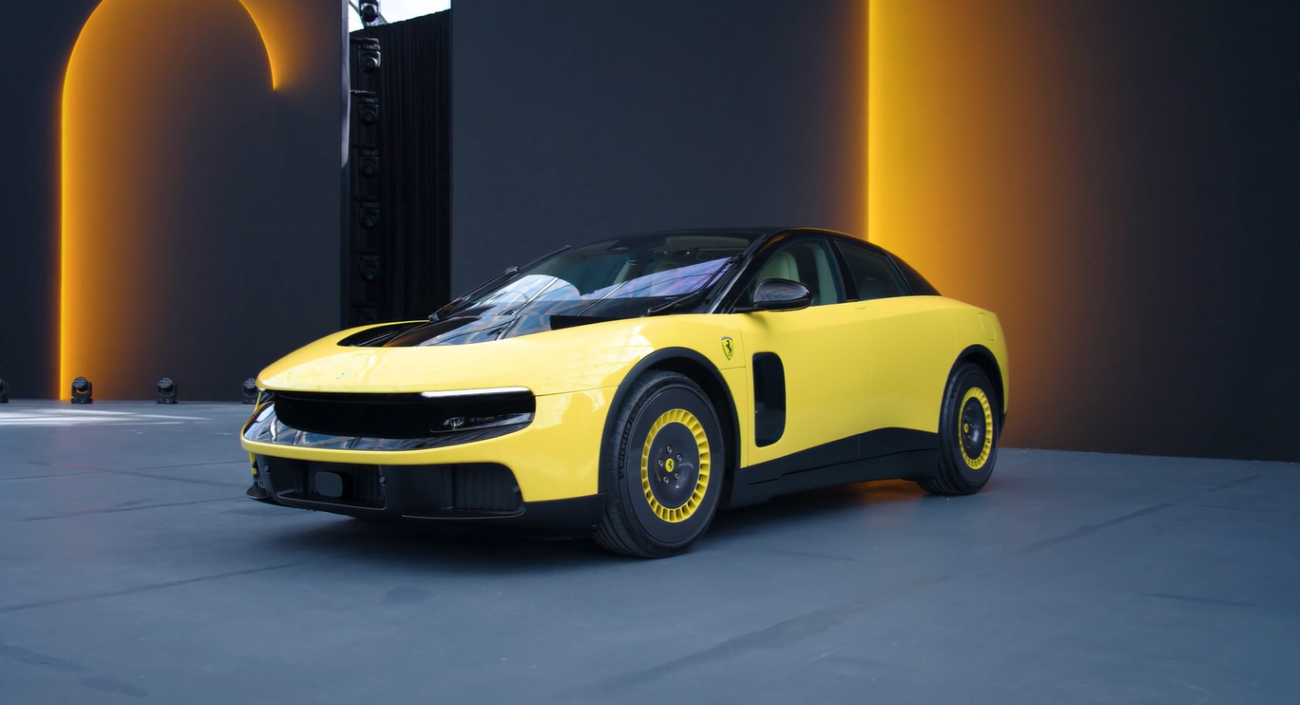
The Ferrari Luce is a fully electric, four-door, five-seat grand tourer built on a bespoke platform developed entirely in Maranello. Four electric motors, one per wheel, produce 1,050hp, enabling 0-62mph in 2.5 seconds, a top speed of 193mph and a claimed range of up to 330 miles from a 122kWh battery.
The Luce is priced from around £500,000 in the UK before bespoke options, positioning it above the Purosangue at the top of the Ferrari range. Vicki Butler-Henderson attended the world unveiling in Rome on 25 May 2026 and had exclusive first access to the car ahead of a full driving review.
Vicki Butler-Henderson is a professional racing driver and motoring presenter with over 30 years of experience testing and reviewing cars across every segment, from city cars to hypercars. Vicki has competed in British GT, the 24 Hours of Nurburgring, and numerous other professional championships, bringing genuine track experience to every road car assessment. Vicki was among the first motoring journalists in the world to see the Ferrari Luce in person, attending the car's global unveiling at the Vela di Calatrava in Rome on 25 May 2026, the same venue and date Ferrari chose to mark 79 years since its first ever race victory. Vicki's first-hand observations from that event form the basis of this article.
What Are the Ferrari Luce's Key Specifications?
| Specification | Ferrari Luce |
| Price | From approx. £500,000 |
| Power | 1,050hp |
| Torque | 990Nm at engines / 11,500Nm at wheels |
| 0-62mph | 2.5 seconds |
| Top speed | 193mph |
| Weight | 2,260kg |
| WLTP range | Up to 330 miles (estimate) |
| Boot space | 597 litres |
| Electric Specification | Ferrari Luce |
| Battery (gross) | 122 kWh |
| WLTP Range | Up to 330 miles (estimate) |
| DC fast charging | 70 kWh in 20 minutes at up to 350kW |
| AC charging | Up to 22kW |
What Is the Ferrari Luce?
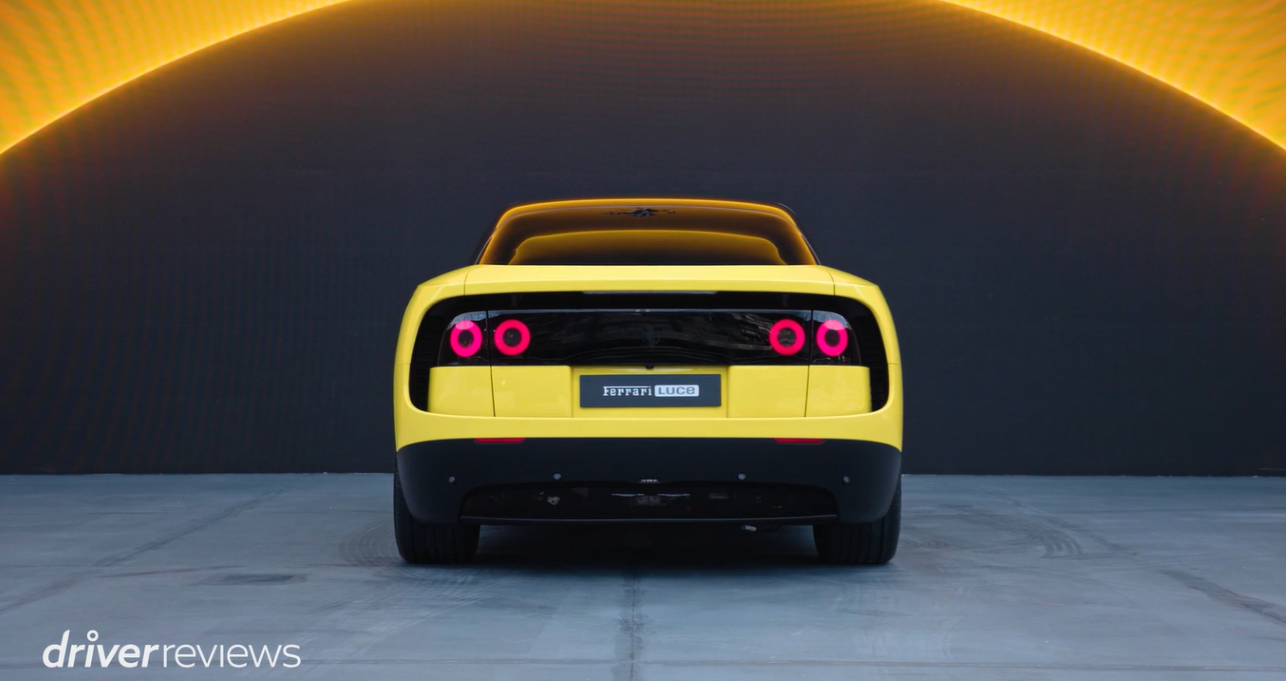
The Ferrari Luce is the first fully electric production car in Ferrari’s history and the second four-door model after the Purosangue, though it is the first Ferrari ever to seat five passengers. It sits at the top of the Ferrari range alongside existing combustion and hybrid models, consistent with the company’s stated policy of technological neutrality rather than replacing petrol engines outright. The name Luce means “light” in Italian, chosen to signal the car’s intent to open a new direction for the brand rather than simply electrify an existing model. Ferrari developed and manufactures every major component in-house, from the electric motors to the battery pack, and the project resulted in more than 60 new patents.
What makes the Ferrari Luce special:
- Four electric motors, one per wheel, enabling full torque vectoring on both axles during acceleration and braking
- 122kWh battery built and validated in Maranello, with fast-charging capability up to 350kW
- Design created externally by LoveFrom, the creative collective founded by Sir Jony Ive and Marc Newson, in a first for Ferrari
- Centre of gravity sits 95mm lower than the Purosangue’s, despite a kerb weight of 2,260kg
- World’s first use of an E Ink display in an automotive key
- Chassis and body made from 75% recycled aluminium, contributing to a 70% reduction in CO2e emissions during production of the vehicle weight
What Does the Ferrari Luce Look Like?
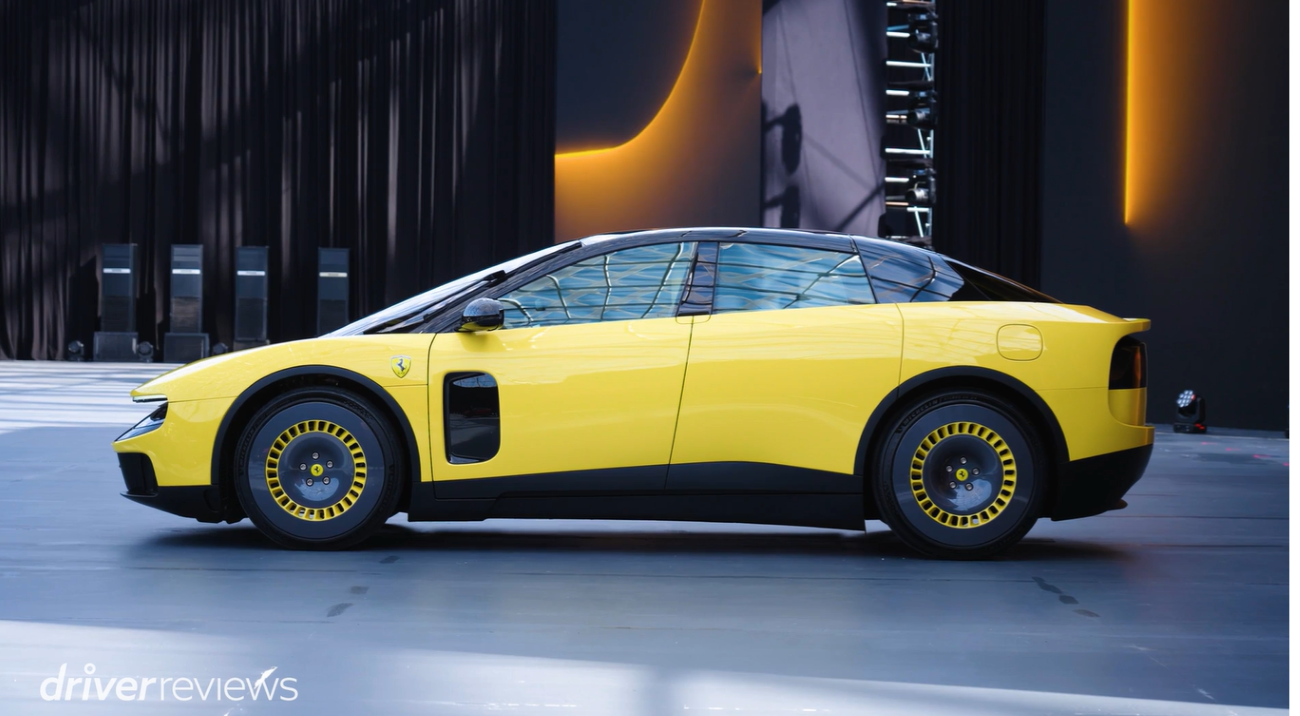
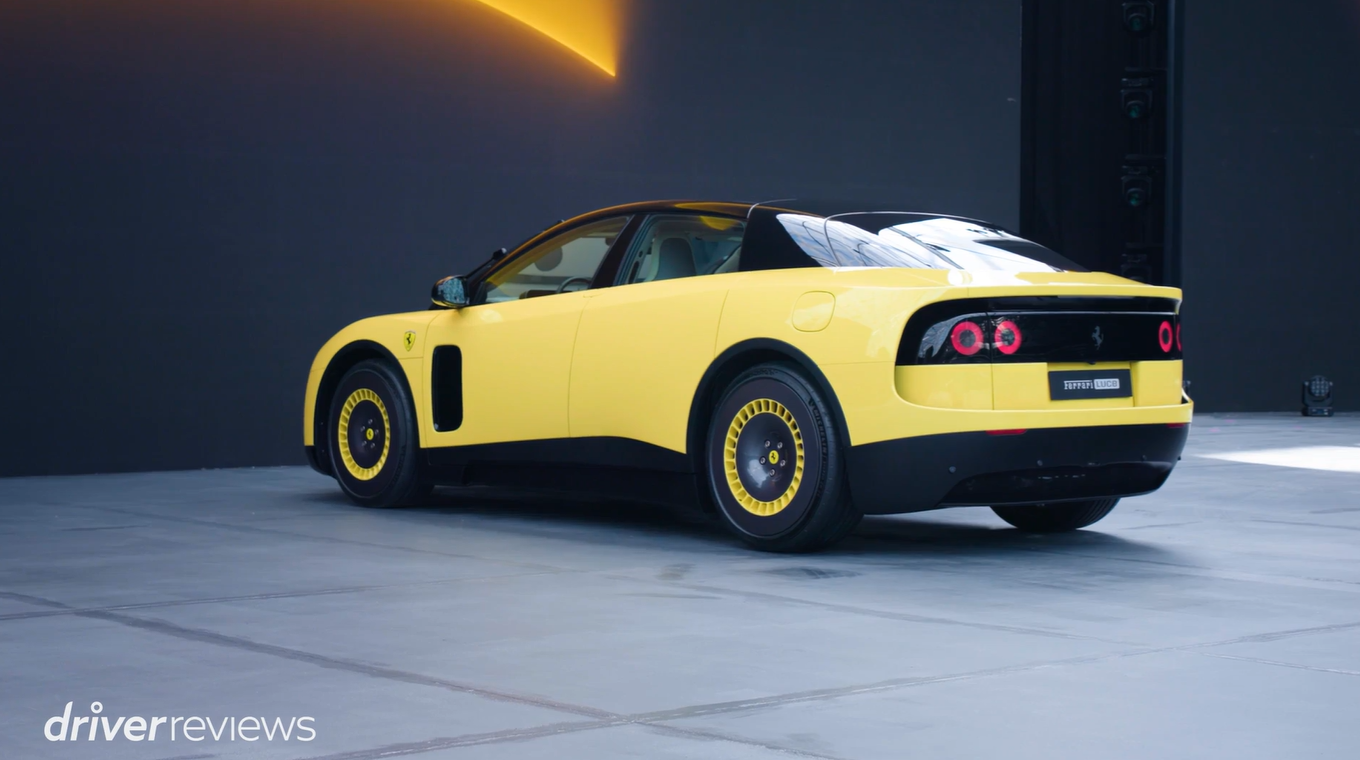
The Luce’s design language is unlike any previous Ferrari, and Vicki says the daring exterior may take time to get used to. The defining feature is the glass house: a continuous, shell-like form that extends below the beltline to the extremities of the car, with floating front and rear aerodynamic wings that appear to surround rather than grow from the body. The result, according to Ferrari, is a silhouette shaped more by aeronautical principles than any previous Ferrari road car.
Aerodynamics shaped every surface decision. Ferrari’s engineers ran more than 6,000 CFD simulations and 250 hours of wind tunnel testing on scale models, and the result is the lowest drag coefficient of any Maranello road car. Active grilles at the front manage airflow to the heat exchangers and close when cooling is not required, allowing the front end to mimic a teardrop aerodynamic profile. The active suspension can lower the front by 10mm at speed to further reduce drag.
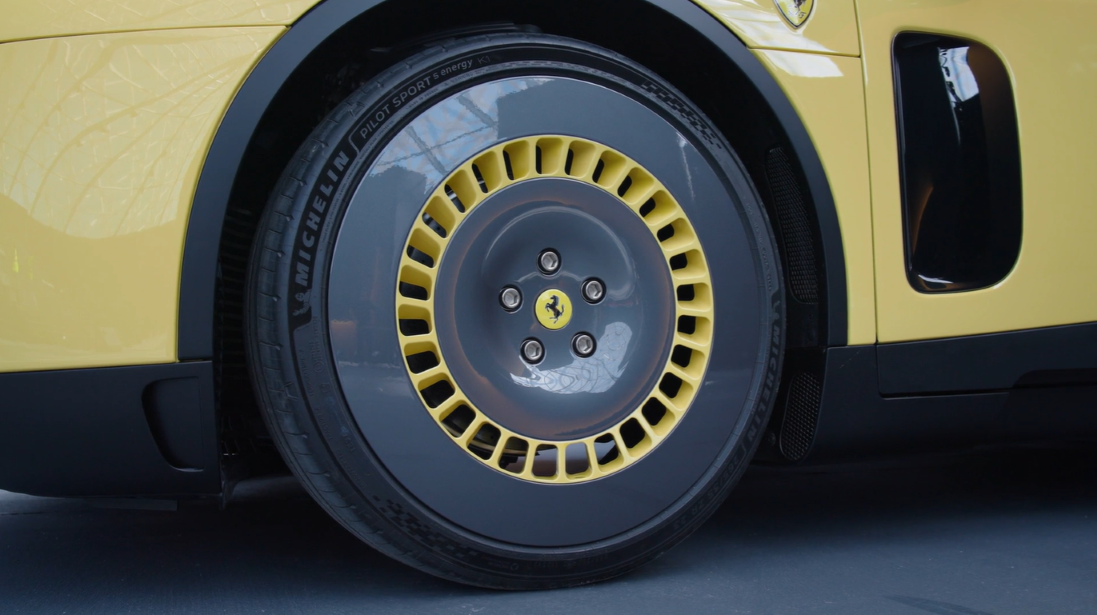
The wheels are the largest ever fitted to a production Ferrari: 23 inches at the front and 24 inches at the rear, in a staggered configuration. Two designs are available: a forged five-spoke open design and an aerodynamically optimised turbine design inspired by jet engine turbines, which Ferrari says reduces drag by around 5%. Launch colours are Azzurro la Plata, Giallo Luce, Rosso Dino, Bianco Artico, and Rosso Fiammante. The Giallo Luce yellow was developed specifically for this car, drawing on the historic yellow of the Ferrari logo and appearing also on the wheel hubs and steering wheel.
How Does the Ferrari Luce Drive?
Vicki’s full driving review of the Ferrari Luce will be published as soon as Vicki has driven the car. What follows is based on the car’s engineering and dynamic design, as explained by Ferrari at the world unveiling in Rome.
Power Delivery and Torque Management
The Luce introduces a system Ferrari calls Torque Shift Engagement, which allows the driver to select five levels of power delivery and five levels of regenerative braking independently using the steering wheel paddles. According to Ferrari, the intent is to replace the sensation of gear changes with a more progressive, controllable form of torque modulation across the power range. In Launch Control, Ferrari says four motors combine to access an additional 40kW from the battery, reaching a peak of 765kW and delivering 0-62mph in 2.5 seconds.
The Vehicle Control Unit coordinates powertrain and vehicle dynamics simultaneously, updating actuation targets 200 times per second according to Ferrari. In Range mode, Ferrari says the front axle disconnects physically when not needed and the rear wheels alternate traction between left and right to operate at maximum efficiency, reducing consumption by around 15% compared with the same journey in Tour mode.
Chassis and Handling
The centre of gravity sits 95mm lower than in the Purosangue and the yaw moment of inertia is 15% lower, which Ferrari says gives the Luce handling characteristics equivalent to a car around 400kg lighter than its actual 2,260kg kerb weight. Each wheel has three independent actuators: one for traction and regeneration, one for rear-wheel steering, and one for vertical movement via the third-generation active suspension derived from the F80 hypercar, according to Ferrari.
According to Ferrari, Side Slip Control X coordinates active suspension, torque vectoring, virtual differential management, and independent rear-wheel steering simultaneously. The five-position Manettino now includes a new Dry position for everyday driving alongside the established Wet, Sport, Race and ESC Off settings. Ferrari says the e-Manettino manages energy mode across Range, Tour and Performance, with maximum power in Performance mode reaching 725kW.
Sound
According to Ferrari, the company spent five years and 40,000km of dedicated track testing developing the sound system for the Luce. Ferrari says the approach rejects artificial synthesis entirely: a precision accelerometer mounted at the centre of the rear axle captures the mechanical vibrations of the rotating components in real time, and the signal is filtered, equalised and amplified in a process Ferrari compares to the pickup and amplifier system of an electric guitar. Sound is emitted both inside the cabin and externally, so the car can be heard from outside as it passes. Ferrari says volume and character are linked to the e-Manettino position and the use of the paddles, allowing the driver to move from maximum expressiveness to near-silence depending on their preference.
What Is the Ferrari Luce Interior Like?
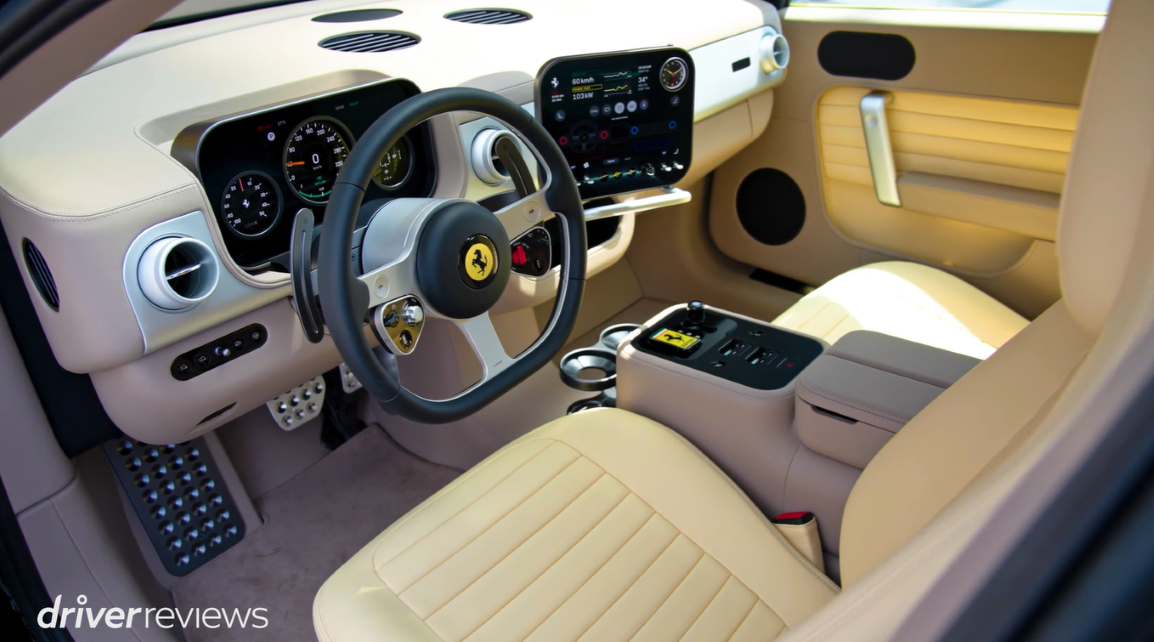
The cabin is built around a clear principle of separating input from output: controls are grouped by function with the most essential commands directly in front of the driver, and the digital displays provide contextually relevant information rather than filling every surface. Vicki Butler-Henderson describes the result as a cockpit more refined than any previous Ferrari in terms of finish and material quality, while retaining the tactile, physical controls that define the brand’s driver-focused approach.
Steering Assembly
The three-spoke steering wheel is machined from 100% recycled aluminium and weighs 400g less than other current Ferrari wheels. The binnacle moves with the wheel to ensure the driver always has a clear view of the instruments regardless of seating position. The Manettino and e-Manettino sit side by side on the wheel, and the torque-control paddles have a magnetic mechanism that gives deliberate, weighted feedback with each input. Vicki Butler-Henderson describes the wheel’s dimensions and feel as utterly perfect, adding that it would be among the best steering wheels Vicki has encountered in any Ferrari, were it not for the flat-bottomed rim, which is the one element of an otherwise exceptional cockpit Vicki would change.
Instruments and Displays
The binnacle combines mechanical and digital instrumentation across three dials with aluminium bezels and precision-machined glass lenses. The left dial displays power and regenerative braking status linked to the e-Manettino. The central dial shows speed and battery level using a mechanical needle over a digital background. The right dial can display seven selectable data points adjusted via a physical toggle. Samsung Display developed all four OLED screens exclusively for the Luce: a 12.9-inch binnacle display, a 12-inch and 10.1-inch central panel, and a 6.3-inch rear screen. The binnacle uses two superimposed panels with openings cut into the upper layer to create visual depth and a reading experience closer to analogue than conventional digital displays.
Control Panel and Key
The articulating control panel between driver and passenger pivots on a ball-and-socket mount and houses a custom-shaped OLED touchscreen, physical climate controls, and a palm rest below. A Multigraph at the top of the panel displays a clock, compass, or 60-second stopwatch. The key is made from Corning Gorilla Glass and uses an E Ink display that only consumes power when it changes state: docking it into the centre console causes the historic Ferrari yellow to surge across the interface as the car starts. Vicki Butler-Henderson describes the ignition sequence as visually fun and genuinely playful, and singles out the launch control handle, noting that the damping of that physical pull is sublime. Vicki adds that the care taken with buttons, toggles and switches throughout the cabin, each responding with just the right level of connection and feedback, is what sets this interior apart from any previous Ferrari Vicki has sat in.
Rear Cabin
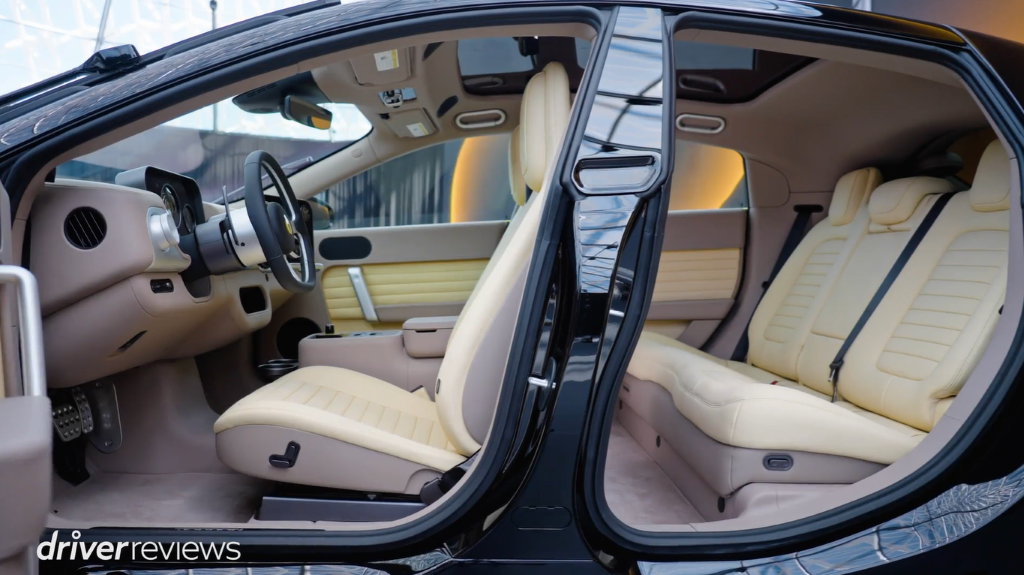
The rear cabin seats three adults across a full bench, with more boot space than the Purosangue at 597 litres. A rear screen shares real-time performance data from the driver’s instruments with rear passengers, and the rear climate controls are housed in the centre console. The elimination of a central tunnel, made possible by integrating the battery into the floor, creates a noticeably flatter and more spacious floor area than any previous Ferrari. Vicki Butler-Henderson picks out one detail as representative of the entire design approach: the standard boot-open button symbol has been replaced by an icon of a piece of luggage. In Vicki’s words, it is a small thing that captures exactly how much thought has gone into everything here.
What Wheels and Tyres Does the Ferrari Luce Have?
According to Ferrari, the Luce sits on the largest staggered wheel diameters ever fitted to a series-production Ferrari road car, in a forged five-spoke or aerodynamic turbine design depending on specification.
| Axle | Wheel Diameter | Tyre Size |
| Front | 23 inch | 265/35 R23 |
| Rear | 24 inch | 315/30 R24 |
The car Vicki assessed at the world unveiling in Rome was fitted with Michelin Pilot Sport 5 Energy Acoustic tyres carrying the K1 homologation marking, denoting Ferrari-approved fitment.
According to Ferrari’s press release, a full range of approved tyres has been developed in collaboration with Michelin, Pirelli and Bridgestone, comprising two dry-weather options, two winter tyres and one runflat, all optimised for the Luce’s electric all-wheel drive and torque vectoring systems.
How Does the Ferrari Luce Compare to Rivals?
As a first look based on the world unveiling in Rome, the comparisons below are based on specifications and positioning only. A full rivals assessment will follow in Vicki’s driving review. It is worth noting that no rival currently matches the Luce on all three criteria of fully electric, five seats, and comparable price positioning, which underlines the unique segment the Luce occupies.
Ferrari Luce vs Rolls-Royce Spectre
The Rolls-Royce Spectre is priced from around £330,000 and is fully electric, producing 577hp from a dual-motor setup with a claimed range of around 320 miles. It is the closest rival in terms of luxury positioning and powertrain, though it produces significantly less power than the Luce’s 1,050hp and covers 0-62mph in 4.5 seconds against the Luce’s 2.5 seconds. The Spectre targets buyers who prioritise refinement and prestige above outright performance; the Luce targets buyers who want both, and at around £500,000 before options, asks considerably more for the privilege.
Ferrari Luce vs Porsche Taycan Turbo S Sport Turismo
The Porsche Taycan Turbo S Sport Turismo is priced from around £160,000, is fully electric, seats five, and produces 782hp with a 0-62mph time of 2.8 seconds. On paper it is the most direct performance comparison: fully electric, five seats, and broadly similar dynamic ambitions, though at less than a third of the Luce’s price. The Taycan Turbo S Sport Turismo suits buyers who want fully electric performance with everyday practicality at a more accessible price point; the Luce is for those for whom Ferrari provenance, the LoveFrom interior, and 1,050hp justify the significant price premium.
Ferrari Luce vs Lamborghini Urus SE
The Lamborghini Urus SE is a plug-in hybrid, not a fully electric car, and that distinction matters at this level of the market. It is priced from around £200,000, produces 800hp from a combined petrol and electric system, and covers 0-62mph in 3.4 seconds. It offers five seats and a high-riding SUV stance with more conventional packaging than the Luce. For buyers not yet ready to commit fully to electric power, the Urus SE offers electrified performance with the option of a combustion engine; for those who want a fully electric Ferrari with no compromises, the Luce is in a different category entirely.
Frequently Asked Questions
Is the Ferrari Luce worth buying?
The Ferrari Luce is priced from around £500,000 before options and represents the only fully electric car Ferrari has produced in its 79-year history. For buyers who want Ferrari performance, heritage and craftsmanship in an electric package with five seats and a 330-mile range, there is no equivalent. Whether it represents value at that price will depend on the driving experience, which DriverReviews will report on as soon as Vicki has driven the car.
How fast is the Ferrari Luce?
The Ferrari Luce covers 0-62mph in 2.5 seconds and 0-124mph in 6.8 seconds, with a top speed of 193mph. In Launch Control, peak power reaches 765kW through all four motors. Maximum speed in Range mode is limited to 162mph; in Tour and Performance modes the car reaches its full 193mph top speed.
How far does the Ferrari Luce go on a charge?
Ferrari claims a range of up to 330 miles from the 122kWh battery, though this figure is an estimate and is under official WLTP homologation at the time of the car’s unveiling. Real-world range will be tested as part of DriverReviews’ full review.
How long does the Ferrari Luce take to charge?
The Ferrari Luce supports DC fast charging at up to 350kW, enabling 70kWh to be added in 20 minutes. On a 400V column, a built-in DC/DC booster raises the voltage to enable charging at up to 150kW. AC charging via a home wallbox is supported at up to 22kW.
What is the Ferrari Luce’s engine?
The Ferrari Luce is fully electric and has no combustion engine. It is powered by four permanent magnet synchronous electric motors, one per wheel, derived from the F80 hypercar. The front motors produce 105kW each and the rear motors produce 310kW each, for a combined maximum output of 1,050hp. All four motors are designed, built and assembled in Maranello.
Ferrari Luce vs Ferrari Purosangue: which should I buy?
The Ferrari Purosangue is priced from around £340,000 and covers 0-62mph in 3.3 seconds from a naturally aspirated 6.5-litre V12 producing 725hp. The Luce starts at around £500,000, produces 1,050hp from four electric motors, covers 0-62mph in 2.5 seconds, and seats five rather than four. The Purosangue offers the V12 sound and combustion character that define Ferrari’s heritage; the Luce offers more power, more practicality, and Ferrari’s first fully electric drivetrain. Buyers committed to combustion will choose the Purosangue; those ready for Ferrari’s electric future should look at the Luce.
When will the Ferrari Luce be available?
Ferrari unveiled the Luce on 25 May 2026 in Rome. Customer deliveries and availability timelines had not been confirmed by Ferrari at the time of publication. Check the official Ferrari website or an authorised Ferrari dealer for the most current delivery information.
About DriverReviews
DriverReviews provides real-world insights from a team of experienced automotive journalists and professional racing drivers, combining first-hand driving experience with detailed technical knowledge to help buyers make informed decisions. Lead reviewer Vicki Butler-Henderson has over 30 years of professional testing experience and was among the first motoring journalists in the world to see the Ferrari Luce, attending its global unveiling in Rome on 25 May 2026. Every opinion in DriverReviews content is attributed to a named reviewer with verifiable credentials, not drawn from press material alone.
DriverReviews is certified by AFNOR under NF522 and NF ISO 20488 for the collection, moderation, and publication of verified customer reviews, ensuring that all ratings on the platform come from real drivers.
DriverReviews is one of the largest automotive YouTube channels in the United Kingdom, with more than 800,000 subscribers.